
We are in the Hebrew month of Adar, a time of extra joy, as it states, “When Adar enters, we increase our joy.” But how do we do that?
Our Sages offer a very practical answer in the Talmud. They take the famous verse at the end of the Book of Esther, “For the Jews there was light and joy and gladness and honor,” and turn it into concrete guidance for daily life. They explain:
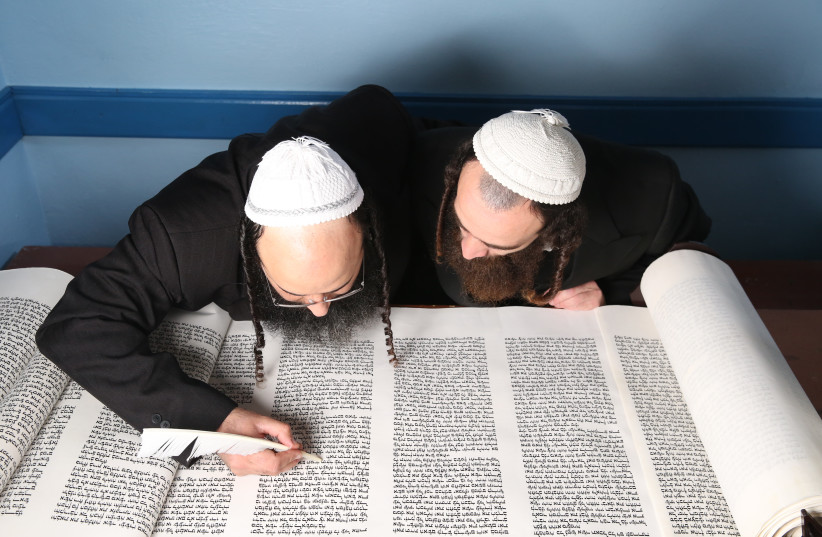
“Light” refers to Torah.
“Joy” refers to festivals.
“Gladness” refers to circumcision.
“Honor” refers to tefillin.
In other words, the true light in the world is found in Torah study; joy is expressed in the way we observe our festivals, with enthusiasm and anticipation; the gladness of a Jew is the covenant of brit milah, and honor is the laying of tefillin.
Joy, then, is not a fleeting pleasure that fades as quickly as it appears. Real joy connects us to something eternal. It is grounded in simple, practical actions: mitzvot and good deeds that anchor us in purpose.
During the month of Adar, you are invited to cultivate this mindset and consciously add authentic joy to your life.
Seeing what is hidden
Shabbat at my parents’ home in Herzliya. On Shabbat morning, Rabbi Yehuda Botman of the Oneg Shabbat synagogue shared a thought that stayed with me.
“I want to speak about three hidden presences,” he began. “The first is Moshe Rabbeinu. He does not appear in our weekly portion of Tetzaveh. In fact, this is the only portion, from the time he is born until his passing, in which his name is absent. On the surface, it seems as if the Torah erases him, diminishes him. But in truth, he is more present than ever. The reason for his absence is that after the sin of the Golden Calf, when the Jewish people faced destruction, Moshe was willing to be erased entirely from the Torah for their sake. His absence is a reminder of his immense love for us."
“The second hidden Presence is God," he continued. "In the Book of Esther, which we will read on Purim next week, God’s name does not appear even once. At first glance, He seems entirely absent from the story. But if one looks more deeply, He is the central Figure, the Director. He guides the unfolding events of the Purim story, weaving together all the twists and seemingly unrelated details."
The rabbi continued, “The third hidden presence is our unity. On the surface, especially these days, we appear deeply divided. A few days ago, I was sitting next to a young man in a doctor’s waiting room. From the slogans on his T-shirt, it was clear what he thought about people like me… But then we began to talk, and we found it hard to stop. The sense of brotherhood between us may seem hidden, but only on the surface. It is there. We simply have to look more closely.”
"May we merit to invest the effort to peel away the outer layers, and see all that is hidden from our eyes," he concluded.
Building our castle
The Torah portion of Tetzaveh is filled with commandments and practical instructions, details that can sometimes feel technical and demanding. I once heard a story that changes the way you read those details.
It was a hot day in a quarry. Three workers were hewing stones with heavy hammers.
“What are you doing?” someone asked the first.
“I’m cutting stones,” he replied, describing the task in front of him.
“And you?” they asked the second.
“I’m earning a living,” he answered. He saw the purpose: providing for his needs.
Then they turned to the third worker. “What are you doing?”
He looked up, his eyes shining. “I’m building a palace.”
All three were right. But the third understood the larger picture, the meaning behind the effort. He saw how every small action, every detail of daily work, becomes part of something far greater. In the end, the little things we do are what build a palace.
Five thoughts for Shabbat Zachor
This week’s Torah portion is Parashat Tetzaveh, the eighth portion in the Book of Shemot (Exodus). Much of the parashah focuses on the garments of the Kohen Gadol, the High Priest.
The Torah places great importance on dignified, even regal, appearance. Some commentators suggest that today, our Shabbat clothes are the equivalent of the garments of the High Priest. On this holy day, we dress more festively in order to express its uniqueness and honor.
This Shabbat, which precedes Purim, is called Shabbat Zachor, the Shabbat of Remembrance. It is customary to go to the synagogue to hear the additional Torah reading, which begins:
“Remember what Amalek did to you on the way, when you left Egypt…” Already at the time of the Exodus, Amalek attacked us. Haman, the villain of the Book of Esther, is a descendant of Amalek. This annual reading serves as a reminder of our ongoing struggle against evil.
Our commentators explain that Amalek is not only an ancient nation. In a deeper sense, it represents the inner enemy, the force within our minds and hearts that seeks to weaken, confuse, and cause us to forget who we are and what we are meant to become.
It is this constant doubt and inner distortion that we are commanded to erase.
After Shabbat, a full and eventful week lies ahead: Monday is the Fast of Esther, Tuesday is Purim, and Wednesday is Shushan Purim, Purim in Jerusalem.
Want to read more by Sivan Rahav Meir? Google The Daily Thought or visit sivanrahavmeir.com