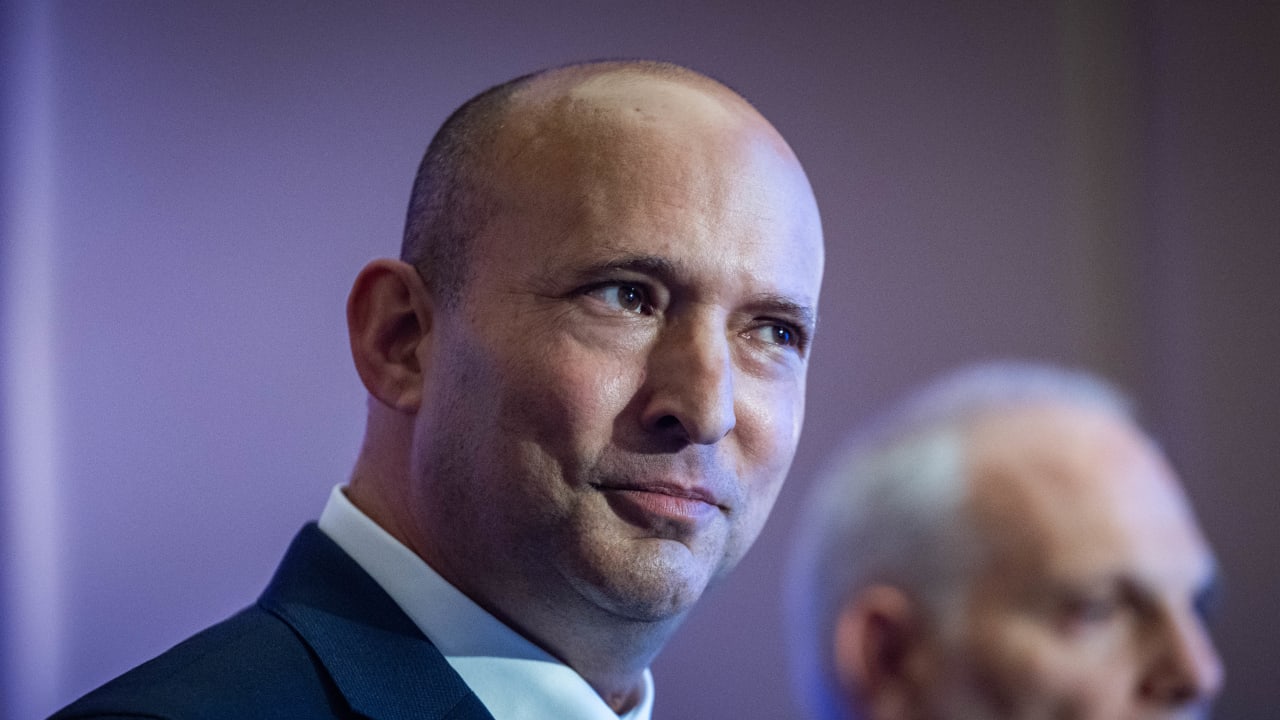
Presenting himself as a right-wing nationalist candidate, Naftali Bennett and his minority party were able to form a coalition government in 2021 with other parties, including some in the current opposition, thereby avoiding another stalemated election.
Once in power, however, he abandoned the policies and principles upon which people voted for him. He resigned abruptly, and transferred power to Yair Lapid, who was to succeed him anyway in their rotation government. It didn’t last long and then-head of the opposition Benjamin Netanyahu returned to power. Bennett offered no excuses or explanations. Some consider this to be the way politics works; for others, it was a betrayal.
The big question, therefore, is – can Bennett be trusted? How valid are his promises? What is his agenda?
Remember this advice: “Fool me once, shame on you. Fool me twice, shame on me.”
Israeli election issues
In all democracies, the candidate/party that receives the most votes gets to lead. But democracies in which minority parties rule in a diverse coalition are not necessarily supported by popular consensus, “the will of the people.” In Israel, minority parties may garner a bare minimum of votes, as the Labor Party did in 1993. They can then carry out policies – for example the Oslo Accords and the Disengagement – which have little popular support.

Bennett asks us to support him once again to implement better leadership, but when he had the chance, he did nothing substantial.
He and his supporters are only focused on removing Netanyahu from power. They are unable to present a coherent strategy to end the war in Gaza, and to protect Jewish communities in the West Bank. They have not presented any proposals for reducing the high cost of living; they have not even acknowledged the existence of a “deep state.” Bennett promises to include religious-Zionist parties in his coalition – as he did a few years ago – but when he was prime minister, he did not fulfill his promises.
Bennett's positions
Bennett promotes himself as a savior of modern Israeli society and its democracy. He’s a salesman selling a product – but what is that product? An alternative to Netanyahu? What else? Even his supporters in the opposition admit that “they failed to present any new policies.”
What is Bennett’s position on judicial reform, and the controversial attorney-general? How does he propose to resolve the issue of drafting haredim (the ultra-Orthodox) – and even more important, integrating them into our economic, social, and cultural system? How will he resolve issues in the Bedouin and Arab communities?
At stake is not only Israel’s democracy, a representative government, but the integrity of the state and Israel’s future as a Jewish one. Would you loan money to someone who has a history of not repaying debts? Would you invest in a company based on vague ideas, or seek one with a proven track record?
As part of the opposition, Bennett’s critique of Israel’s current government offers no concrete, practical solutions to national problems. “Just Not Bibi” is not a policy; it is political charlatanism. Fundamentally, it undermines the essence of what good government should be.
The writer is a PhD historian, writer, and journalist.