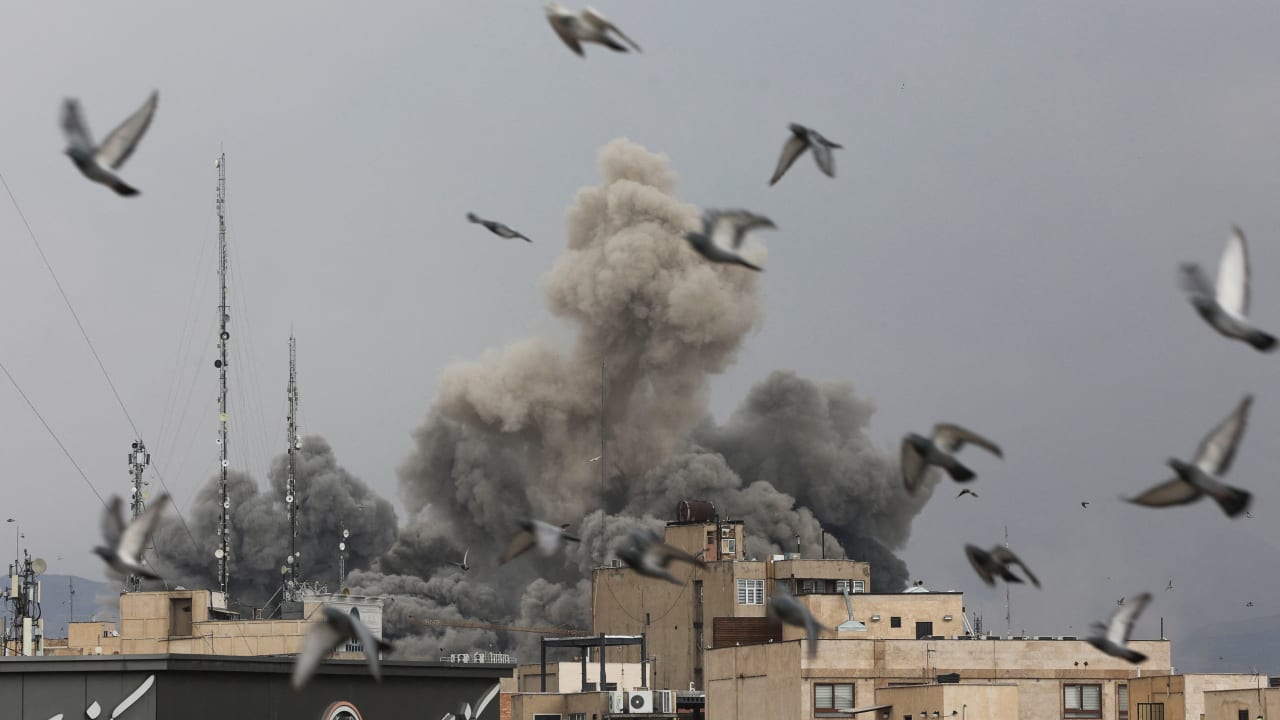
This war has been a long time coming. And the Islamic Republic of Iran asked for it.
We must be honest: the Iranian regime has been out of control, slaughtering its own people, advancing its nuclear and ballistic missile programs, and avoiding compromise at the table.
That’s why we’re now in a war.
As someone who has long been an advocate for the use of American diplomacy to resolve the thorniest of international conflicts, I know enough to know that that doesn’t always work out.
I served at the State Department when president Barack Obama achieved the original Iran nuclear deal in 2015. Back then, he did so out of concern about Iran getting a nuclear weapon.
For me, it was easy to argue in favor of that deal because at the core of the negotiation, it was about preventing an Iranian nuclear bomb. It was solid but imperfect and verifiably worked.

However, then-candidate Donald Trump opposed that deal. His actions since then have led us to the point we’re in today, which is the use of military force against the Iranian regime to not just stop their nuclear program, but also their ballistic missile programs, their support for regional terrorist proxies, and their oppression of their own people.
Iran continues to terrorize its citizens, neighbors
But let’s be clear: today is 2026, not 2015. The United States did not force the Islamic Republic for the past decade to terrorize its neighbors and own citizens while pursuing dangerous policies in defiance of years of international calls to stop. The Islamic Republic chose to do that.
And let’s also remember that Iran’s leaders refused, during the four years of president Joe Biden’s term, to come to a diplomatic agreement to return to the original nuclear deal. That’s what we Americans wanted. And Iran had an opportunity then, with an American administration that prioritized diplomacy over military action, to cut a deal. But it chose not to.
These actions were not the fault of the United States. They were decisions made by the Islamic Republic. And they had clear consequences.
What President Trump therefore did, in recent days, is essentially demand what multiple American presidents – along with our allies – have demanded for years: that the Islamic Republic change its behavior on all these fronts.
And this time, he backed it up with direct military threats. That was a new wrinkle for an American president who had vowed to avoid “regime change” wars, but it should not have been a surprise to anyone. Trump has been calling for the Islamic Republic to get rid of its nuclear program and change its behavior for well over a decade.
Going forward, many questions will be asked. For instance, how will this end? Will the regime collapse? Will Americans have to go on the ground in Iran? Will Congress weigh in, and if so, what will it say?
And just as these are questions for which we would like perfect responses, we should also recognize that in foreign affairs, imperfection is the standard, not the exception. There are no simple solutions to complex problems like Iran. We are living in a world of imperfection.
In a moment like this, we should therefore stand with our armed forces and allies and pray for their safety, as well as the safety of the Iranian people who have been living under a brutal dictatorship for nearly 50 years.
Let us hope that this war concludes swiftly and effectively, and that the Islamic Republic no longer poses a threat to either its neighbors or its own people.
The writer is a former deputy assistant secretary of state who served in the Obama administration. He’s also the author of The Briefing Book on Substack and is writing a book about Democratic foreign policy.