We are Iranian Kurds. We come from families rooted in the western highlands, from Kermanshah, Kordestan and Ilam, from communities that have carried the brunt of the Islamic Republic’s cruelty for as long as it has existed. Some of us are in the diaspora, some of us still have family inside. All of us want the same thing: a free Iran where we can live as full citizens without abandoning who we are.
We are writing because a dangerous idea is circulating in policy circles as the Islamic Republic weakens. The idea that the optimal outcome for the region is an Iran that breaks apart, or that is heavily weakened. That the Kurdish provinces, the Arab south, and the Azeri northwest each become separate problems to be managed. That fragmentation equals safety.
We want to say clearly: this is not what we want, it is not what our communities want, and it would be a catastrophe for the very people it claims to help.
Our grievance has never been with Iran: It is with a regime that turned our identity into a crime. The Islamic Republic executed our activists, treated our faith as subversion, starved our provinces of investment, and systematically erased communities like the Yarsan. This is what we are fighting to end. And we are not fighting alone.
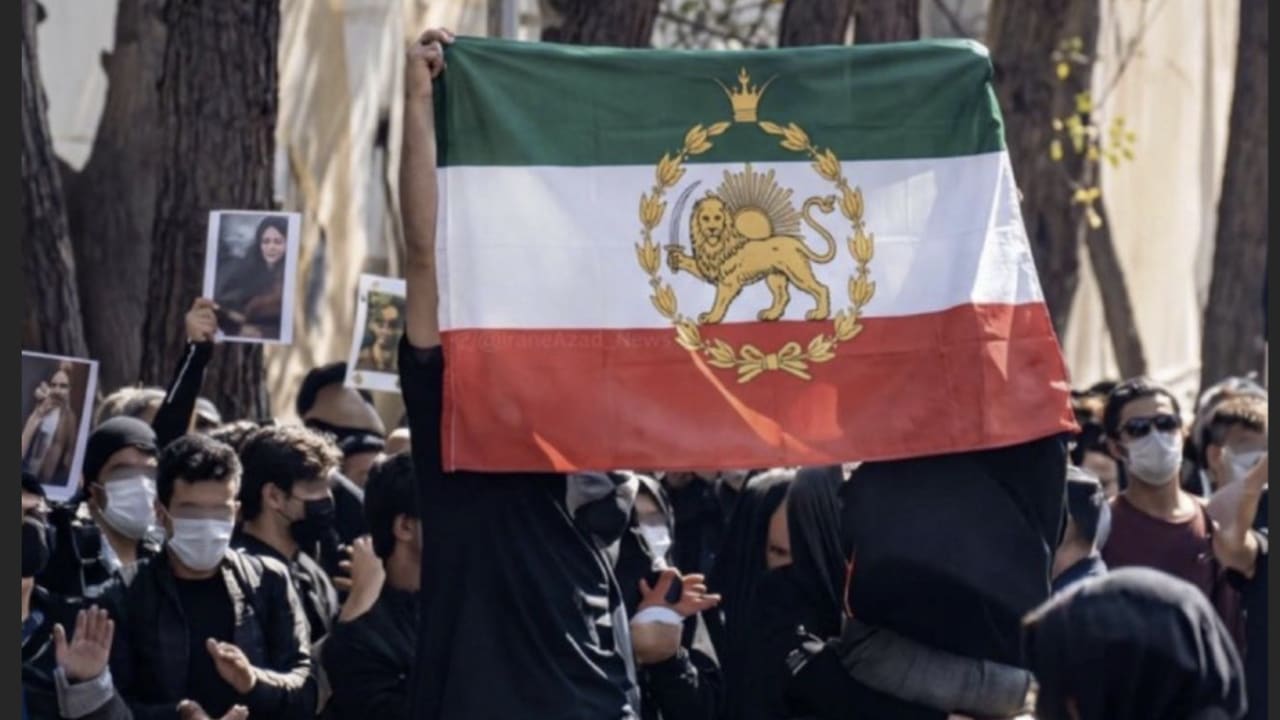
Crown Prince Reza Pahlavi has articulated a vision for Iran’s future built on four principles: territorial integrity, separation of religion and state, the rule of law, and equal citizenship. For Iranian Kurds, these are not abstractions: They are the precise remedies for everything the Islamic Republic has done to us.

Territorial integrity means our communities stay part of one, unified Iran, which is what we want, while the regime’s lie that Kurdish identity threatens national unity gets permanently retired. Separation of religion and state means Sunni Kurds and Yarsan are no longer second-class citizens. The rule of law means our activists stop disappearing into Evin Prison. And equal rights for all citizens means that a child in Sanandaj has the same future as any child in Tehran.
This is why the prince has earned trust across Iran’s ethnic, tribal, and linguistic communities in a way no other national opposition figure has. He speaks about us genuinely as part of Iran’s historical and cultural body, as communities that have always stood as guardians of the nation’s borders and dignity. When he addressed the people of our provinces directly in recent days, naming our tribes and affirming our sacrifices across 47 years, it was a recognition of something real and deeply felt.
Iran is not the Soviet Union, and it is not a twentieth-century construct held together by force. It is a civilization with three thousand years of continuous history, and Kurdish people have been part of it for all of that. The tribes of Jaff, Kalhor, Sanjabi, and Bakhtiari have guarded Iran’s western frontiers across dynasties. That bond is organic, and it has survived everything the Islamic Republic has done to poison it.
Why fragmentation would fail
What would fragmentation actually produce? Weak statelet populations vulnerable to predatory neighbors and proxy manipulation; the same regional competition that destroyed Syria and Iraq; and Kurdish communities left less secure, less sovereign, and more exposed. Federalism or a weakened Iran would yield the same results. The people advocating this from comfortable distances would bear none of those costs. We would.
The prince has been clear about this threat. Opportunistic forces that have long cast covetous eyes on Iranian soil will try to exploit any transition. The most effective counter is a population united behind a democratic framework that addresses every community’s demands. Fragmentation serves predators; unity built on equal citizenship defeats them.
The path forward is what the prince has laid out: a unified, democratic Iran built on those four principles. It is the only framework that has brought all Iranians of all tribal, ethnic, linguistic groups from Azeri, Kurdish, Arab, Baluchi, and Lor, and other voices together behind a single vision. The security of every nation in this region depends on that transition succeeding.
We are Kurds. We are Iranians. We stand with the prince’s vision because it treats those two facts as what they have always been: perfectly compatible. Our future is not as a fragment. It is as full citizens of a nation we helped build and have never stopped defending.
Aran Kamangar, born in Kermanshah, serves as Secretary of Office for Legal Affairs at the Iran Novin Party.
Nejat Bahrami, also born in Kermanshah, is a political activist, former education ministry official, and political prisoner.