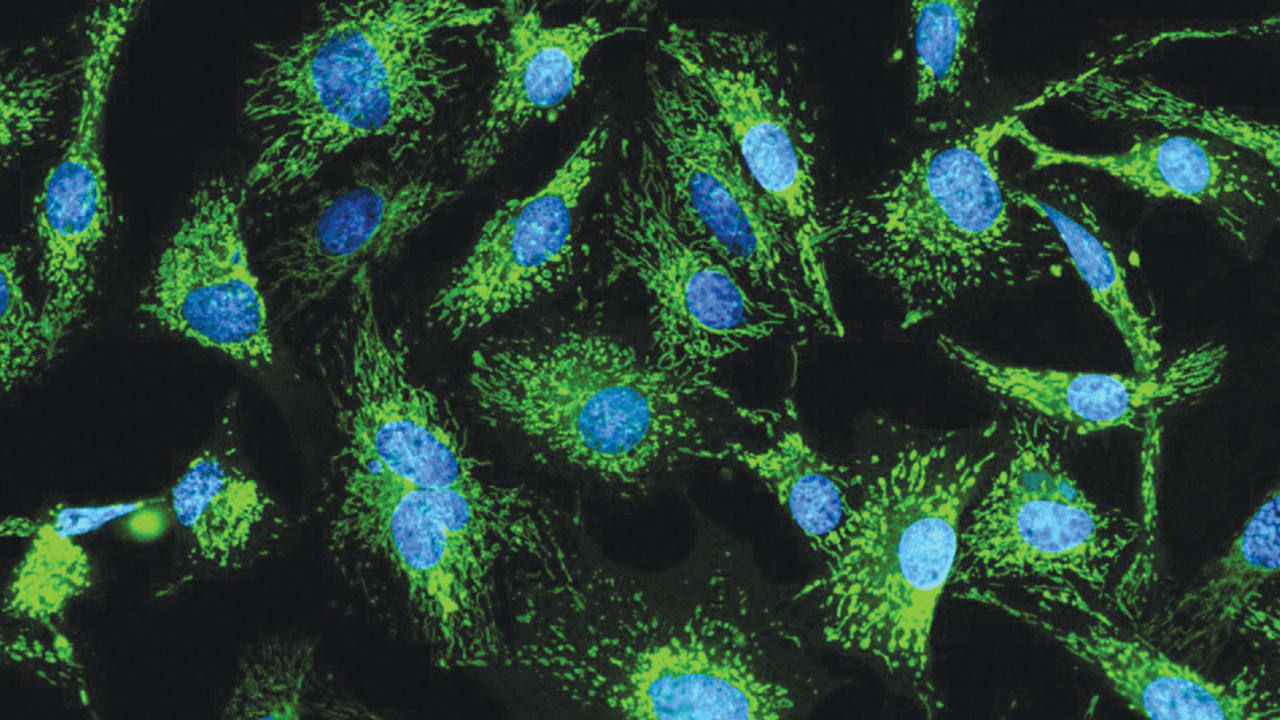
Old McDonald has a farm, but he may have to run it without beef cows. New research at the Hebrew University of Jerusalem (HUJI) shows – for the first time – that cow cells can naturally become immortal. They can continue to divide indefinitely without genetic modification (GM) or any abnormal transformation.
This overturns long-held assumptions that bovine cells could be made immortal only through gene editing. The new technology supplies a safe, stable, and scalable source of cells for cultivated beef production and eliminates one of the biggest technical and regulatory barriers to producing affordable cultivated beef. It is thus a potential game-changer for creating sustainable, ethical meat without the environmental toll of traditional livestock farming.
On a mission to reshape the future of sustainable food, the HUJI researchers and their colleagues at Believer Meats unlocked a natural pathway to immortalize cow cells, marking a major step toward affordable, cultivated beef. The study, led by Prof. Yaakov Nahmias at the Grass Center for Bioengineering at Hebrew University, has just been published in the prestigious journal Nature Food under the title “Spontaneous immortalization of bovine fibroblasts following long-term expansion offers a non-transformed cell source for cultivated beef.”
The researchers revealed that bovine cells can spontaneously renew themselves indefinitely without genetic modification. While similar self-renewal was previously achieved in chicken cells, this study challenges the long-held assumption that such processes were not possible in large mammals like cows due to their natural resistance to cellular transformation. These findings open one of the most stubborn bottlenecks in cultivated meat production, paving the way for safe, scalable production of cultivated beef and lamb.
“This work adds valuable new insights to the rapidly expanding knowledge base supporting cultivated meat development. Spontaneous immortalization attempts often fail because researchers abandon the process when cell growth slows. This study, demonstrating for the first time that bovine cells can be spontaneously immortalized, marks an exciting advance,” explained Nahmias, who was the founder in 2018 of Believer Meats. “By detailing the sequence of events that occur during cell line development, it provides a roadmap for non-GM approaches to be used for commercial cultivated meat production across the full range of animal species used in food production.”
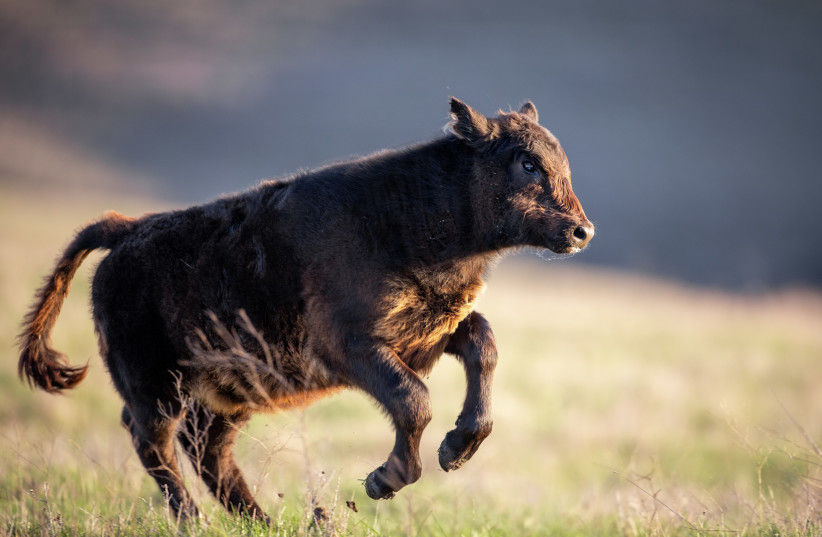
Cultivated meat is grown directly from animal cells in a controlled environment. This may scare some people, but it’s a safe and established technology that has been in development for over 100 years and has been fine-tuned by world-class bioengineers and food scientists, Nahmias told The Jerusalem Post.
“It’s free from antibiotics, artificial preservatives, and artificial colors. Its nutritional profile is similar to the meat you have eaten until now. It requires much less land and water than conventionally-farmed meat, while producing a fraction of the greenhouse gases. It looks, smells, tastes, cooks, and sizzles just like the meat you know and love. In fact, its sensory experience is even better than conventional meat because it has an ideal consistency, so you’ll never encounter any gristly bits.”
IN TRADITIONAL cell biology, animal cells stop dividing after a certain number of generations and enter a state known as senescence. Until now, cattle cells could be induced only to bypass this limit by disabling genes involved in cell cycle regulation, raising regulatory and safety concerns.
“Months stretched into years, and perseverance replaced certainty. Then, after over 400 silent days, colonies suddenly appeared – a true eureka moment that overturned what we thought we knew about bovine cells,” Nahmias recalled.
“We showed chicken cells can immortalize without such interventions a few years ago, but the consensus in the field was that bovine cells could not do the same,” he continued. “What worked relatively quickly in chickens became an exhaustive pursuit in bovine cells. We had to continuously culture bovine cells for more than 18 months before the first self-renewing colonies emerged.”
Believer Meats, whose CEO is Gustavo Burger (admittedly, he encounters good-natured humor because of his name), has finished building a large, modern factory in North Carolina, and it will be able to open in the middle of next year. It has already received permission from the US Food and Drug Administration to manufacture cultivated chicken breasts, which will be followed by cultivated beef.
“Compared to cow farming, cultivated beef will use only 2% of the land and 17% of the water, based on some estimates. I don’t think cows will disappear from the world, as the demand for meat is expected to surge by 50% over the next 20 years, and we don’t have enough land or water to meet this rapidly increasing demand for protein. We need a more efficient method to produce protein people would like to eat,” Nahmias said. “Global warming – whether you believe it was caused by man or by nature – causes the loss of 20% less potable water for every degree that the temperature rises.”
The question of kashrut in the cultivated beef
Regarding kashrut, there is no problem because the cultivated beef is made from skin cells from a kosher-slaughtered cow. As for whether the product will be regarded by observant Jews as being able to be eaten with dairy products, he noted that there are disputes among the various rabbinical authorities, some of whom are fearful of approving it as pareve.
“This work adds valuable new insights to the rapidly expanding knowledge base supporting cultivated meat development. By detailing the sequence of events that occur during cell line development, it provides a road map for non-GM approaches to be used for commercial cultivated meat production across the full range of animal species used in food production,” concluded the HUJI researcher.