Biology
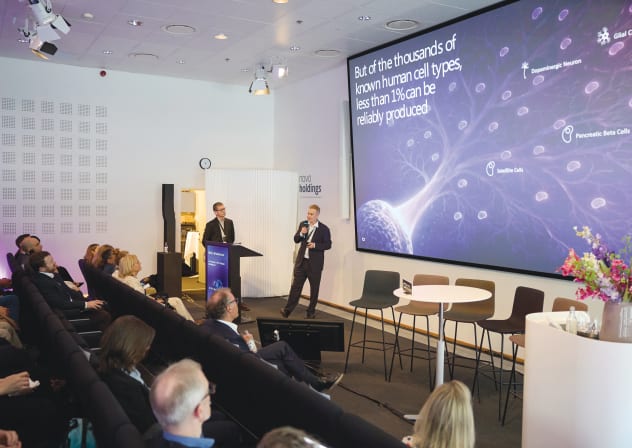
AI meets biology: How cellular intelligence is redefining stem cell therapy
AI-native platforms are reshaping stem cell research, making regenerative medicine faster, cheaper, and more precise.

Oral inflammation may impair female fertility, new Israeli research shows

Cellular Intelligence strikes deal with Novo Nordisk to advance Parkinson’s cell therapy

"Biology books will need to be amended": Scientists identify molecule that slims without diet
Biotech company aims to resurrect woolley mammoths in three years
Colossal lays out a ten-step process for how they will resurrect the Woolley Mammoth.

How did the first stages of evolution start? - study
The researchers found primitive cell-like membranes in hydrothermal vents, which may reveal how life began on unhospitable Earth.

New snake species discovered, named after Indiana Jones star
Harrison Ford, known for his role as Indiana Jones and his "Why did it have to be snakes?" catchphrase, now has a new species of serpent named after him.

This wasp can paralyze its victims for 8 months - TikTok biologist
Biologist Andrew Legan collected a tarantula that had been paralyzed by a hawk wasp to study the effects of the wasp’s venom on the arachnid.

Have you been having a bad hair day? Blame your genes
The study is the first gene-mapping study on human scalp hair whorls.

Do we need to change the definition of 'life' to find it among the stars?
As long as astronomists continue to search for life outside the borders of our world, biologists are forced to continue to reconsider the meaning of the word "life."

Microbiome may influence the health of some people diagnosed with autism
A collaborative study involving Israel, the US, Europe, Ecuador, Russia, and China reveals promising insights into the gut-brain axis in autism spectrum disorder.

Step this way: When did humans learn how to walk upright? - study
Through digitally recreating the muscles of an early human ancestor, research has shed new light on how humans evolved to walk upright.

What advantages did curly hair give to our early human ancestors?
Life before air conditioning: Curly hair kept early humans cool and protected early humans from the sun’s radiative heat.