Cemetery
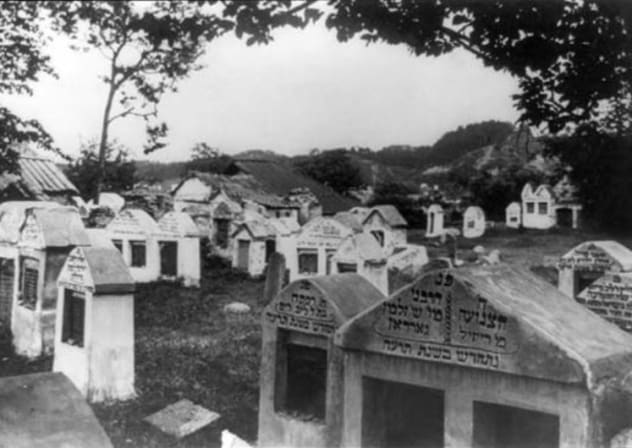
US antisemitism envoy pressures Lithuania to stop construction over Vilnius Jewish cemetery
US antisemitism envoy Yehuda Kaploun urged Lithuania to block renewed development at Vilnius’s historic Snipiskes Jewish Cemetery, warning that thousands of Jewish graves remain beneath the site.

Egypt unearths three previously unknown tombs from different eras at Bahariya Oasis cemetery

Jewish cemetery in Poland damaged by bulldozer during unsupervised repairs, org. tells 'Post'

Layers of history: Egypt unearths 6,000-year cemetery spanning Predynastic to Ptolemaic eras
Brother of Huwara attack victims marks bar mitzvah at graveside on Remembrance Day
Israelis who had come to the cemetery for Remembrance Day sang happy birthday and Mazel Tov to Tzur Yaniv.

New Defense Ministry app helps locate graves of IDF fallen soldiers
It allows the public to easily locate and navigate to specific grave sites in one of Israel's military cemeteries, some of which cover huge areas and are difficult to navigate.

Mystery as old as Israel: Who is the little girl buried with Hahagana fighter?
An eight-year-old girl was buried with a fallen Hahagan fighter in 1948, but nothing is known about her.

Israel to mark Remembrance Day amidst sharp controversy
Few ministers cancel participation in ceremonies following bereaved families’ requests

Israeli leaders have a duty to attend Remembrance Day ceremonies, Benny Gantz says
Many bereaved families especially oppose the participation in ceremonies of Knesset members or ministers who did not serve in the IDF.

Arye Deri pitches 50% off graves to impoverished Holocaust survivors
A third of Holocaust survivors in Israel live under the poverty line, according to the Foundation for the Welfare of Holocaust Victims.

Israel Remembrance Day: Politicians to attend services - Gallant
Government and Knesset representatives usually speak at ceremonies at military cemeteries throughout the country on Remembrance Day. The defense minister insisted that they speak this year as well.

Memorial Day: Family of fallen soldier won't visit son's grave in protest of gov't
The family of Yossi Garciani wants to avoid running into politicians on Memorial Day and placed a sign on the grave, writing that they would not come to visit.

Jerusalem terror attack: Rephael Ben Eliyahu laid to rest
Seven people were murdered in the terror attack on Friday in Neve Yaakov in Jerusalem.

20 ancient tombs uncovered at site in northern Egypt
The tombs were found at a massive necropolis, used to bury the dead since nearly 2,500 years ago.
