Iron Age
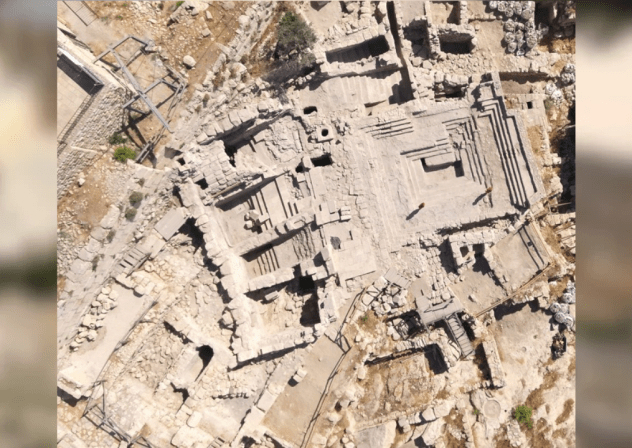
Massive newly-unearthed complex may shed light on how Jewish pilgrims prepared to enter the Temple
The discovery was made during five seasons of excavations, directed by Prof. Uzi Leibner and Prof. Orit Peleg-Barkat of the Hebrew University of Jerusalem’s Institute of Archaeology.

Previously unknown Iron Age grave of high-ranking individual, two-wheel chariot found in Germany

Ancient stone at Tel Eton may provide new proof of King Hezekiah’s religious reform, study suggests

Wooden platform older than Stonehenge found hidden beneath man-made island in Scotland
Project to make Tel Hebron’s Second Temple mikveh accessible to visitors nearly complete, INPA says
Burda added that visitors to the site will be able to learn about the bath’s significance, its place within daily life, and “momentarily experience the religious and social reality of that era.”
DNA analysis reveals ancestry of man buried in ancient Spanish tomb, shows mixed heritage - study
Due to the warm climate, researchers only managed to extract usable DNA from the remains of one of the men, estimated to have been around 45-years-old, called Menga1.

Scandinavia's largest prehistoric mound is not a tomb, but a memorial to a natural disaster - study
Archaeological excavations that have taken place at Raknehaugen, have all failed to discover evidence that would typically indicate a burial mound, such as a grave or human remains.

Iron Age hoard rewrites history of wagons in Britain, may have been part of royal memorial - study
The collection's careful arrangement is indicative of a “noisy, symbolic acts of deliberate destruction," showing that the Melsonby Hoard was not just a collection of abandoned valuables.

Archaeologists unearth at least five Gaul skeletons buried sitting upright during Paris excavations
Burials such as these are unique, as only about 50 “seated skeletons” have been found across a dozen archaeological sites in Europe.

Ancient Polish 'princess' burial date revealed after decades of archaeological mystery - study
In 1899, the young woman’s coffin, made of a hollowed-out oak log, had tumbled from an eroding cliff above the Baltic coast village. She was nicknamed by locals as the “Princess of Bagicz.”

Canine remains discovered in Bulgaria show dog meat may have been Iron Age delicacy - study
The Greeks, as well as the Thracians, who lived in what is now modern-day Bulgaria, are believed by researchers to have consumed dog meat.

Civil Administration recovers dozens of looted artifacts from West Bank site
A targeted operation at "Burj Lasana," in Area B, near Wadi Haramiya, recovered Crusader- and Byzantine-era items from a villa built inside the site.

Celtic teenager buried face down in Dorset pit may reveal Iron Age human sacrifice
"This has the sense of a body thrown into a pit, with hands potentially tied," archaeologist Miles Russell said.

Sunken secrets: earliest iron-age cargoes in Israel’s Tantura lagoon
Research in Antiquity identifies the three wrecks as Israel’s earliest submerged cargoes, proving coastal trade survived long after the late bronze age collapse.
