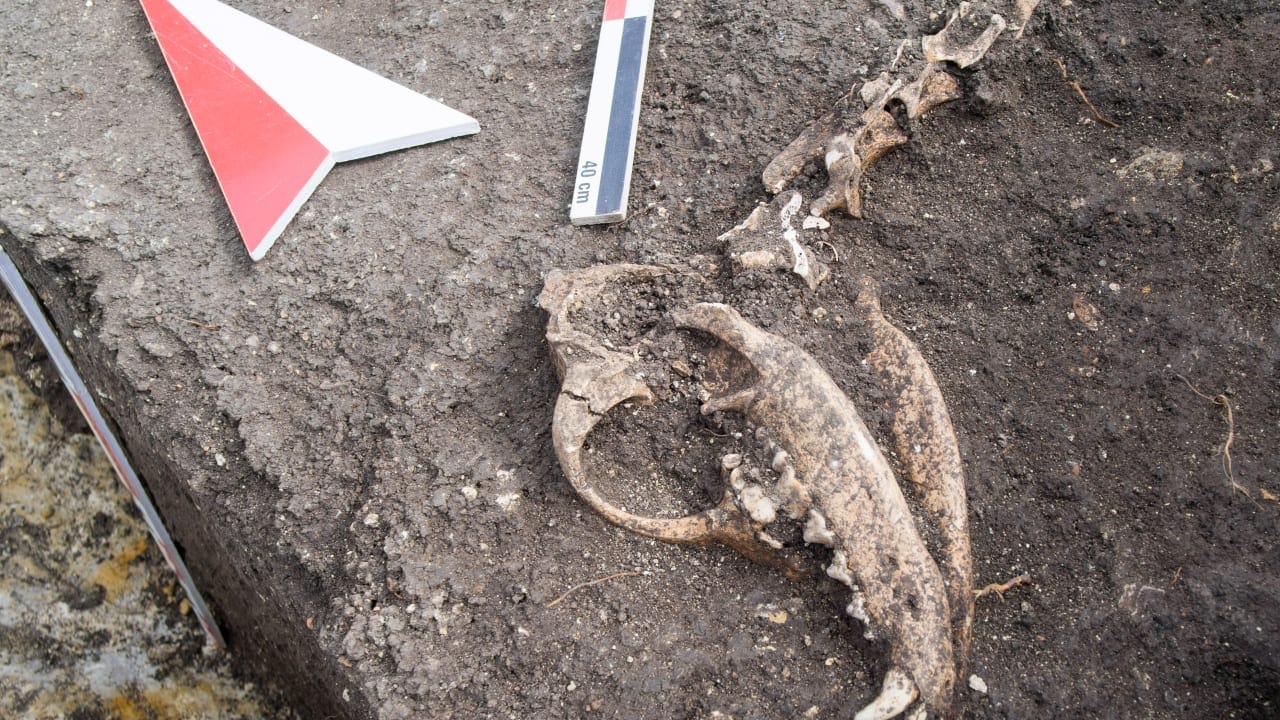
Dog meat was eaten by people approximately 2,500 years ago in Iron Age Bulgaria as part of a ritual or as a delicacy, Stella Nikolova, a zooarchaeologist at the National Archaeological Institute with Museum of the Bulgarian Academy of Sciences, claimed in a study published in December 2025.
The study, titled "Dog Meat in Late Iron Age Bulgaria: Necessity, Delicacy, or Part of a Wider Intercultural Tradition?," was published in the International Journal of Osteoarchaeology.
Canines were not a “necessity eaten out of poverty, as these sites are rich in livestock, which was the main source of protein,” Nikolova shared with Live Science in January, citing butchery marks discovered on canine skeletons uncovered across multiple archaeological sites in Bulgaria.
“Evidence shows that dog meat was associated with some tradition involving communal feasting.”
The Greeks, as well as the Thracians, who lived in what is now modern-day Bulgaria, are believed by researchers to have consumed dog meat.

To verify the claim, Nikolova studied previously published data on canine bones discovered across 10 Iron Age archaeological sites in Bulgaria, the highest concentration of which were found at Emporion Pistiros, an Iron Age trade center between Thrace and Greece.
Archaeologists have unearthed about 80,000 animal bones at Pistiros, two percent of which have been identified as canine, according to the study. Of those, nearly 20% bear butchery marks “made by metal tools, which most probably were a knife, as no cleavers have been found on this site.”
Nikolova also discovered that two lower canine jaws had burned teeth, believed to have been singed during the hair removal phase of the butchery process.
Some bones bore evidence of “further meat portioning,” the study explained, and noted that other cooking processes, such as boiling, would not have left marks on the bones, and the number of canines consumed could be much higher than currently thought.
Dog meat not thought to be a primary protein source
The study also revealed that the majority of canine remains found with butchery marks belonged to adult dogs, rather than puppies.
“The highest number of cuts and fragmentation is observed in the parts with the densest muscle tissue — the upper quarter of the hind limbs,” Nikolova told Live Science. “There are also cuts on ribs, although in dogs they would yield little meat.”
The cuts discovered by Nikolova on the dog bones roughly followed the same butchery patterns discovered on sheep and cattle bones found at the site, lending further credibility to her theory.
With this, Nikolova does not believe that dog meat was the Thracian's primary protein source, as canine remains made up a low percentage of bones identified in other Iron Age sites in Bulgaria, and were found “among dozens of slaughtered livestock in all cases” at Pistiros.
“It is possible that their [dog] meat played a role in some ritual or was seen as a delicacy,” she wrote in her study.
However, the consumption of dog meat was not necessarily “unique to Ancient Thrace, but a somewhat regular practice that was carried out in the 1st millennium BC in the North-East Mediterranean,” the study went on, citing data showing that canine remains had also been found in sites in Greece and Romania.