Neuroscience
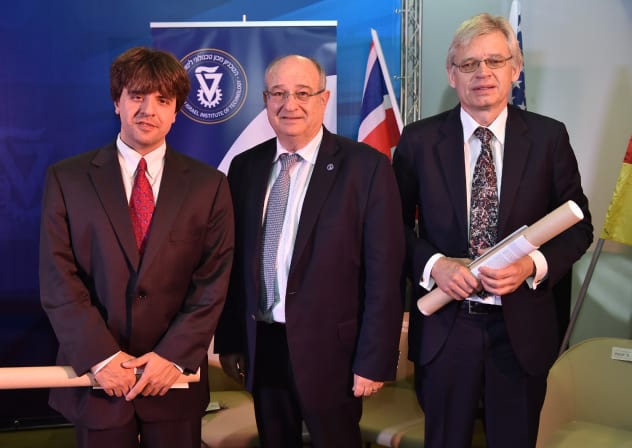
Two out of three 2026 Nobel Medicine laureates were recognized with Technion's Harvey Prize in 2016
Prof. Deisseroth of the Howard Hughes Medical Institute and Prof. Hegemann of Humboldt University of Berlin were awarded the Harvey Prize in 2016 and received the Nobel in 2026.

How does breathing alter the brain? Inside the science of sighs with a world-leading neuroscientist

Russian cyborg pigeon drones begin real-world testing phases, sparking concern over military misuse

Neural 'on/off' switch discovery may shed light on sex differences in social behavior
Neuroscientists record dying brain activity, suggesting a replay of life memories
Dr. Zemmar's team observed gamma oscillations involved in memory retrieval just before and after cardiac arrest.

Autism, epilepsy meet next-gen medicine with Israel’s brain chip innovation
Brain organoids developed in Israel for testing and repurposing a wide variety of existing drugs to see if they could treat autism, schizophrenia, epilepsy, and more

Why we struggle to say no: insights from neuropsychologist Alba Cardalda
Cardalda, a Spanish neuropsychologist, has explored the challenges people face in setting boundaries in her book "How to Tell Someone to Go to Hell Politely.

Tel Aviv researchers develop wearable sensor capable of neurological disorder detection
Imagine detecting early signs of neurological disorders just by tracking your steps. Researchers at Tel Aviv University have created a groundbreaking wearable sensor that does exactly that.

Tel Aviv researchers enable artificial speech for paralyzed patients using thought power
Imagine speaking without using your mouth. Tel Aviv University researchers have made this possible for paralyzed individuals through a groundbreaking technology, turning thoughts into words.

Understanding cataracts: Causes, symptoms, and modern treatment options
Cataracts, mainly caused by aging, normally include the symptoms of blurred vision and glare. Surgery is the only effective treatment, replacing the cloudy lens with an artificial one.

How an award ceremony reunited descendants of two saviors of Denmark's Jews - opinion
"For me, to celebrate my scientific work with the Danish royalty and people is to celebrate the amazing richness of humanity the Danes represented in the darkest period of my family’s life."

Why do we help others? New study reveals part of brain responsible for altruism
According to the new paper, our selflessness and willingness to do good deeds is governed by a specific region in the brain.

UK discovers why nightmares and ‘daymares’ are signs of autoimmune disease
Recognizing early symptoms of nightmares and hallucinations could provide an “early warning system” helping doctors to improve care.

Human-caused climate change is likely to worsen neurological and psychiatric diseases
The researchers stressed the urgent need to understand the impact of climate change on people with neurological conditions so as to protect their health
