Pharaoh
US family returns four artifacts to Egypt, including statue head thought to depict female pharoah
The artifacts were received in Cairo on June 5 before being transferred to the Egyptian Museum for further examination, documentation and restoration ahead of their display in the museum.
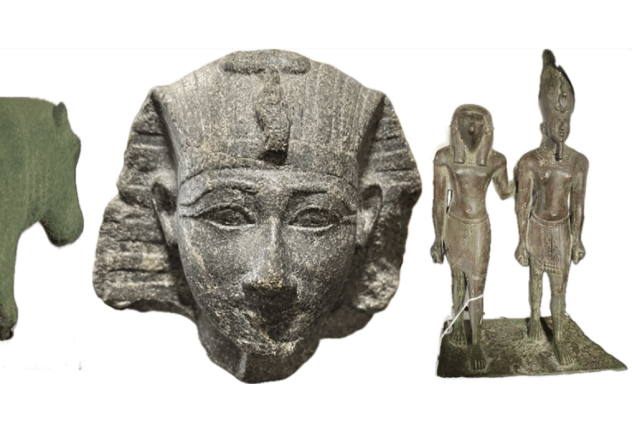

Collection of ancient Egyptian, Greek, Roman-era artifacts discovered at Egypt’s Heracleopolis

Freedom is not free: Passover 5786 in the shadow of war - opinion

You don’t have to be Moses: This generation must rise to lead in a time of war - opinion
Passover and the Holocaust: Why Judaism refuses to build identity on tragedy - opinion
The only safeguard against this constant danger is constant vigilance: seeing Jewish duty as the greatest of privileges.

Echoes of Egypt: Haggadah that brings ancient Egypt to your seder
Experience a Haggadah that brings 3,000 years of Egyptian imagery to life.

Did giants exist? Ancient Egyptian papyrus points to proof of gargantuan Canaanite tribe, org says
The papyrus, known as Anastasi I, or “The Satirical Letter,” is believed by most to take the form of a somewhat mocking letter written between two army scribes.

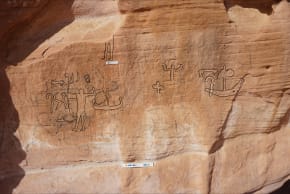
Archaeologists discover 5,000-year-old evidence of ancient Egyptian conquest in Sinai desert
The carving of a boat, erased name of a pharoah, and two depictions of the Egyptian diety Min were also found nearby.
Parashat Bo: The world is catching up, again
'The Protocols of the Elders of Zion' was a crude forgery that peddled the myth of a clandestine Jewish cabal manipulating institutions under the guise of doing good.

The high price of not listening: What Pharaoh teaches us about power and humility
Pharaoh ignored every warning until his nation collapsed. His mistake isn’t ancient, it’s painfully familiar today.

Parashat Va'era: Between Pharaoh and Persia, pride before a fall
The Iranian regime, like Pharaoh, has long encouraged the belief that it is untouchable. Yet the protests reveal a profound rupture between the state and the society it purports to lead.

Parashat Va’era: Why being good is the secret strength we forget
Why does Moses step aside for Aaron during the first plagues? The answer reveals a profound Torah teaching about humility and gratitude.

Parashat Shemot: Learning God
The divine cannot be reduced to scientific explanation or empirical inquiry. God exists beyond the categories through which human beings normally understand reality.

Parashat Shemot: The continuity of the world
The victory of the midwives over Pharaoh was the beginning of Israel’s triumph over Egypt.
