Science
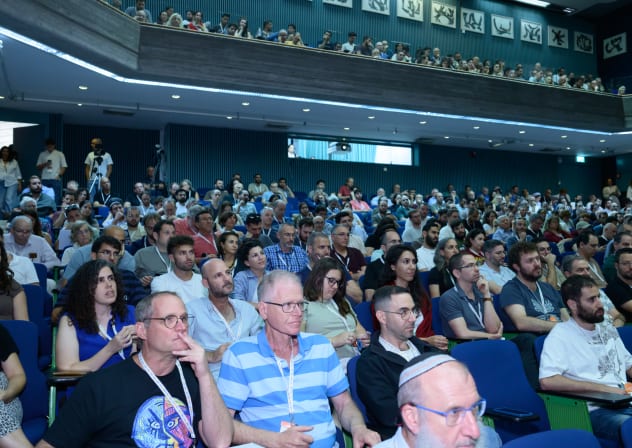
Over 700 researchers attend computer science conference at BGU, celebrating 'golden age' of tech
Mobileye CEO Prof. Amnon Shashua also attended the conference and delivered a guest lecture on the development of machine intelligence and its impact on scientists, researchers, and experts.

Ancient sheep virus traced through DNA preserved in medieval manuscripts

Can young diabetics safely observe Jewish fasts? Insulin pump tweaks can help, Israeli study finds

Wolf Foundation, Herzog announce 2026 Wolf Prize Laureates in medicine, physics, chemistry, math
Iran’s ‘jihad of knowledge’ was never about its people - opinion
How the Islamic Republic weaponized science, hollowed out its universities, and left its citizens to pay the price

Israel's noise pollution upsets animals as much as people - but can be reduced, study finds
Researchers at Beersheba’s Ben-Gurion University of the Negev (BGU) have pioneered a first-of-its-kind spatial model that maps how road noise disrupts animal behavior.

Amid Iran war, 53 of Israel's future scientists showcase projects in Jerusalem contest
‘Courageous, creative, and deeply committed’: The Young Scientists and Developers in Israel returns for its 29th year amid war, as part of National Science Week events.

NASA’s Artemis II mission takes off with four astronauts for historic lunar journey
The mission, a 10-day journey around the Moon, represents the United States' most significant step yet toward returning humans to the lunar surface within this decade.

NASA set for first crewed moon return in over half a century
The mission is the first crewed test flight in NASA's Artemis program, the flagship US effort to begin regular flights to the moon, at an estimated cost of at least $93 billion since 2012.

Liquid water in -70 Celsius: Scientists break down water's weirdness
New peer-reviewed experiments on supercooled water corroborate the transition between high- and low-density liquid states.

Man's oldest friend: Dogs have been around for over 15,000 years, genetic study shows
The dog, descended from an ancient wolf population separate from modern wolves, was the first animal domesticated by people, with animals such as goats, sheep, cattle and cats coming later.

Israel’s role in lunar infrastructure could define future space power - opinion
The moon will become an extension of Earth’s economic and security architecture

Hard truth about hard people revealed in new research
Researchers link frequent exposure to bothersome social interactions with markers of accelerated biological aging.

Study explains Antarctica’s mystery Blood Falls
Researchers solved the mystery thanks to measuring devices that captured the event entirely by chance, providing the first evidence of the immense physical pressure behind this eerie natural phenomen
