
Right before boarding the flight comes the dilemma nearly every Israeli knows: How do to connect to the internet abroad? Should you purchase a roaming package from an Israeli cellular provider, switch to an eSIM, or simply buy a local SIM card?
In recent years, the eSIM has become one of the most popular options among travelers, primarily thanks to low prices and the ability to activate a data package within minutes, even before landing. But is it really the best solution for everyone? The answer, as with most things, depends on the type of trip and your needs.
Roaming package vs. eSIM: Pros and cons
The major advantage of a roaming package from a cellular provider is convenience. There is no need to change settings, download applications, or worry that the phone will not work. You activate the package before the flight, land, and connect. This is also the preferred option for those who require full availability, including calls and text messages to their Israeli number, or for those who do not wish to deal with technical settings.
The disadvantage: In many cases, the price is higher, and the data volume received is relatively small. In addition, packages are not equally cost-effective in all destinations.
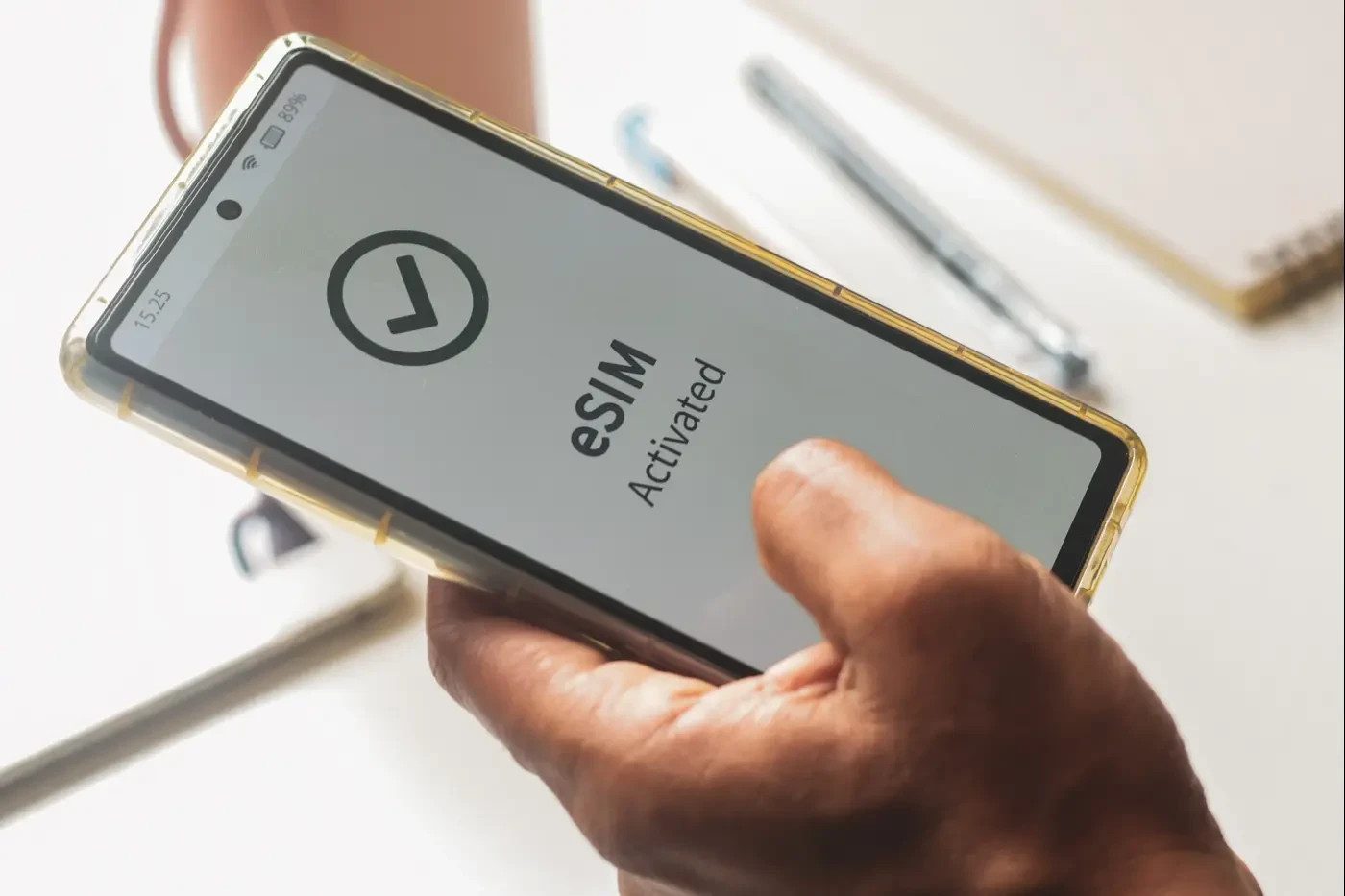
In contrast, the eSIM is a solution that has become particularly popular. Instead of a physical SIM card, a digital card is installed via an application or by scanning a QR code, and you select the package suitable for your destination. The advantages are clear: Prices are generally lower, you can choose packages by country, region, or even several countries together, and installation takes place within minutes, sometimes even before takeoff.
The disadvantage: Not all devices support eSIM, and in some packages, you will receive data only, without a local phone number or regular calls.
What about the price?
Generally speaking, an eSIM is cheaper than a roaming package from an Israeli cellular provider, but the price varies based on the destination, data volume, and length of stay. Here is a typical comparison for a one-week vacation in Europe:
71% of Israelis flew abroad at least once in the past 5 years
However, a new study by the London-based research firm Kantar for the Israeli eSIM company Voye Global reveals that 38.4% of Israelis who fly abroad purchase an eSIM package, a higher rate than those who choose a roaming package from an Israeli cellular company (34%).
The study, conducted among a representative sample of 510 Jewish Israelis aged 18 to 74, shows that 71% of Israelis flew abroad at least once during the past five years. Among those travelers, 38.4% purchased an eSIM package, compared to 34% who chose a roaming package from an Israeli cellular provider. A total of 24.9% purchased a local SIM card in the destination country, while 20.8% relied solely on Wi-Fi networks.
It also emerged that the highest flight rate was recorded precisely among those aged 66 to 74, with almost 80% reporting that they flew abroad during the past five years. They are followed by those aged 30 to 49 at 73.4%, while among those aged 18 to 29 and 50 to 65, the flight rate stood at approximately 66%.
As age increases, travelers turn to roaming packages
The study also points to clear differences between age groups regarding how they connect to the internet abroad. Among those aged 18 to 29, 35% of travelers chose an eSIM, compared to only 23.9% who purchased a roaming package from a cellular provider. The eSIM also leads among those aged 30 to 49 at 32.9%, compared to 30.4% who chose a traditional package.
In contrast, as age increases, so does the preference for traditional solutions. Among those aged 50 to 65, 34.4% chose a cellular provider's roaming package, compared to 29.5% who purchased an eSIM. The gap is particularly striking among those aged 66 to 74, where 42.2% preferred a roaming package from a cellular provider, while only 15.6% chose an eSIM.
The data further show that women constitute 57.4% of eSIM package buyers, compared to 42.6% of men. Additionally, 67.1% of eSIM buyers hold a higher education degree. Differences were also found in a breakdown by lifestyle: Secular Israelis account for 50.3% of eSIM package buyers, traditional Israelis 37.4%, and religious Israelis 12.3%.
"The foreign communications package market is at a turning point," Voye Global said. "If in the past a roaming package from a cellular provider was the natural choice of most travelers, today more and more Israelis are choosing the eSIM solution thanks to convenience, price, and the ability to connect to the network right upon landing. We estimate that as awareness of the technology continues to grow, we will see another significant shift toward digital solutions in the coming years."