
Lego sales jumped 21% in the first half of 2026 as soccer World Cup and Formula 1 sets attracted new customers, the Danish toy brand said on Tuesday.
Lego has gained market share as its growth outpaces rivals like Mattel and Hasbro, helped by tie-ups with film and entertainment franchises and by producing more sets for adults as well as children.
Lego's revenue was 41.9 billion Danish crowns ($6.54 billion), up from 34.6 billion in the first half of 2025. Operating profit rose 22% to 10.9 billion Danish crowns, while net profit rose 32% to 8.6 billion Danish crowns.
The company also reported free cash flow of 2.1 billion Danish crowns, up from 1.7 billion in the same period in 2025, as it increased "investments in long-term growth, including factory capacity and the acquisition of LEGO and LEGOLAND® Discovery Centres."
Lego also made "significant continued investments in sustainable materials and solar capacity expansion," it added, as well as "continued its multi-year transition to paper-based bags, aiming to convert the remaining packaging lines across all factories by 2027."
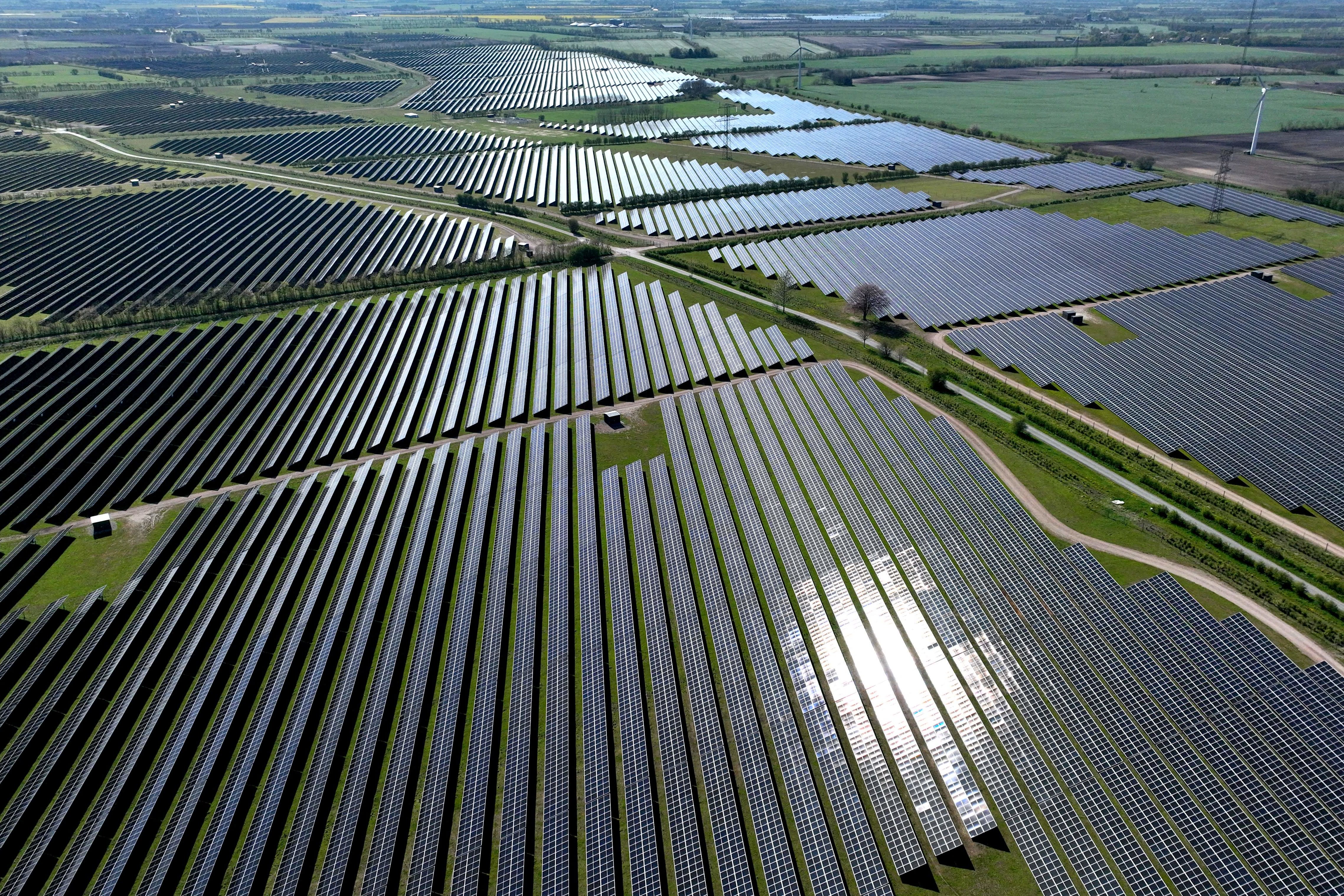
It is also planning to construct a large solar park featuring "160,000 panels able to produce 99 GWh per year," near its Billund, Denmark headquarters, which will be operational in 2027, according to Lego's website.
"The product portfolio is really, really strong and it hits new passion points in this first half," Lego CEO Niels Christiansen told Reuters in an interview.
Lego CEO notes increased child customer base
"We also see more kids in the brand, which is really exciting for us that we managed to grow both the number of kids and consumers active, and also the total amount that they're buying," Christiansen said.
"We are very pleased with our strong start to 2026 and the excitement we see for the LEGO brand. Our product portfolio offers something for everyone, and culturally relevant brand experiences continue to drive demand across the globe. Our success in the market means we can maintain high investment levels in growth and sustainability for both the short and long term," Christiansen said in a public statement released by LEGO.
“It’s been a real highlight to see the passion and commitment of our 34,000 colleagues in our organization who work to inspire kids and fans everywhere," he added.
Lego launched more than 330 new sets in the first half, including a $199.99 replica of the official FIFA World Cup trophy, Pokemon sets using its new interactive bricks, and K-Pop Demon Hunters sets that Christiansen said were particularly popular with girls.
The surge in oil prices caused by the Iran war has driven up the cost of plastics Lego uses to make its bricks, and Christiansen said the company might see an impact in the second half, but so far it has not been significant.
Increased oil prices due to Iran war trigger higher costs due to higher plastic prices
"We are impacted by higher oil prices, but because we purchase so much non-fossil-fuel-based material that is less correlated to the oil price, we've actually been able to manage relatively well," said Christiansen. Lego is in the process of shifting towards renewable and recyclable materials to make its bricks.
Global oil prices rose during the Israeli-US strikes on Iran and the subsequent blockade of the Strait of Hormuz during operations Roaring Lion and Epic Fury.
As it aims to produce closer to its main markets, Lego is building a factory and distribution center in the US state of Virginia, aiming to open by the middle of 2027.