
There are three pillars of the IDF's ground forces that, if combined, would allow the military to set the rules of the game in the next war.
These are a well-prepared and motivated fighting force, equipped with advanced and upgraded equipment that addresses past gaps, as well as cutting-edge technology, including drones and unique systems that enable soldiers to hover above the battlefield, not just operate on it.
These considerations come amid the military's preparations for the reoccupation of Gaza City, with criticisms from IDF reservists regarding combat methods, military equipment, and preparations for a prolonged war since the October 7 massacre.
It has been nearly two decades since the Second Lebanon War in 2006, and it seems like the IDF ground forces are at a crossroads again, as the readiness and capability of both regular and reserve forces, equipment, the quality of combat tools, and the confidence of soldiers come under question.
Nadav Lotan, at the time, a Lt.-Col. in command of the IDF's 532nd Battalion, and now a Maj.-Gen. in command of the IDF ground forces, heard firsthand sharp criticism from regular and reservist IDF soldiers about a shortage of basic equipment and weapons during the 2006 war.
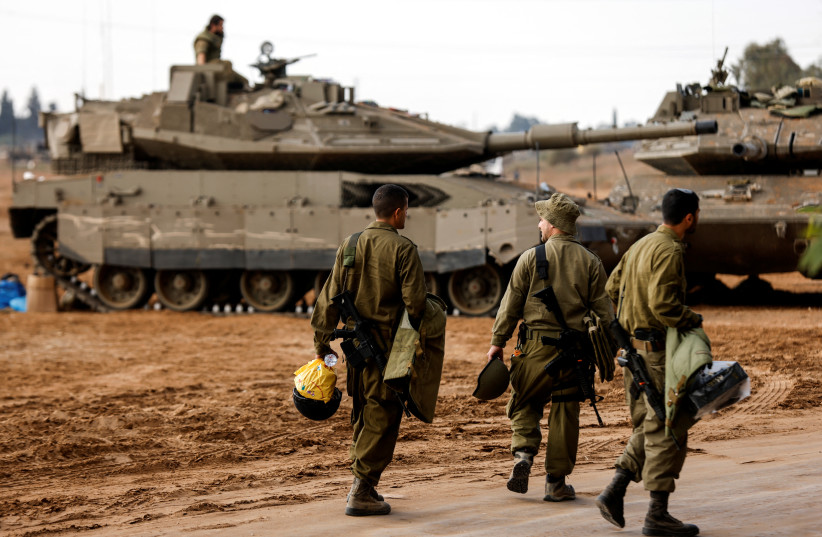
In response, the IDF launched a large-scale procurement campaign, investing over one billion shekels over a four-year period.
However, during the Israel-Hamas War, the IDF was caught off guard again, not only in terms of intelligence, but also in the quality and scope of the ground forces' equipment, particularly reserve units. These shortages have led to a wave of criticism and large fundraising initiatives around the world, seeing soldiers personally purchase necessary equipment, including personal gear, vests, night-vision equipment, and drones.
Ground forces, Defense Ministry working closely to procure materiel
Lotan, upon his appointment to ground forces chief nine months ago, worked closely with Defense Ministry Director-General Maj.-Gen. (res.) Amir Baram to change direction by shortening the supply chain, accelerating the procurement processes for military materiel, and collaborating with global suppliers, mostly from the US.
As preparations for the capture of Gaza City, including the mobilizations of tens of thousands of IDF reservists, come closer, the moment of truth has arrived for the ground forces. At this stage, there are fewer criticisms from the soldiers, especially reservists.
A senior ground forces officer stated that to evaluate what has been done since the outbreak of the war to narrow gaps, particularly between regular and reserve soldiers, one needs to look at the bigger picture. "Focusing only on the helmet or the vest misses the point," they said. "We need to examine all the building blocks of the force: training quality, readiness of the emergency supply depots, and the overall readiness of the reserve force."
"We will definitely not return to the situation of October 7," he emphasized. "It's also important to say honestly: despite the criticism, the reserve force's ability to fulfill its operational tasks was clear to me, at least, when I was a division commander, long before the war. And during the fighting, it was proven once again."
"The IDF has never dealt with a challenge of this magnitude, lasting nearly two years. We experienced immense wear and tear on personnel, resources, and the entire system. In some areas, equipment purchased at the beginning of the war is only arriving now and starting to be integrated into the units," he concluded.
Group one: Maneuver infantry:
Currently, the ground forces consist of 32 reserve maneuver brigades, including 21 reserve infantry brigades, 11 reserve armored brigades, four regular armored brigades, and 17 engineering battalions, four of which are regular. According to the IDF General Staff's decision, this force structure is clearly prioritized over other forces in terms of personnel, equipment, training, the integration of new combat systems, and other aspects.
Group two: Frontline Infantry
This group includes reserve infantry battalions, whose soldiers are drawn from maneuver brigades, such as the Paratroopers, and other brigades. They are moved to serve in the regional brigades along the borders. "These battalions did a lot during the war; they captured the villages of Kfar-Kila and Al-Adaysa in southern Lebanon and more. They conduct more limited local operations," said a senior officer in the ground forces.
Group Three: West Bank Infantry
This group includes the infantry battalions in the West Bank, totaling 18 battalions, and three battalions in the Jordan Valley Brigade. The soldiers of these battalions served in regular maneuver brigades. "They have done and continue to do excellent work during the war, but it’s important to note that they are the third group. They come third in the priority order," said the senior officer.
He further emphasized that the fourth group includes the headquarters and force structures outside the maneuver brigades, mainly within the regional commands. He hinted that the difference between the groups also contributed to the criticism regarding the quality and quantity of equipment, as each group is supposed to receive equipment of a similar quality, even after more than 700 days of fighting.
According to the senior officer, the effort to narrow the disparity between regular and reserve forces, with an emphasis on maneuver brigades, has led to results on the ground. "Today, an infantry battalion in the 3rd Brigade is essentially the same battalion in structure and organization for battle (quality of military equipment, combat systems, standards, and manpower quality), except for Armored Personnel Carriers," he said.
"In their support platoon, they have all the components. The same number of snipers, drones, and personnel. For example, we’ve purchased tens of thousands of night-vision devices since the beginning of the war," he explained.
The officer continued by saying that in his view, "The biggest revolution that happened in this war is the revolution of vertical dimension (operating drones close to the ground) because of the reserve soldiers, mainly in the 55th and 5th Brigades, but also in other brigades, who bought drones of various types and brought them to the battlefield."
However, he also described how today the situation is different: "We are now in a completely different place: four drone schools have been established. Training is based on reserve soldiers. The ground forces are training about 20,000 drone operators at the company level. Every company commander operates a drone before entering a building."
Additionally, the IDF purchased a reconnaissance drone for each regular and reserve platoon, enabling accurate operational decision-making. For example, when entering an intersection, a facility, or performing other actions with a sharp and up-to-date image of the terrain.
Meanwhile, the ground forces developed the "Atalef" (bat) suicide drone. According to a senior officer, this drone changes the rules of the game in fighting in the Gaza Strip and is considered particularly efficient. Its airtime is approximately 40 minutes, and it is expected to enter service in all platoons, scout units, and mobile reconnaissance battalions along the borders. Two weeks ago, an agreement was signed for the production of about 10,000 drones of this type.
The IDF uses between 100 and 150 of these drones weekly in the enclave. This suicide drone contains two kilograms of explosive material packed with shrapnel. The senior officer claimed this is the weapon that kills the most terrorists in the Gaza Strip today. Integrating this drone may lead the maneuver battalion to become self-sufficient in attacks.
In addition, the ground forces began purchasing heavy drones designed for various missions, including transporting equipment, reconnaissance, carrying and dropping heavy explosives, and assisting in neutralizing explosives in roads and buildings. These drones are expected to begin operational service in reserve and regular reconnaissance units.
This is taking place alongside the establishment of new units specializing in detection and attack. However, the IDF has not yet disclosed the details about drones operated under the control of ground forces divisional commands.
The senior officer did not shy away from responsibility, admitting candidly that "The IDF invested over a billion shekels after the Second Lebanon War to reduce gaps in equipment and military clothing."
However, much of the equipment wore out over time, and the ground forces entered the war unprepared," he added. "But quickly, we adapted, and we launched an accelerated procurement campaign to recruit hundreds of thousands of reserve soldiers. Many of them brought their own equipment from home," he continued.
The IDF has also purchased a significant number of helmets and around 100,000 new rifles, in addition to other weapons systems. To date, about 50,000 rifles have been supplied to soldiers, some of which have been Israeli-made, as part of Baram's broader vision aimed at developing security independence and creating defense manufacturing jobs in Israel. The rest of the weapons have come from the US defense industry.
In addition, over 100,000 advanced sights have been purchased, but the officer affirmed that this is a gradual process, and some of the sights have not yet been delivered to the IDF.
Reservist soldiers have issued heavy criticism over the lack of tactical helmets, claiming that they were left without standard equipment and had to embark on a fundraising campaign to close logistical gaps left by the IDF.
However, the IDF responded that some of the equipment purchased through donations, particularly helmets and vests brought from abroad, were found to be non-standard and did not meet the required standards. "We import about 4,000 helmets a month from the United States. We managed to double the quantity through American aid funds, and some of the helmets replaced equipment purchased back in 2007," the senior officer said.
There were also gaps in the availability of bulletproof vests, with only a third of the required quantity having been supplied to date, due to production limitations in local factories.
"I admit the pace is not sufficient," the officer said. "But it’s important to clarify that every soldier was supplied with two protection plates of the v3 model. No soldier enters the field without standard protection," he stated.
"Before Operation Gideon's Chariots, a parade was held for 22 brigades to ensure that the equipment met the IDF’s specified standard. We don’t need donations for these things. Where donations are needed, we will do it," he added.
In the area of mobility, there has been a sharp turn in procurement. "This area includes trucks, off-road vehicles, and jeeps, and it was identified as one of the key gaps of the ground forces," said the senior officer. On the other hand, over the past eight months, the Defense Ministry has procured 827 Humvees from the United States, with some already delivered and distributed to battalions in the field.
According to IDF estimates, all vehicles are expected to be delivered to the units by March 2026, and the Defense Ministry is considering purchasing about 1,500 more Humvees.
Reserve battalions will be the first to receive the new Humvees. Additionally, it was decided to establish a dedicated mobility unit within each division to improve the ability to move troops in combat zones.
Meanwhile, hundreds of new trucks are expected to be purchased soon, replacing the old ones, which the IDF committed to removing from service more than a decade ago.
The Israel-Hamas War began with the IDF having over 200 operational bulldozers, some of which were damaged by anti-tank fire and explosives, and some were even completely disabled. "The previous American administration delayed the arrival of the bulldozers," a senior officer said.
"The deal includes 132 heavy bulldozers from 'Caterpillar'. So far, 68 have arrived, but their armor and training process require time," he added. "The bulldozers are central to the fighting. We are doing everything we can to bring as many of them into service as possible," he continued.
"Today, their readiness level stands at 60% to 70%," the officer said. It is important to note that the Defense Ministry and the IDF also faced a complex challenge in the spare parts market due to embargoes imposed by several countries.
"After two years of war, there are things we've made progress on in spare parts, and some things less so," the officer continued. "Some parts are produced within Israel. We've expanded their production, such as crawler links, pins, and some of the parts found in Israeli tanks, and there are things we buy abroad."
The ground forces, perhaps more than any other branch of the IDF, are paying the heaviest price for the changes in the military and, in some cases, for neglect over the years that needs to be fully investigated to prevent similar processes in the future.
Between the criticism and the effort, between the shortage and the restoration, it is clear that the direction has changed. But if the IDF does not know how to preserve the trust of its soldiers, even the most advanced equipment in the world will not save it in the next war.