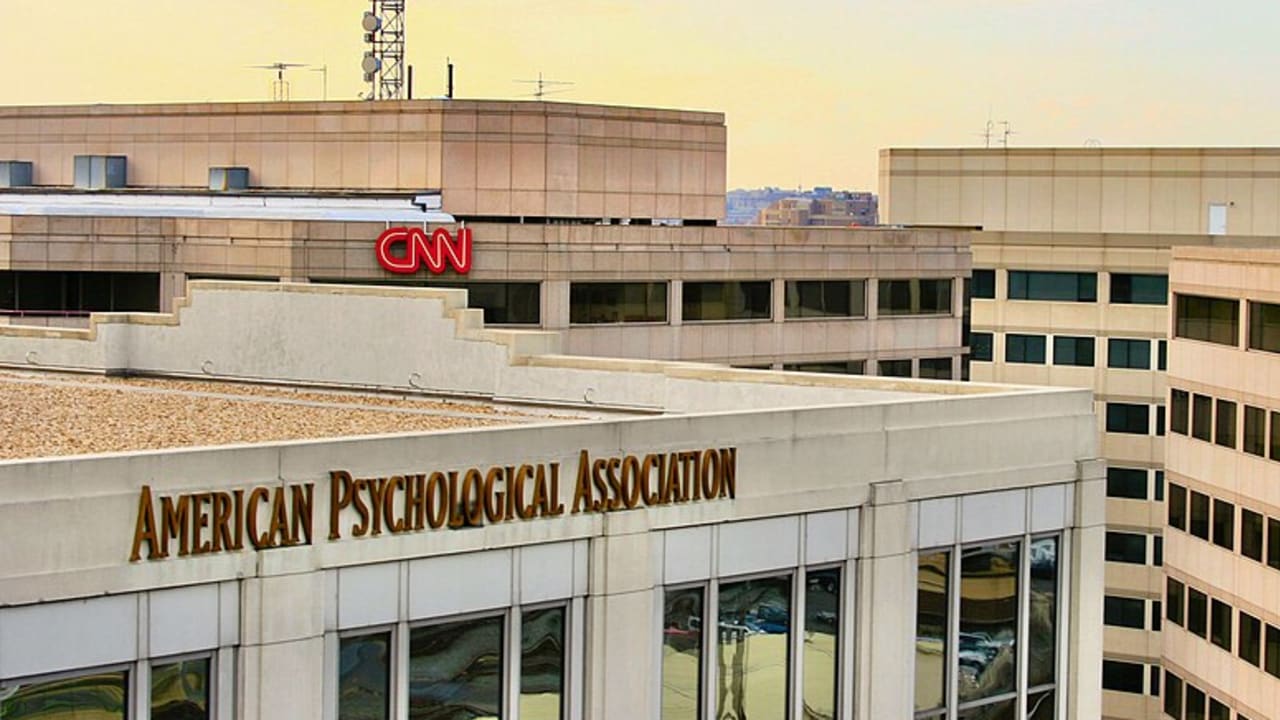
The US House Committee on Education and Workforce has launched a formal investigation into reports of antisemitism within the American Psychological Association (APA).
The committee’s chairman, Tim Walberg (R-Michigan), wrote a formal letter to APA president Dr. Debra Kawahara on Friday, announcing the investigation. He also requested all APA documents, communications, publications, programming materials, complaints, and actions related to antisemitism since the October 7 massacre in 2023.
The move follows multiple reports of antisemitism within the APA, the largest psychological organization in the world, including harassment of Jewish members and inadequate responses from leadership to such complaints.
“The Committee is gravely concerned about antisemitism at the APA, which represents more than 172,000 researchers, clinical professionals, professors, and students across the country in the field of psychology,” Walberg wrote. “Jewish APA members have reported being harassed and ostracized by their colleagues within the APA and at APA events because of their Jewish identity, their efforts to speak out against antisemitism, and their Zionist beliefs.”
The APA has offered educational credits for members to attend conferences where speakers endorsed “violence against Jews and Israelis; antisemitic tropes; Holocaust distortion; minimization of Jewish victimization, fear, and grief; and ‘pathologizing of Jewish people’s connection to their indigenous homeland,’” the letter said.

'Zionism - a mental illness'
APA is said to have failed to take sufficient action against a former APA division president who made deeply antisemitic statements, it added.
Walberg was alluding to Dr. Lara Sheehi, who served as president of the APA’s Division 39 (Society for Psychoanalysis and Psychoanalytic Psychology) from 2023-2025. She reportedly taught that Zionism is a mental illness, called to “destroy Zionism,” referred to Israelis as “genocidal f**ks,” and, after the October 7 massacre, wrote, “How dare you slander the names of our martyrs as terrorists.”
Sheehi also justified the shooting of Israeli embassy staffers Sarah Milgram and Yaron Lischinsky earlier this year. Several members of her division resigned in response.
Jewish students accused Sheehi of having created a hostile environment during her tenure as an assistant professor at George Washington University in Washington. Sheehi has since relocated to Doha, Qatar.
On February 5, Psychologists Against Antisemitism sent a letter to the APA president and board of directors with a request to address the “serious and systemic problem of antisemitism/anti-Jewish hate within the organization.”
The letter was signed by 3,556 mental-health professionals, psychologists, academics, and physicians.
It named certain divisions of the APA as being particularly problematic: APA’s Board for the Advancement of Psychology in the Public Interest (BAPPI), Division 39 (Society of Psychoanalysis and Psychoanalytic Psychology), Division 17 (Society of Counseling Psychology), Division 9 (The Society for the Psychological Study of Social Issues), Division 48 (Society for the Study of Peace, Conflict, & Violence: Peace Psychology), and AMENA-Psy (American Arab, Middle Eastern, and North African Psychological Association).
The letter spoke of a “stark contrast” between APA’s swift responses to other issues and its relative silence on antisemitism.
“While APA has issued statements in solidarity with Ukraine and apologized to People of Color for perpetuating racism, it has remained inactive regarding the 500% spike in attacks against Jews, who represent only 2% of the population yet experience over half of all religion-based hate crimes according to FBI statistics,” Psychologists Against Antisemitism wrote.
In response, APA president Debra Kawahara and executive vice president Arthur Evans said in a joint statement: “APA unequivocally condemns antisemitism in all its forms.”
They cited a previous resolution, which said APA explicitly condemns all antisemitic attitudes and actions, and fosters an environment where all members can participate freely, without experiencing discrimination.
Kawahara and Evans disputed claims that APA had responded insufficiently to reports of antisemitism.
“APA has been actively addressing these concerns as part of our long-standing commitment to building a more equitable and just society,” they wrote. They pledged to cooperate with the committee.