Some speakers struck a hopeful note during an antisemitism symposium on Tuesday morning hosted here by the Republican Jewish Coalition and National Review.
Ted Cruz was not one of them.
“Norm [Coleman, chair of the RJC] just said that we are winning. And I applaud him for that, because I want us to be winning,” Cruz said. “But I’m not sure it is accurate as a descriptive matter that we are winning right now.”
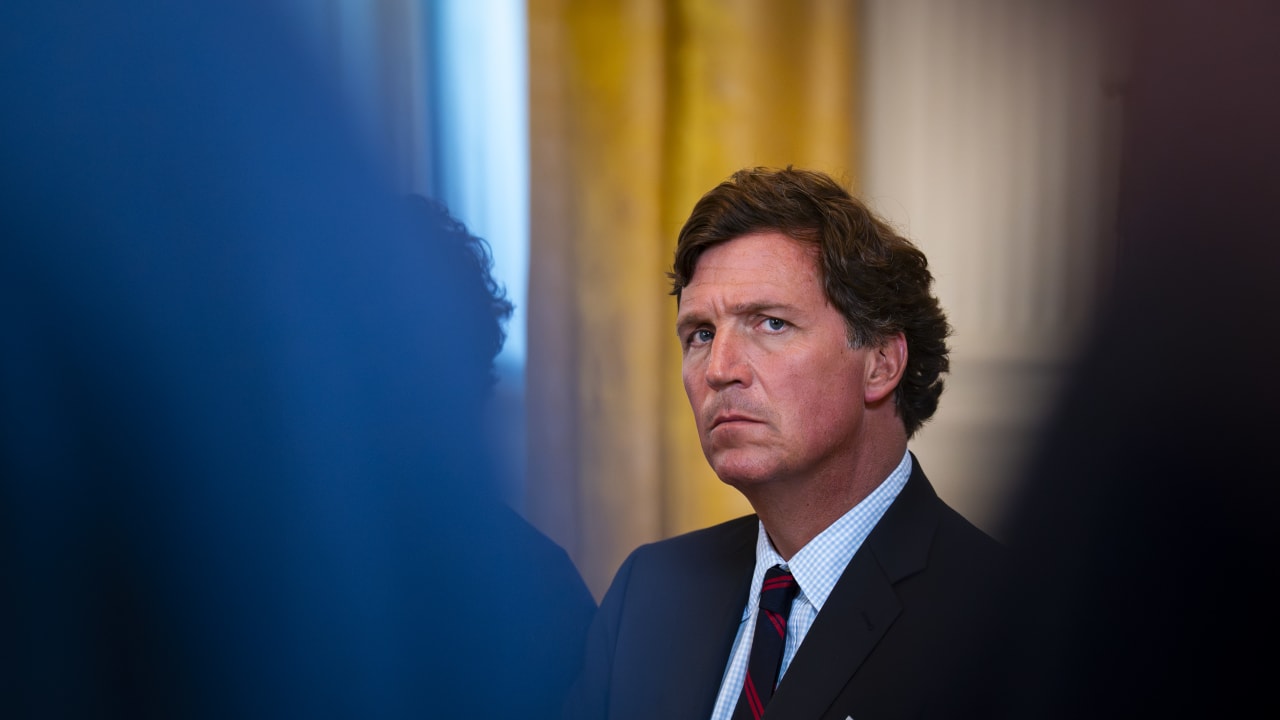
Cruz was referring to an ongoing battle within the Republican party over figures like Tucker Carlson and Candace Owens, conservative influencers who’ve spread antisemitic conspiracy theories.
It wasn’t the Texas senator’s first time speaking to the RJC crowd with grave warnings about right-wing antisemitism and anti-Israel rhetoric. He called antisemitism “an existential crisis in our party” at the RJC’s annual summit in November, which was held shortly after Carlson gave a friendly interview to avowed antisemite Nick Fuentes.

Four months later, Cruz’s speech served as a sobering follow-up: “This is the beginning of a battle where our nation, our beliefs, our Constitution, the principles that built America, are under assault. And we need to gird ourselves for battle and defeat this garbage,” he said Tuesday.
Cruz was far from the only speaker stressing the importance of rooting out right-wing antisemitism at the half-day symposium. The 100 or so attendees at the Museum of the Bible heard from speakers on how antisemitism is spread via social media, on policy responses to antisemitism, and why American exceptionalism is said to be inextricable from Jewish exceptionalism.
Coleman: 'We're winning the fight'
Cruz seemed to contradict Coleman’s assertion that “we are winning and they” - that is, “prominent polemicists” like Carlson, Owens, and younger figures like Fuentes and Florida gubernatorial candidate James Fishback, who traffic in “ancient hatred” - are “losing.”
Nonetheless, Coleman said in an interview after the event, he and Cruz are on the same page.
“First of all, I’m an optimist. Second of all, I could understand Sen. Cruz’s concern,” said Coleman, suggesting that Cruz didn’t want to leave the impression that the GOP’s internecine battle over antisemitism was over, and “this isn’t a fight that has to be fought.
“It has to be fought tooth and nail because it’s so critically important,” said Coleman.
He added, “We haven’t won the fight. I think we’re winning the fight - and by the way, that’s shown in the fact that 85-90% of Republicans are on our side.”
Still, Coleman - who said in his public remarks that they are “not fringe figures whispering in dark corners,” and that they “have large megaphones” - later dismissed Carlson, Owens, and Fuentes as being “fringe voices on our side.” Cruz, on the other hand, said during his remarks that antisemitism “is gaining real purchase, especially with young people.”
“I don’t want to wake up in five years and find myself in a country where both major political parties are unambiguously anti-Israel and unapologetically antisemitic,” Cruz said. “And I think that is a real possibility. If Tucker and his minions prevail, that will happen.”
To stop that from happening, Cruz said Christian pastors need to fight Carlson “on theological grounds” by dispelling the replacement theory that Carlson “aggressively” pushes. He also said there should be an effort to “follow the money” because he suspects that “many of these influencers are cashing a check” from countries like Qatar, Russia, and China, as part of “an operation to destroy America.”
Cruz was far more explicit in his condemnations of Carlson than he’d been in November, when he held back from using the former Fox News personality’s name.
“I believe Tucker Carlson is the single-most dangerous demagogue in this country,” Cruz said on Tuesday, drawing applause.
“And I’ll tell you,” he said, “I’ve made the decision that I’m going to take him on directly.”
The debate over antisemitism and figures like Carlson and Owens has roiled the American conservative movement. More Republicans have weighed in over the last few months, including Trump, who said last week that Carlson is “not MAGA” after the commentator criticized American and Israeli strikes on Iran.
Meanwhile, Vice President JD Vance has not publicly denounced Carlson, drawing skepticism and growing impatience from some Jewish Republicans.
Cruz blasted his fellow Republicans who have not publicly condemned Carlson.
“Nick Fuentes is easy to denounce,” he said. “I actually think it’s a tell among Republican politicians - if they’ll denounce Fuentes but are scared to say Tucker’s name, that tells you a great deal.”
Cruz did not name any such politicians.