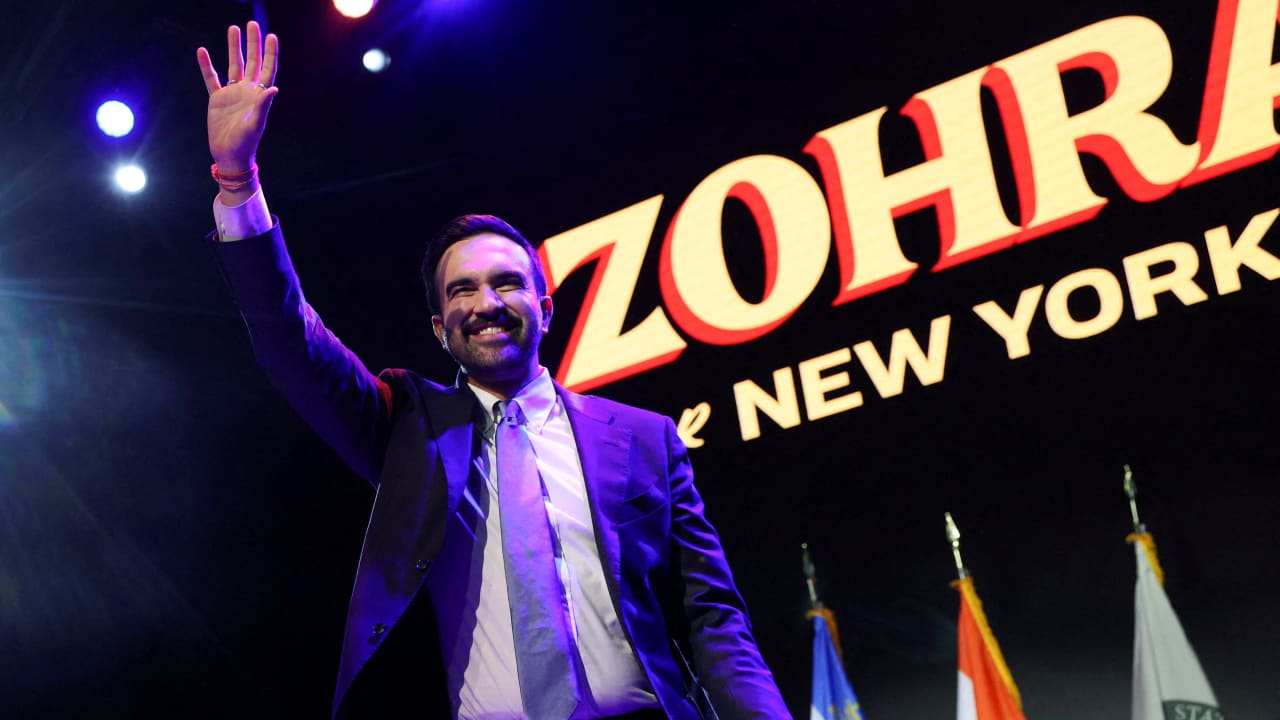
New Yorkers elected Zohran Mamdani as their next mayor on Tuesday. That sentence alone will reverberate through Jewish conversations in synagogues, WhatsApp groups, and kosher restaurants from across the United States. But will it translate into a surge of aliyah? As always, the answers are complicated.
In most Western countries, Jews do not simply pack a suitcase and move because of one election or a single spike in antisemitic incidents. The exception that proves the rule was Ukraine, where war and male conscription created powerful push factors that accelerated immigration to Israel. We also saw very large numbers from Russia after Moscow’s invasion. Those were urgent, life-altering circumstances, not political discomfort.
France offers another instructive example. After the 2012 Toulouse school attack, talk of aliyah grew, but the peak took time. The record year was 2015, when 7,892 French Jews moved to Israel, after which the numbers stabilized. Major demographic turns arrive on a lag.
So will New York Jews make aliyah now? Some will start asking real questions and opening aliyah files. Most will not. What I expect first is internal migration. New Jersey will look appealing. So will Boston and greater Washington, DC. And many will eye Florida, which has become a magnet in recent years for Jewish families, including those who lean Right politically. It is too early to know the scale, but sociologically it feels like a turning point.

Part of the shock is symbolic. For decades, the mayor of the world’s largest Jewish city outside Israel made a point of standing with the community. Mayors lit menorahs, walked in the Fifth Avenue Celebrate Israel Parade, and spoke fluently about the city’s Jewish life. Mamdani is a declared supporter of BDS, and he has repeatedly waded into the debate over the “globalize the intifada” slogan, at times saying he does not use it while refusing to condemn it outright. None of this automatically predicts policy, but it explains why mainstream Jewish leaders reacted with alarm.
Pro-BDS candidate win in NYC raises alarm
If the last decade in Britain is any guide, communal unity matters. In 2018, three rival Jewish newspapers there ran the same front-page warning about Jeremy Corbyn, and in 2019, Chief Rabbi Ephraim Mirvis publicly declared Labour “unfit for office.” That clarity helped crystallize national attention.
There is also a difference in baseline attachment to Israel. JPR’s 2024 survey found that 88% of British Jews have visited Israel at least once, 73% feel attached to Israel, and 63% identified as Zionists, creating a communal reflex that translated into coordinated action. New York’s Jewish population is larger, more diffuse, and, for many, further from Israel in daily life. I personally cannot ignore that difference. It’s very clear.
New York’s Jewish community will now face hard questions. Did we do enough to explain why BDS is not a harmless protest tactic, but a campaign that singles out the world’s only Jewish state? Did we persuade neighbors who do not follow Israel closely that slogans about intifada are heard by many Jews as calls for violence? Those are uncomfortable conversations, but they are necessary ones.
For Israel, Mamdani’s victory is a data point inside a larger trend within parts of the Democratic Party. A proudly pro-BDS politician can now run and win in America’s most-watched city. That does not mean the party writ large has turned anti-Israel, but it should focus minds in Jerusalem and in Jewish organizations on the need for deeper, broader engagement with American progressives, including those who are skeptical of Israel.
So, will there be a wave of aliyah from New York? I do not predict one. What I do foresee is churn. Some families will move within the US, some will move to Israel, and many more will deepen their connection to Jewish life in place. If you are contemplating aliyah, do it because you think it’s the right thing, not just for reasons of anxiety.
Aliyah is a life choice and a statement; make sure you are really serious about it. And for the community staying in New York, there is still work to be done. Build coalitions. Make the case. Protect institutions. Teach the next generation why Israel still matters. If your mayor won’t march with Israel, your decision should be to actually do so. Turn this grief into something positive.
Minutes after Mamdani was announced winning this election, the first initiative was already announced: Rabbi Marc Schneier said he plans to build what he called “the first Jewish day school in the Hamptons,” anticipating “thousands of Jewish families” moving from the city to Suffolk County.
Winter is coming, and this winter will be unlike any other. Let’s try and make it different for the good, whether in New York or elsewhere.