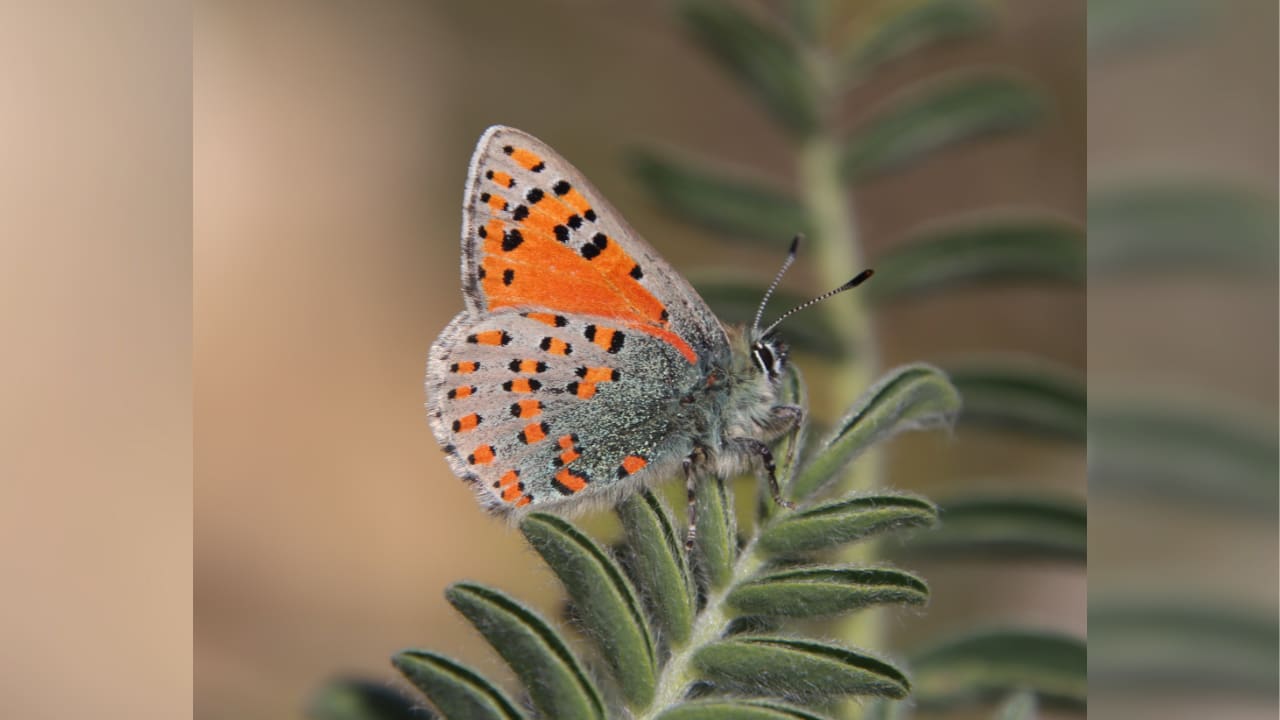
The condition of butterflies has worsened in Israel in recent decades, according to new data published by the Israel Nature and Parks Authority (INPA).
On Tu B’Shvat, the Jewish birthday of the trees, which fell on February 2 this year, KKL-JNF, in collaboration with Tel Aviv University, the Butterfly Enthusiasts Association, and the INPA, published the first Red Book for butterflies in Israel.
The book presents the main threat factors for butterflies: habitat loss, pesticide use, invasive species, fires, light pollution, and climate change. It paints a worrying picture of the current situation.
Of the 156 butterfly species documented in Israel, three have become extinct, 12 are critically endangered, 23 are endangered, and 22 are defined as having a threatened future.
The data defines only 63 species, just 40% of all butterfly species documented in the country, as not being at risk. There is not enough data on the remaining 33 species to assess their status.

Dr. Dotan Rotem, an open space ecologist at the INPA and the leader of the Red Book for Butterflies, explained that the findings highlight a continuing trend of deterioration in the conditions of one of the most important insect groups in the country.
“Today's butterflies are excellent bioindicators of the health of the ecosystem. Harming them is a warning sign of broader harm to nature,” said Dr Rotem.
What is a Red Book, and what are its implications?
The Red Book of the INPA is a comprehensive scientific publication and database that documents rare, endangered, and extinct plant, animal, and ecosystem species in Israel.
It serves as a critical conservation tool for identifying extinction risks and prioritizing protective actions, guiding management policies for biodiversity.
Dr Rotem said that “The Red Book is not just a scientific summary, but an applied tool for setting conservation priorities: identifying high-value habitats, guiding planning policy, and intelligent management of open spaces.”
According to the INPA’s findings, the greatest threat to butterflies in Israel is the loss of habitat as a result of accelerated construction and infrastructure development. The book highlights that continued damage to the butterflies' habitats will place the species at real risk of extinction.
"Israel is warming at a faster rate than the global average, and many butterfly species are here at the southern limit of their distribution - a situation that increases their vulnerability. In Israel, about 18 square kilometers of natural areas are destroyed every year, one of the highest rates in the developed world,” explained Dr Rotem.
“The examination revealed that many species, which were previously defined as being at risk, are currently in a more serious situation,” but it’s not all bad news; some species have experienced an improvement in their status assessment over the last decade. In some cases, this is due to the collection of new information; in others, it is thanks to conservation and habitat management efforts.
“The Red Book for Butterflies today in Israel is a wake-up call: preserving butterflies is not just about preserving beauty and color, but about the stability and health of the ecosystems on which we all depend," concludes Dr. Rotem.
The Environment and Climate Change portal is produced in cooperation with the Goldman Sonnenfeldt School of Sustainability and Climate Change at Ben-Gurion University of the Negev. The Jerusalem Post maintains all editorial decisions related to the content.