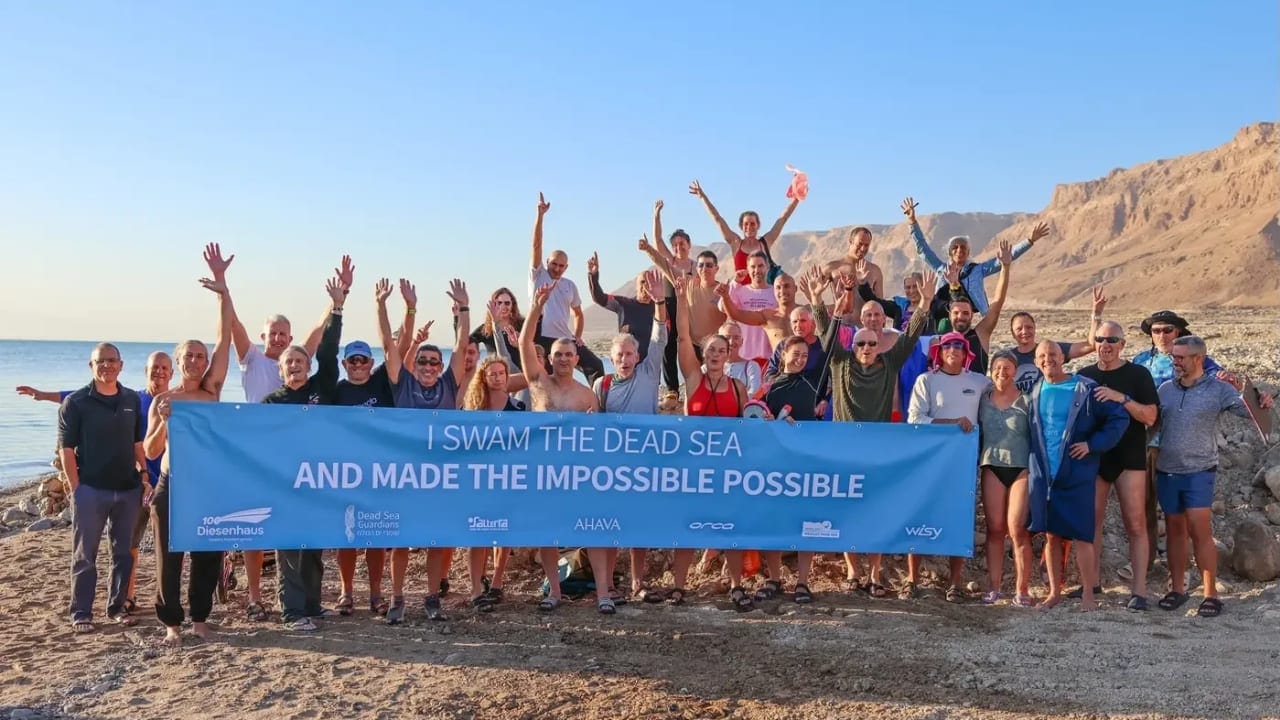
Some 30 experienced open-water swimmers participated on Friday in a five-kilometer extreme swim in the Dead Sea, initiated by the Dead Sea Guardians organization in cooperation with the Megilot Dead Sea Regional Council.
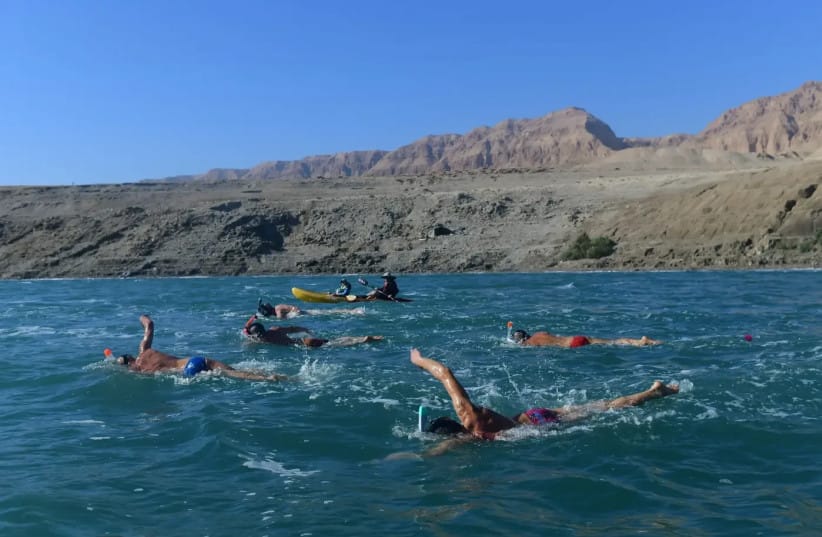
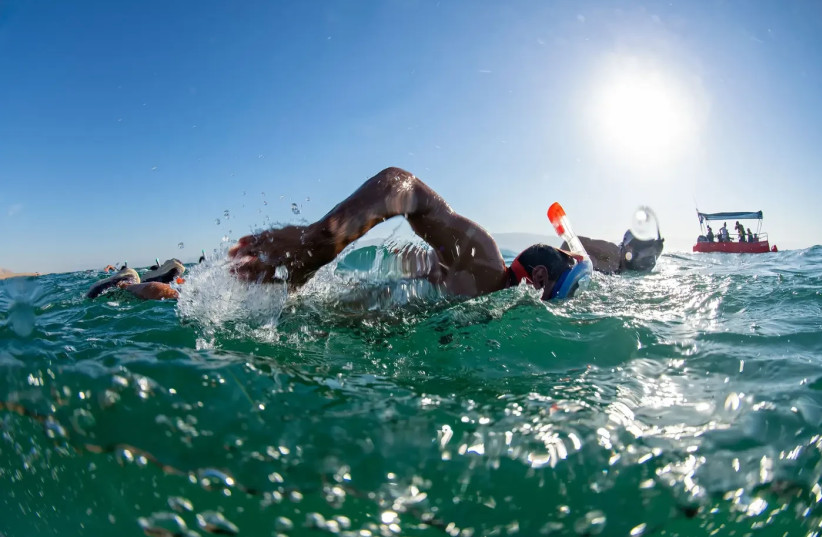
The swimmers set out on a route along the Mitzpe Shalem beach, equipped with special face masks that allow swimming in the extreme salinity conditions of the lowest place in the world.
The swim was held 10 years after the historic event in which swimmers from Israel, Jordan, the Palestinian Authority, and other countries crossed the Dead Sea by swimming. Since that event, the lake's water level has dropped by an additional 11 meters, a figure that illustrates the depth of the environmental crisis it is in.
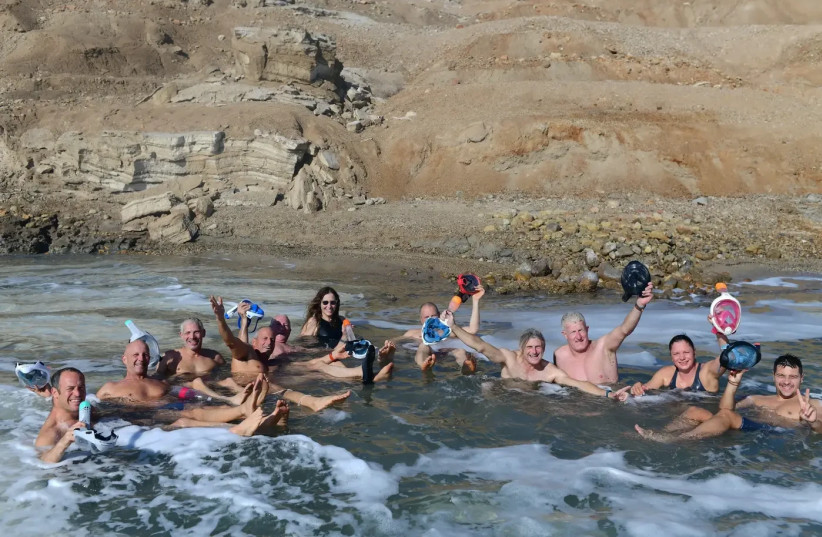
Crossing the Dead Sea by swimming
Behind the initiative is Oded Rahav, an entrepreneur, world-record-holding swimmer, and founder of the Dead Sea Guardians organization, which he established to promote the conservation of the lake and work toward finding long-term solutions to the crisis. The organization operates as a public benefit company and promotes public, educational, research, and international activities.
Rahav believes that the Dead Sea does not receive the place it deserves in the national priorities. According to him, a natural wonder of global importance, which is supposed to be one of Israel's prominent symbols, has largely become its backyard. "If we managed to do what everyone said was impossible and cross the Dead Sea by swimming, we can and must care for it and act on its behalf," he said.
The swimmers, accompanied by professional safety teams, sought through the swim to remind the public and decision-makers that the struggle for the future of the Dead Sea is far from over. Their message is that joint action by governments, organizations, researchers, and the general public is required to preserve one of the world's unique natural sites.
The Environment and Climate Change portal is produced in cooperation with the Goldman Sonnenfeldt School of Sustainability and Climate Change at Ben-Gurion University of the Negev. The Jerusalem Post maintains all editorial decisions related to the content.