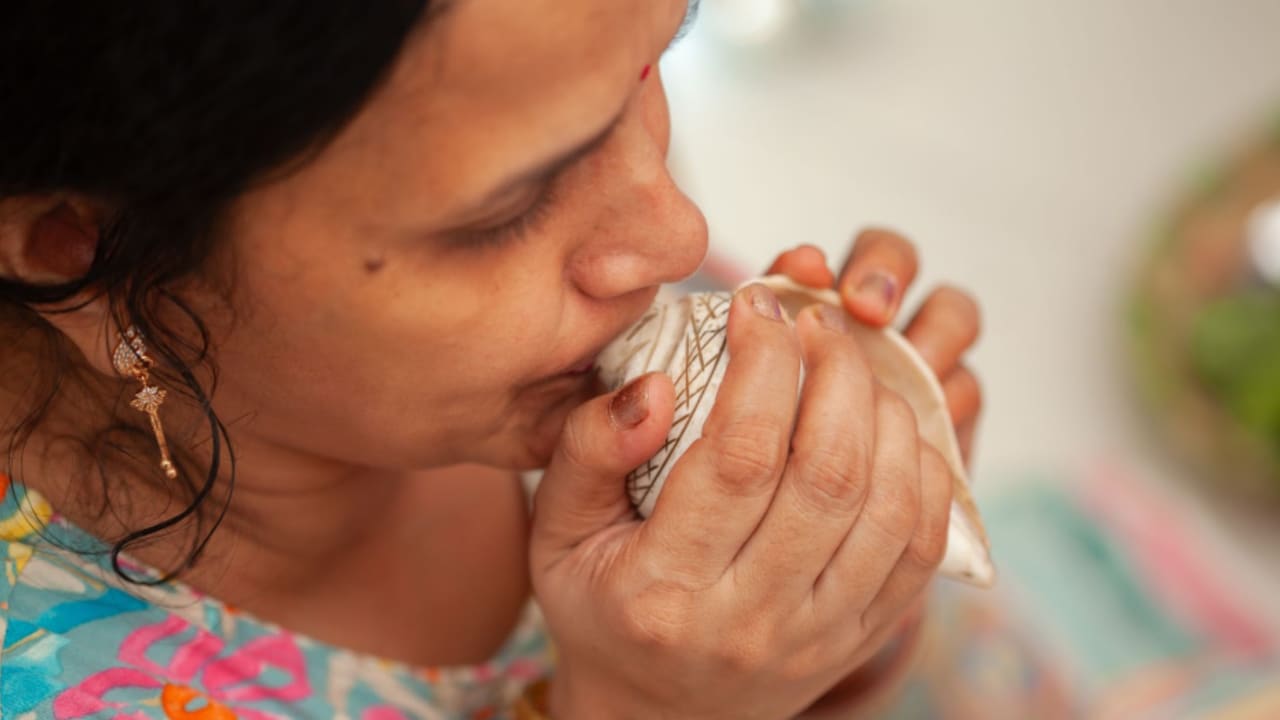
A clinical trial suggested that the ancient practice of shankh blowing could potentially offer relief for individuals suffering from obstructive sleep apnea (OSA). The study, led by Dr. Krishna K. Sharma at the Eternal Heart Care Centre and Research Institute in Jaipur, India, explored the impact of this low-cost, traditional yogic breathing technique on sleep apnea symptoms. Between May 2022 and January 2024, 30 individuals aged 19 to 65 with moderate OSA were assessed as part of the research, as reported by Newsweek.
Obstructive sleep apnea affects approximately eight million people in the UK and around 30 million Americans. The condition is characterized by frequent interruptions in breathing during sleep due to blocked airways, leading to symptoms like loud snoring, restless sleep, and daytime sleepiness. OSA increases the risk of high blood pressure, heart disease, and stroke, underscoring the need for effective treatment options.
The clinical trial involved dividing participants into two groups. Sixteen participants were trained in the practice of blowing a traditional conch shell, known as a shankh, while the remaining 14 engaged in deep breathing exercises. The technique requires a deep inhalation followed by a powerful, sustained exhalation through tightly pursed lips into the spiral-shaped shell, creating vibrations and airflow resistance that likely help strengthen the muscles of the upper airway.
After six months, those practicing shankh blowing were found to be 34% less sleepy during the day and experienced higher blood oxygen levels at night. They also reported having four to five fewer apneas per hour on average and better overall sleep quality compared to the control group. Participants trained in shankh blowing were encouraged to practice at home for a minimum of 15 minutes, five days a week after receiving instruction at the clinic.
"It shows the ancient practice of shankh blowing could potentially offer an OSA treatment for selected patients by targeting muscle training," remarked Professor Sophia Schiza, head of the ERS group on sleep disordered breathing at the University of Crete. The researchers received ethical approval for expanding the study into a larger multicenter trial in India, aiming to discern whether shankh blowing can serve as a viable therapy for OSA patients.
Blowing the conch shell, a tradition steeped in cultures such as Hinduism and Hawaiian rituals, dates back to around 1,000 BCE. Several patients practicing this yogic exercise reported feeling more rested and experiencing fewer symptoms, motivating Sharma to delve deeper into its therapeutic potential. "In my clinical practice, several patients reported feeling more rested and experiencing fewer symptoms after regularly practicing shankh blowing," said Sharma to EurekAlert.
While continuous positive airway pressure (CPAP) machines remain the frontline treatment for OSA, the discomfort associated with these devices often leads to inconsistent usage, according to Sharma. He added that shankh blowing could serve as either a supplement or an alternative in specific cases—particularly for those with mild-to-moderate OSA or in regions where CPAP machines are not easily accessible or affordable. The researchers now intend to investigate how this practice impacts airway muscle tone, oxygen levels, and sleep, potentially broadening the array of therapeutic options available to OSA patients.
Produced with the assistance of a news-analysis system.