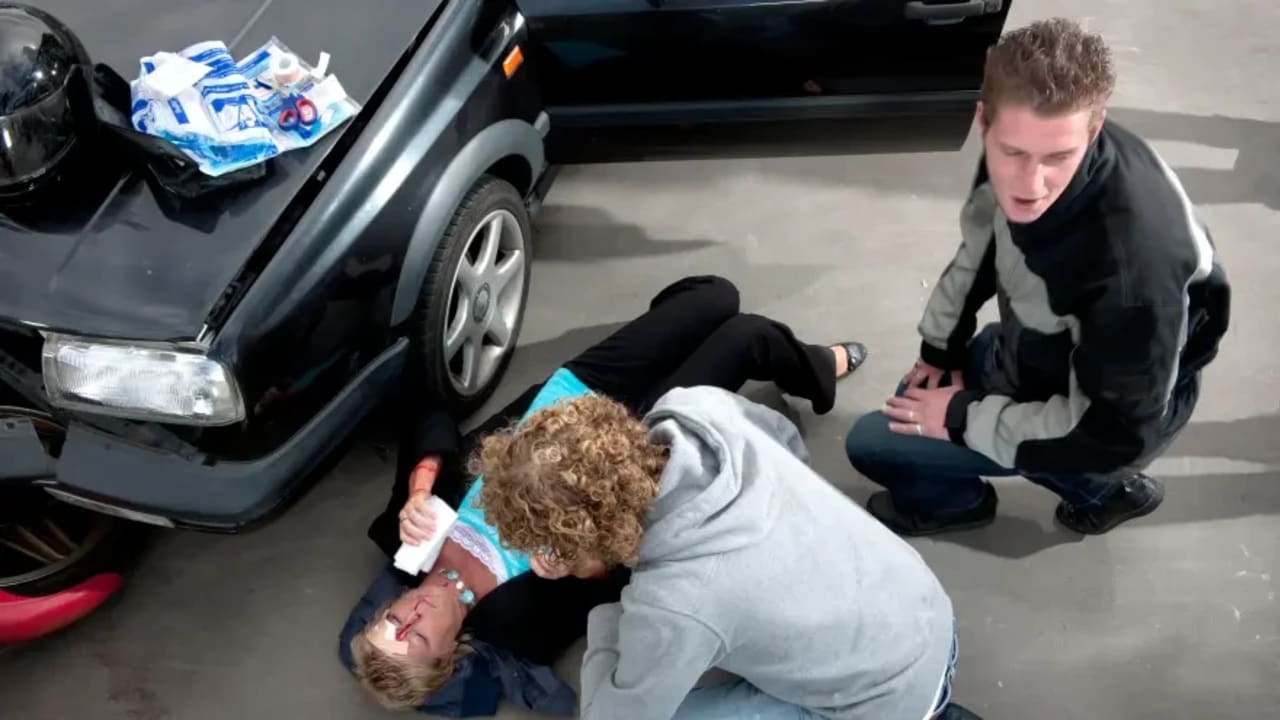
Blood is the fuel of the body, carrying oxygen to every single cell. In an average adult, about 5 to 6 liters of blood circulate. A rapid loss of one liter or more puts the body into a state of "hypovolemic shock" (shock), a life-threatening condition in which the supply of oxygen to the brain and heart is impaired. In penetrating injuries, deep cuts from glass or in car accidents, death may occur within a few minutes if we do not stop the flow.
In the past, we were taught complex "pressure points" and limb elevation. The new protocols are much simpler and more aggressive: Stop the bleeding at the source – and fast.
The caregiver’s safety comes first
Before you touch another person’s blood, protect yourself. If there are gloves in the first aid kit – put them on. If not, try to use a plastic bag or a thick cloth as a barrier. Blood-borne diseases are a real risk.
Step 1: Direct pressure – The first action
In the vast majority of cases, strong pressure directly on the site of the injury will stop the bleeding. Dial 101 to MDA, put the phone on speaker. Expose the area of the injury (cut the clothes if necessary) to see exactly where the blood is coming from. Take a bandage, a clean towel or even a shirt, place it on the wound and press firmly with the palm of your hand.
Do not release! Keep the pressure continuous until help arrives. If the bandage becomes soaked with blood, do not replace it – add another layer of cloth on top of it and continue pressing. Removing the bandage will tear the blood clots that have formed and renew the bleeding.

Step 2: Tourniquet
If the bleeding is in the limbs (arm or leg) and it is very severe ("spurting"), or if direct pressure did not stop it – a tourniquet must be used. Today, C.A.T type tourniquets (a strap with a plastic lever) are very common in car kits and public places.
Location: Place the tourniquet about 5–10 cm above the bleeding site (toward the heart), or as high as possible on the limb (in the armpit or groin) if the location of the injury cannot be clearly seen.
Tightening: Tighten the strap very strongly using the Velcro.
Rotation: Turn the lever (the "stick") until the bleeding stops completely and there is no pulse in the limb. It hurts the casualty very much – and this is a sign that you are doing it correctly.
Locking: Lock the lever inside the clip and write the time of application on the casualty’s forehead or on the tourniquet itself.
Improvised tourniquet: If there is no standard tourniquet, use a "Russian tourniquet" (a silicone band) or improvise one from a triangular cloth and a stick. Avoid shoelaces or thin strings that cut the skin.
Nosebleed (Epistaxis)
Most of us make the mistake of tilting the head back. The mistake: Tilting the head back causes the blood to flow into the throat and be swallowed, which leads to vomiting. The correct way: Tilt the casualty’s head forward, and firmly pinch the wings of the nose (the soft part) for 10 continuous minutes using two fingers.
In any case of an emergency, call MDA at 101, provide accurate address details, keep the dispatcher on speaker and act according to their instructions.