
"Periods of war shake our basic sense of security. Sirens, nonstop news and ongoing uncertainty affect mood, sleep quality and also our ability to function day-to-day," warns Michal Zinn, an occupational therapist at the geriatric rehabilitation hospital Beit Rivka of the Clalit Health Services group.
"Many report a decline in motivation, difficulty concentrating and sometimes even a sense of paralysis," she explains. "Precisely in such situations, maintaining a daily routine of activities becomes an important tool for maintaining physical and mental health – especially in older age."
According to her, "As an occupational therapist in the field of geriatric rehabilitation, I meet many patients coping with the effects of stress and anxiety on their functioning." She clarifies that "Clinical experience shows that even during periods of external instability, a daily routine can provide a sense of stability and control."
She further notes that when reality outside feels unpredictable, a fixed daily schedule allows us to feel that we control at least what happens at home.
"Daily activities, such as preparing a meal, caring for plants, reading, knitting or thinking games are not just 'passing time'. They are meaningful activities that engage the body and the brain, strengthen the sense of capability and reduce feelings of anxiety and low mood."

She clarifies that "Daily occupations also have an important role in maintaining cognitive and physical health. When we stop being active over time, there may be a decline in memory, concentration, muscle strength and posture. In contrast, even simple activities such as organizing the house, solving crosswords or light movement exercises provide important stimulation to the brain and body."
She further notes that a routine of activities also helps cope with feelings of loneliness. "In periods when social meetings are reduced, it is important to maintain contact with family members and friends – even if through a phone call or a video call. Social connection strengthens the sense of belonging and helps maintain a stable mood," she says.
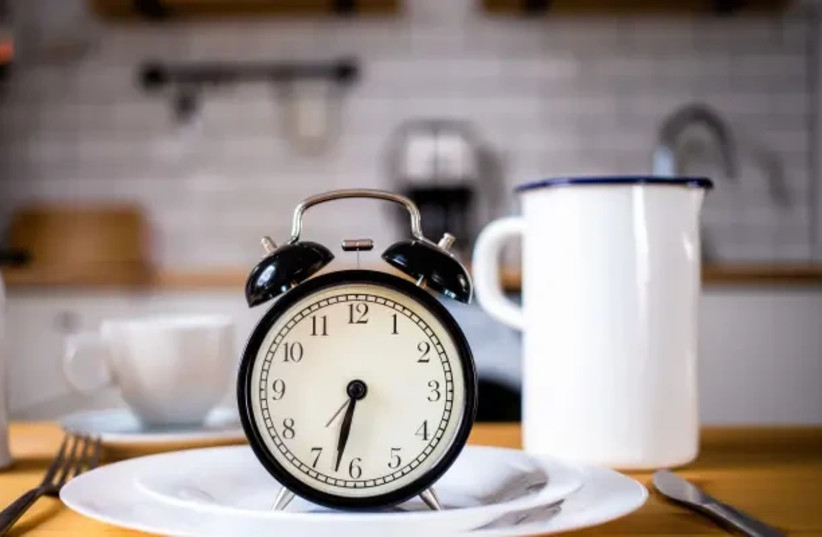
However, she reminds that it is important to recognize that the security reality makes it difficult to maintain a routine. "The need to be close to a protected space, the closure of social frameworks such as clubs and day centers, and the ongoing mental stress may disrupt the daily schedule," she explains. "Many say that over time it becomes difficult to distinguish between the days of the week, and this also affects important habits such as meal times, taking medication and sleep."
According to her, to cope with this challenge, it is recommended to build a simple and clear daily schedule. Even writing a daily schedule on paper or on a board can create order in the mind. The daily schedule can include fixed waking hours, meal times, light physical activity, time for rest and leisure activities.
She also notes that technology can help more than it seems. The phone or tablet is not only a source of news. They can be used for thinking games such as sudoku and crosswords, for learning a new language, for watching lectures or for practicing adapted physical activity from home.
"Routine is not only a sequence of actions. Routine is an anchor that helps us maintain independence, functioning and a sense of meaning – precisely in periods when the world around us feels less stable," concludes Dr. Zinn.
Meanwhile, ahead of Passover, Dr. Dana Florentin, a family medicine specialist at Clalit Health Services in the Dan–Petah Tikva district, recommends ways to maintain health while managing a Zoom-centered lifestyle.
Releasing the body: Set an alarm that rings every quarter hour and make sure every 15 minutes to get up from the chair. When you get up, find somewhere to walk to, such as to fill a glass of water, if there are stairs in your surroundings you can go up one floor and come down, those interested can also take the opportunity to do a few squats for toning, stretching exercises of various kinds, even a few light jumps to get the blood flowing.
During sitting it is recommended from time to time to do light stretching exercises such as: shoulder rotations, moving the legs, straightening, stretching and relaxing. It is possible to place an adjustable ergonomic footrest under the feet and move the legs during the meeting.

Nutrition: Make sure to keep a plate of peeled vegetable sticks available such as carrot, cucumber, cherry tomatoes and more. Cut fruit (in moderation due to sugar content).
Throw out all carbohydrates from the house, or at least place all junk food very far away, far and not within reach. This refers to snacks, cookies, baked goods, pizzas, hamburgers and other high-fat products.
Drinking: Make sure there is a jug of water available that can be drunk from from time to time to prevent dehydration. In summer days it is also possible to combine a jug of cold lemonade with mint that is refreshing and cooling (it is recommended to squeeze lemon into a jug of cold water without adding sugar and to avoid store-bought drinks that are high in sugar and not healthy) or a cold jug of infused fruits (without adding sugar) – both refreshing and with health nutritional benefits.
Eye breaks: The eyes get tired from prolonged viewing and short-range focusing, which can also cause dryness. Therefore the breaks every quarter hour are important here as well – during the break we turn our gaze away from the screen, and the focus becomes distant instead of near focus. This protects the eyes.
Physical activity after Zoom: After Zoom make sure to take a short walk, short physical activity of several exercises to maximize potential (it is recommended to perform aerobic activity for 40 minutes every day, or almost every day).

Meanwhile, ahead of Passover, Dr. Uri Bela, a pediatrician and director of the child health center of Clalit Health Services in Modi'in, recommends how to get through early Passover cleaning safely.
"The Israeli reality of the past months of war has forced all of us to stay for prolonged periods within the four walls of the home. The children are at home, the routine is shaken, and many of us are looking for avenues of activity and order within the chaos. This is how this year, the smell of bleach and preparations for Passover arrived earlier than usual," he says. "The home, which these days is our protected space, may turn into a dangerous trap for toddlers דווקא during cleaning," he warns and recommends ways to clean without harming children's health.
"Poisoning from cleaning materials is a common phenomenon among children due to inhalation of fumes, ingestion or contact with the eyes and skin. Therefore, store all cleaning materials, including laundry capsules (which look like candies), in a high and locked cabinet," he explains. "Never transfer cleaning materials into drink bottles or cups. For a toddler, a blue liquid in a transparent bottle is 'raspberry' or 'juice'. Ingestion of caustic substances may cause irreversible damage to the digestive system and respiratory tract."
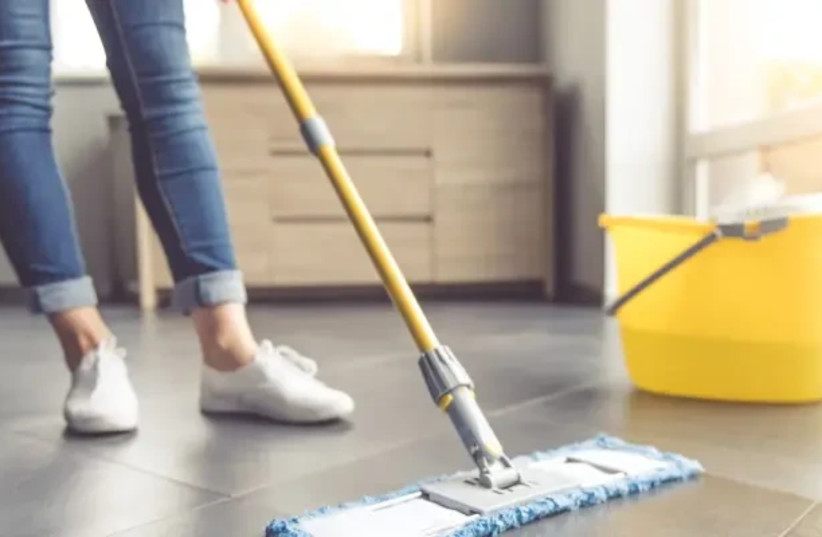
He further warns that a bucket with water and cleaning materials should not be left unattended even for a moment. "Toddlers can drown even in a few centimeters of water," he explains – "Mixing cleaning materials (such as bleach and limescale remover) creates toxic gases. Make sure windows are open and do not allow children to stay in the room while using harsh substances."
He further notes that thorough cleaning includes moving refrigerators, sofas and cabinets. Furniture that is not anchored to the wall or that has been moved from its place may fall on a curious toddler trying to climb it. Make sure you do not leave furniture in an unstable state, and keep children away from the work area.
He further warns that while scrubbing shutters and windows, we sometimes leave them open unattended, or place chairs and ladders near them. "A child sees a ladder as an invitation to climb. Never leave a chair or table near an open window, even if 'it is just for a moment'," he explains.

According to him, Passover cleaning includes moving heavy furniture. This is the time when small objects, button batteries or toy parts forgotten under the sofa are discovered. These pose an immediate choking hazard.
"One of the most common causes of injury ahead of the holiday is burns from hot liquids. Whether it is the use of steam devices for thorough cleaning or during the stages of 'koshering utensils', boiling water is an immediate danger. Make sure to keep children away from the kitchen during these actions. Also, keep sharp tools and knives that are on the counter out of children's reach," he recommends.
Dr. Bela further warns that in case of ingestion or exposure to a toxic substance, rinse with running water for several minutes and immediately seek medical attention with the product packaging.
In addition, in any suspicion of foreign body inhalation, immediately call a medical team and begin rescue actions. It is also possible to contact the national poison control center, which provides consultation for suspected poisoning from medications, cleaning materials and other substances.