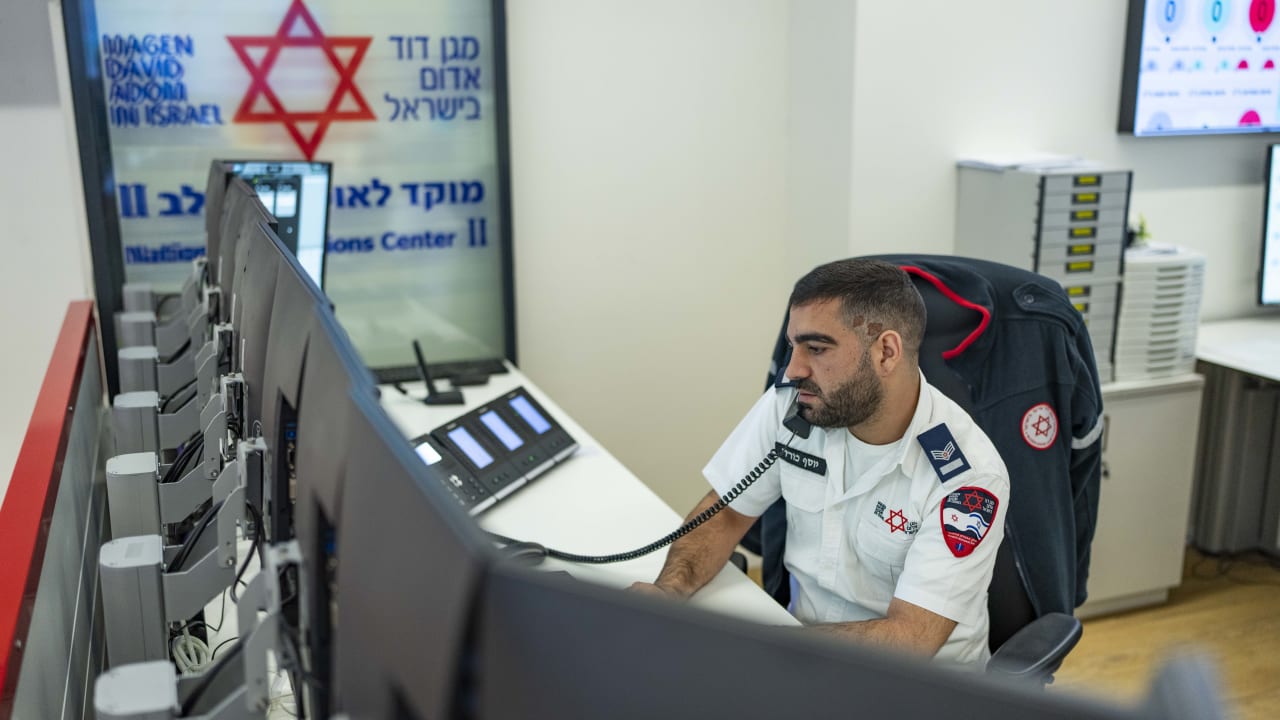
Magen David Adom announced the establishment of a new dedicated mental health emergency response unit on Monday, launching it in partnership with Israel's Health Ministry, following a successful pilot program.
The Israeli emergency service system said it is evaluating a phased expansion of the program with the Health Ministry, aiming to accelerate its rollout over the coming years. MDA said the new unit will help improve care for mental health-related emergencies.
MDA Deputy Director-General of Medicine and Blood Services, Dr. Raphael Strugo, described mental health emergencies as "some of the most complex and emotionally charged situations our teams face.”
“As the number of crises increases, MDA is committed to ensuring these individuals get the care they need," said Strugo. "By embedding mental health professionals directly into our emergency response, we’re giving our teams the tools to provide the highest quality care, even in the most difficult moments.”
Until now, such incidents were handled by standard medical teams, EMS dispatchers, and police, MDA said. Under the new system, mental health-related calls will be transferred to a specially trained mental health dispatcher for evaluation.

The dispatcher would have access to a mental health crisis intervention unit, which would work with other units to carefully manage the situation and determine further care.
The crisis intervention units will comprise a specialized paramedic and a mental health nurse. MDA noted that calls will still involve police where necessary, such as those involving violence or self-harm.
Israel facing rise in mental-health emergencies
Israel has faced a sharp rise in mental health-related emergencies over the past year, according to MDA, which reported a roughly 45% rise in calls from 2024 to 2025.
MDA noted that many such calls are linked to the war and the related psychological issues, including anxiety and post-traumatic stress.