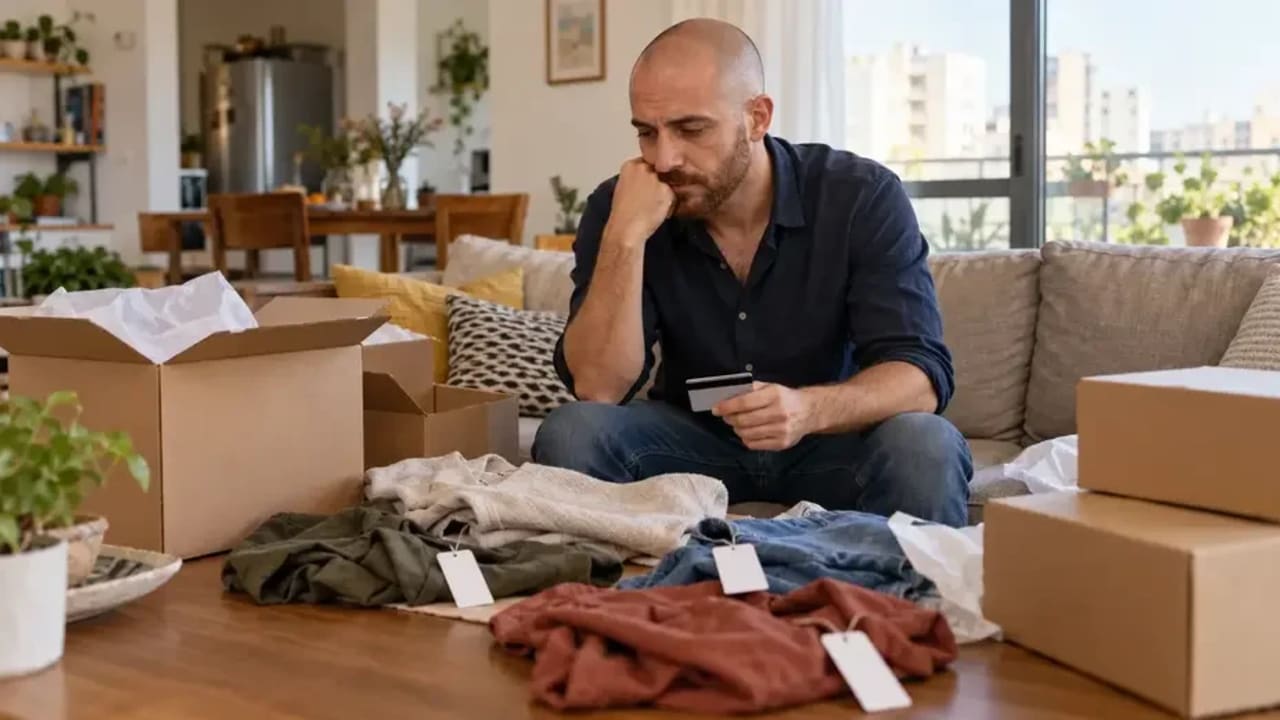
November is probably the month when it is easiest to explain to ourselves why we must buy. Black Friday, Cyber Monday, and a host of shopping days generate a sequence of sales, countdowns, and promises for a price that will not return. For many, this is simply a period when people buy a little more. For others, buying may gradually turn from something they want to do into something they feel they must do.
To understand when this happens, one must first ask what we get from the purchase. The reward is not limited to the product itself: The reward system in the brain also responds to anticipation, and therefore part of the enjoyment begins even before payment. The search, the comparison, finding the bargain, and the thought that in a moment we will have something new – all are part of the experience.
Buying sometimes also has an emotional role. It can provide excitement, distraction, or temporary relief from stress, boredom, loneliness, and frustration. In itself, this is not unusual. We all sometimes rely on various activities to improve our mood. The difficulty begins when buying repeatedly becomes the primary way to achieve that relief.
From excitement to regret – and back to purchase
This is how a cycle can form: We feel tension or discomfort and begin looking for a product. Anticipation already generates a thrill, buying provides relief, but the effect fades. Sometimes regret, guilt, or pressure over the expense follows. These are unpleasant emotions in themselves, and next time the temptation to buy in order to feel better arises again.
Therefore, it is incorrect to measure the problem only in money. A person can buy an expensive product without losing control, and another person can make dozens of small purchases and develop a pattern that harms them. The central questions are how much one can control the behavior, and how it affects life. Loss of control, distress, and continued buying despite negative consequences are central characteristics also described in the research literature on compulsive shopping.

When should a red light go on?
It is worth paying attention if we enter shopping sites almost automatically when we are stressed or bored; if it is hard for us to postpone a purchase even when it is clear we do not need it; and if products accumulate at home that remain in their packaging or are hardly used. Another sign is regret that returns after the purchase, without changing the next pattern.
A more significant light turns on when one begins to hide: Packages brought into the house secretly, deleted messages, amounts presented to a spouse as lower than they actually were, or payment methods that are not talked about at home. Repeated attempts to stop buying, which break again and again, also justify attention.
Sometimes the environment notices this first. We know how to explain to ourselves why every purchase was logical: There was a sale, it was time to replace it, the price was excellent. Family members see the sequence: Another package, another product that is not used, another argument about money, and another promise that this was the last purchase.
When the store is in the pocket all the time
Digital commerce greatly reduces the distance between the urge to purchase. There is no need to leave the house, look for parking, or even take out a credit card. Payment details are saved, and the product is a click away.
Simultaneously, notifications, personal recommendations, coupons, and countdowns arrive. During sale periods, the fear of missing out also joins: If I do not buy now, maybe I will miss the opportunity. In such a situation, it is easier to focus on the question of how much we "save", and less on whether we wanted or needed to buy at all.
One can start with a simple self-check: Am I capable of postponing the purchase by 24 or 48 hours? Does the desire remain equally strong? Do I want the product, or mainly the feeling that the purchase provides? Did I try to reduce and fail? And do the purchases harm my money, relationship, work, or sense of control?
Putting a margin between the urge and the action
Delaying non-essential purchases, canceling marketing notifications, and removing saved payment details can create a moment for pause and thought. One can also document what we felt before entering the site, and what we felt after the purchase. The goal is to identify the need that the purchase fulfills and find other ways to address it.
No single question diagnoses a disorder, and one day of excessive shopping on Black Friday does not make a person an addict. What should arouse attention is a recurring pattern of loss of control and continued buying despite the harm. When the pattern continues, is accompanied by hiding, or harms daily life, it is worth consulting a mental health professional. One does not need to wait for debts to grow or relationships at home to be harmed in order to ask for help.
The writer is the CEO of Shivtaya, a private rehabilitation center