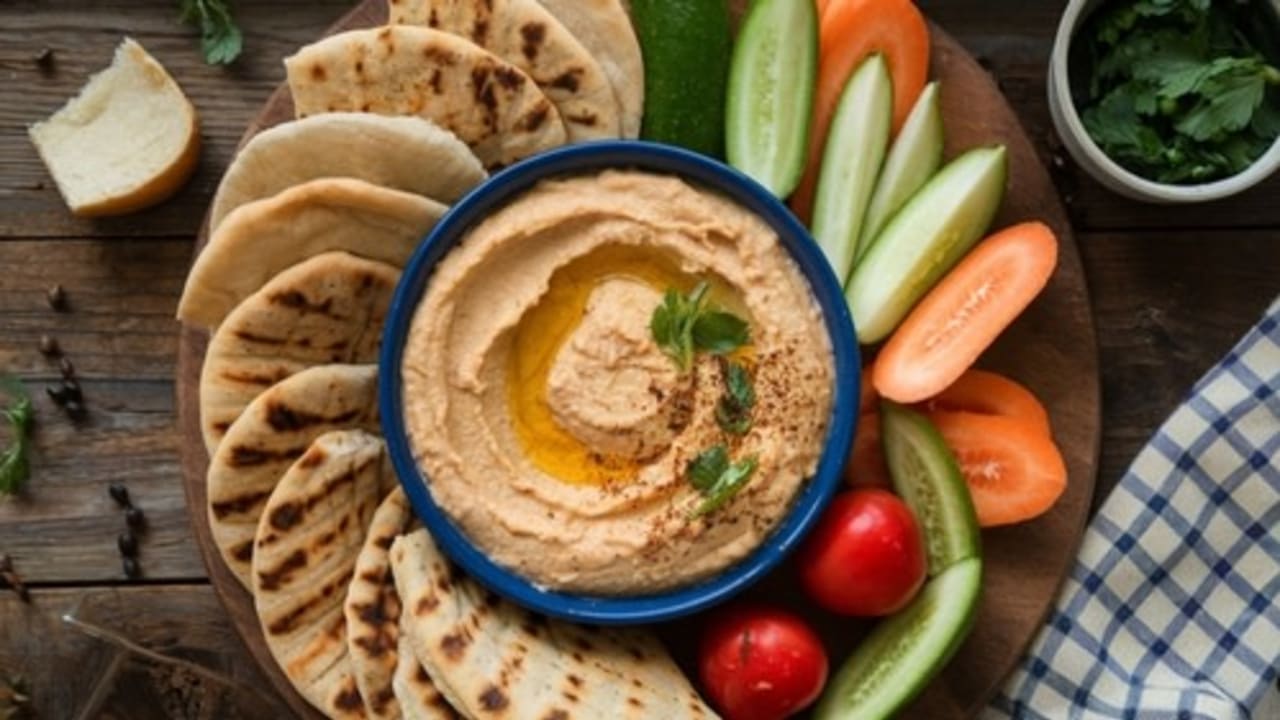
Hummus makes you happy? The surprising science behind the national legume. Israelis are known for their great love of hummus, but did you know that inside this tasty dish there is a "chemical laboratory" that simply knows how to calm our brain? It turns out that chickpeas are much more than just wiping up lunch.
What happens inside our body when we eat hummus?
1. The raw material for serotonin: It all begins with an amino acid called tryptophan. Our body does not know how to produce it on its own, and it is essential for the production of serotonin which is the neurotransmitter responsible for a feeling of calm, satiety and good mood. Chickpeas are rich in tryptophan, and they come with a special "bonus": The complex carbohydrates in hummus help tryptophan enter the brain much more easily and start working.
2. The winning team – vitamin B6 and magnesium: To turn tryptophan into serotonin, the brain needs help, and this is where vitamin B6 comes into the picture. Hummus is considered one of the richest plant sources of this vitamin. In addition, it is loaded with magnesium, a mineral that has earned the nickname "the relaxation mineral". Magnesium helps relax blood vessels and release substances in the brain that reduce anxiety and improve sleep quality.
3. Maintains stability (emotional): Do you know the "crash" of the need for something sweet in the afternoon? It usually happens because of a drop in blood sugar levels, which brings with it irritability and mental fog. Hummus has a very low "glycemic index", which means that the energy from it is released into the bloodstream slowly and steadily. This helps us maintain a high level of concentration and a stable mood for hours, without sharp ups and downs.
4. The mysterious connection between the gut and the brain: One of the most fascinating discoveries of recent years is the "gut–brain axis". Hummus is rich in prebiotic fibers that feed the good bacteria in our intestines. When these bacteria "celebrate" on the chickpea fibers, they produce substances that travel through the bloodstream to the brain, reduce inflammation and help us cope better with stress and depression.
5. A small tip for better sleep: If you have difficulty falling asleep, it may be worth considering a small portion of hummus (and not too heavy) in the evening. The combination of tryptophan, vitamins and natural melatonin found in hummus can help the body enter a state of relaxation toward the night. A cup of cooked chickpeas with salt, lemon, olive oil and black pepper – this is a snack that is recommended at any hour, also at night, and also during a diet for weight loss.
6. What happens during soaking before cooking and how to soak correctly? Soaking is much more than just a step to shorten the cooking time. It changes the chemical composition of the hummus. When the chickpeas are in the water, they swell up to three times their original size and begin a process called enzymatic activation.
The water awakens an enzyme called phytase, whose role is to break down phytic acid, which is a component called an "anti-nutrient" because it sometimes binds important minerals such as magnesium, zinc and iron and prevents them from being absorbed in the body. Breaking down phytic acid makes these minerals available to us and contributes directly to the health of the brain and the nervous system.

Another thing: Soaking helps remove oligosaccharides, which are actually complex sugars that the body has difficulty digesting and they are the main culprits in the feeling of bloating and gas after eating legumes.
If you add a pinch of baking soda to the water, you will create an alkaline environment that breaks down the pectin in the cell walls of the chickpea, which softens the peel perfectly and allows you to reach the creamy and smooth texture of real hummus. The final cooking completes the work by improving protein resistance and turning it easy to digest, so that all this goodness is absorbed in the body with maximum efficiency.