
In the summer we talk a lot about sunscreen, hydration, moisture, dryness, sun, and air conditioners, but it is important to raise awareness of one of the most important vitamins in this context, namely vitamin E, a fat–soluble antioxidant whose primary role is to protect cell membranes from oxidative damage.
It is important to state right from the start: Vitamin E is not a substitute for sunscreen, a hat, or avoiding excessive sun exposure. But it is indeed part of the body's natural defense system.
Our skin is constantly exposed to factors that increase oxidative stress, such as solar radiation, air pollution, dryness, smoking, stress, and also prolonged stays in air-conditioned environments.
Vitamin E, along with other antioxidants such as vitamin C, carotenoids, and polyphenols, participates in protecting cells against free radicals.
Why Is Vitamin E Important for the Skin?
Vitamin E is one of the primary antioxidants in the body's lipid environment.
Since cell membranes are built, among other things, from fats, vitamin E helps protect them from oxidation. In the skin, this role is particularly important, because the skin is the organ that is in direct contact with the external environment.
A review published in the Indian Dermatology Online Journal describes vitamin E as an antioxidant linked to protection against radiation damage through the neutralization of free radicals.
A review published in Nutrients also noted that one of the primary physiological roles of vitamin E in the epidermis is the antioxidant defenses of the skin and protection against environmental damage.
Despite this, it is important not to overstate promises: There is no study showing that eating sunflower seeds "rejuvenates the face" or erases wrinkles. The responsible conclusion is different: Adequate consumption of vitamin E from food contributes to the proper functioning of the skin's defense systems, and this is part of a good diet for skin health in general.
How Much Vitamin E Is Needed per Day?
The recommended daily amount for adults is 15 mg per day of alpha–tocopherol, the primary form of vitamin E in the body.
Vitamin E is a fat–soluble antioxidant, and its prominent sources in the diet are vegetable oils, nuts, seeds, and green vegetables.
Usually there is no need for a vitamin E supplement, unless there is an absorption problem or a specific medical recommendation. In fact, one must be cautious with high–dose supplements, especially in people taking blood–thinning medications or who have certain medical conditions. Therefore, the best recommendation for most people is simple: Get vitamin E from food.
First Place: Sunflower Seeds
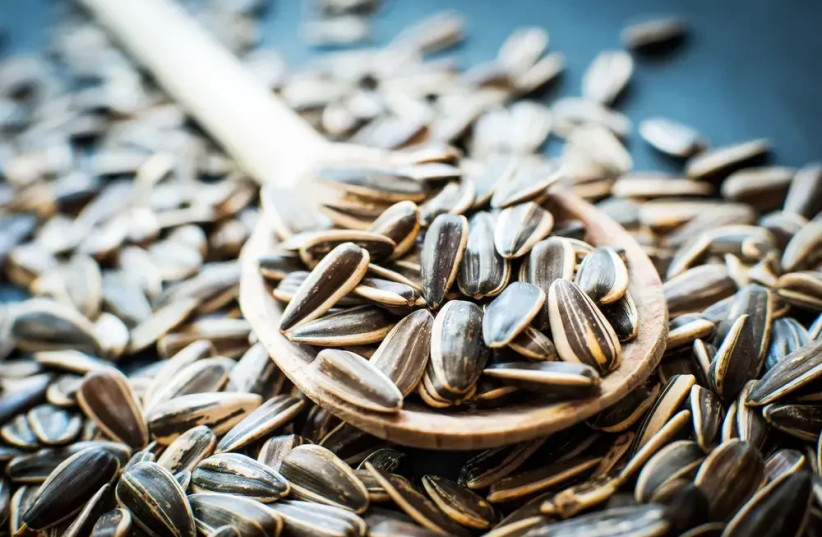
Sunflower seeds are one of the most convenient and cost–effective sources of vitamin E. In 20 grams of shelled sunflower seeds there are approximately 5 mg of vitamin E, which means about a third of the recommended daily amount. In terms of calories, this is about 115–120 calories, depending on the product and the degree of roasting.
It is important to pay attention to a practical point: If weighing seeds with the shell, not all of the weight is consumed. About 40 grams of seeds with shells yield about 20 grams of shelled seeds for eating. Therefore, anyone calculating calories or nutritional values should refer to the part actually eaten, and not to the total weight with the shell.
The advantage of sunflower seeds is not only vitamin E. They also contain unsaturated fat, magnesium, a little protein, and fiber.
On the other hand, it is very easy to overindulge in them, especially in front of the television or when eating directly from the bag. Therefore, my recommendation is to measure out in advance an amount that is suitable as a snack: About 20 grams shelled or about 40 grams with the shell.
Second Place: Almonds
Almonds are also an excellent source of vitamin E. In 20 grams of almonds, roughly 15 almonds, there are around 5 mg of vitamin E, which means here too about a third of the recommended daily amount. In terms of calories, this amount contains approximately 115–120 calories.
The combination of good fat, a little protein, and fiber makes them more satiating than dry sweet foods like cookies or snacks.

Wheat Germ Oil – The Richest, Less Common
The most concentrated source of vitamin E. In one tablespoon of wheat germ oil there can be an amount of about 20 mg of vitamin E, which means more than the recommended daily amount for an adult. The NIH notes wheat germ oil as one of the richest sources of vitamin E in the diet.
But there is an important caveat here: This is an oil, and therefore it is also very concentrated in calories. A tablespoon of oil contains approximately 120 calories, no matter if it is olive oil, sunflower oil, or wheat germ oil. In addition, it is not advisable to use wheat germ oil for frying or intense heating. It is preferable to add a small amount of it to a cold dish, for example to a salad, yogurt, spread, or a dish that has already cooled down.
Why Is Absorption from These Foods Good?
Vitamin E is a fat–soluble vitamin. The meaning is that it is absorbed better when it arrives together with fat in food. This is precisely the advantage of sunflower seeds, almonds, and wheat germ oil: Vitamin E is found in them naturally together with fat, and therefore its absorption is more efficient.
This is also the reason that vitamin E from green vegetables, for example spinach, Swiss chard, or broccoli, can be absorbed better when adding a little olive oil, tahini, avocado, nuts, or seeds to the meal. Not a lot of fat is needed, but it is advisable not to always eat the vegetables completely "dry" if one wishes to derive more fat–soluble vitamins from them.
Additional Sources of Vitamin E
Anyone who wants to diversify can find vitamin E also in hazelnuts, peanuts, natural peanut butter, spinach, Swiss chard, broccoli, kiwi, mango, and vegetable oils such as cold–pressed sunflower oil.
Meat, by contrast, is not a significant source of vitamin E. Therefore, among those whose menu is based mainly on bread, cheeses, eggs, chicken, or meat, without nuts, seeds, quality oils, and vegetables, vitamin E consumption might be relatively low.
It is important to mention again that vitamin E does not replace sunscreen and does not guarantee youthful skin, but it is definitely an important part of a diet that supports skin health and the body's defense systems.