“There is an element of luck, karma, miracle, whatever you want to call it,” says Prof. Shlomi Codish, director-general at Beersheba’s Soroka Medical Center.
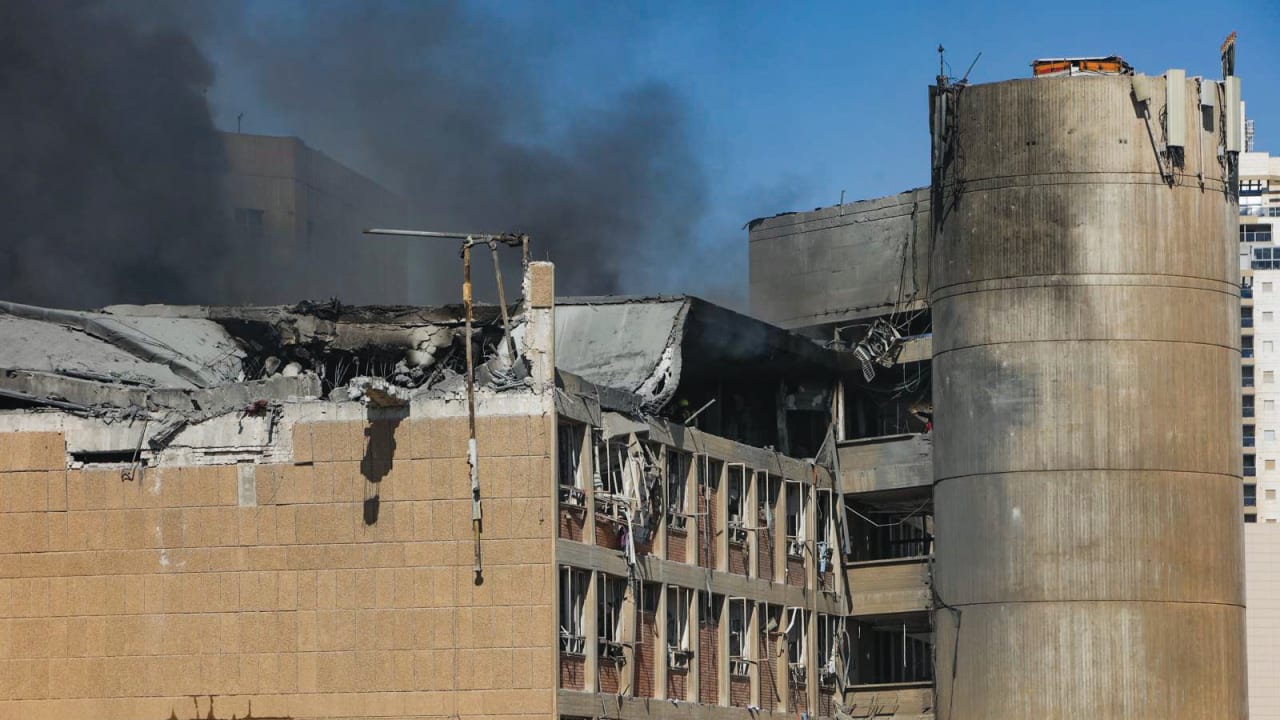
He’s sitting in his office overlooking the three-helicopter landing pad and a building with two of the top floors smashed by a missile fired by Iran during the June war.
On his windowsill is a souvenir chunk of shrapnel that remained from the windows that were blown out by the shock wave of the blast. Today, he’s looking out of shiny new windows
The Center in Beersheba is a huge hospital complex. Founded in 1959, it serves the vast and diverse Negev region with its population currently pushing over one million. When first built, the Egyptian border was only 30 km. away. Now, that territory is Gaza. With close to 1,200 beds, the facility is formidable, covering around 29 hectares (70 acres) with more than 200,000 sq.m. of constructed space.
It is a tertiary care teaching hospital affiliated with Ben-Gurion University’s Faculty of Health Sciences, and it is acclaimed for medical research and innovation. While buildings like pediatrics, oncology, and maternity are relatively new, as in other Israeli hospitals, several of its buildings are 70 years old and have never been upgraded to accommodate the ongoing security situation.

“Our catchment area runs all the way to Eilat,” Codish explains. “Although some areas are very sparsely populated, between Yeroham and Eilat, there are probably around 30,000 citizens plus another 50,000 foreign agricultural workers.
“Arad is 40 minutes away. Dimona is 40 minutes away. If you go west, you’ll make it to Netivot. If you draw a circle half an hour around us, you still have at least 10,000 people.”
Oct. 7 – Mass Casualty Event at Soroka
From one war to the next, Soroka has learned to work smarter and create a level of response to meet the needs of their patients.
“We can never close the Emergency Department or divert patients,” explains Codish. “The entire Negev relies on us. And we have maintained a level of readiness from 1967 on, when we were inundated with patients from the Egyptian front.
“Oct. 7 was the largest mass casualty event in [Israel’s] history,” he continues. “Barzilai in Ashkelon was closer but it’s a smaller hospital. On Oct. 7, we treated 674 patients, which exceeded our largest drill – in which we prepared to treat 300. There simply were no options. We treated them and then sent them elsewhere.
“Since Oct. 7, we have treated 4,000 patients from the war alone,” he adds. “We have had over 300 helicopter landings in a year and a half.”
The 12-Day War – Preparing for the Worst
The logistics of trying to protect patients were formidable. Hospital preparations began on June 13 at 3:30 a.m., immediately after Israel announced the attack on Iran. “It was the most elaborate alarm clock in the history of the State of Israel,” quips Codish.
By 4:15 a.m., Soroka Medical Center personnel were awake, had driven through the sirens, and mobilized at the hospital.
“Within probably five or six hours, we had already moved a couple of hundred patients from non-sheltered areas into sheltered areas.”
Soroka was not new to rocket attacks, having sustained major barrages from Gaza over the years. Although they had “protected spaces,” many of the buildings were simply not built to withstand impacts.
“As a medical center treating emergencies for many years, I think we made reasonably good use of the week we had before the strike.”
Based on what they had learned from Grad rockets from Gaza, Codish decided to leave the newer internal medicine building fully occupied because it has shelters within the building.
“Only about 20% of our beds are fully sheltered but there are sheltered areas (in specified rooms and hallways). If a patient is mobile, they just need to be near a sheltered area, which is about 50% to 60% of our beds. But for the bedridden, even if the shelter is right outside your door, you’re not going to make it in time unless someone can roll you out.”
Building by building, the staff sent home patients that they could, but the hospital was reluctant to send patients to elderly care facilities, which might have been even less secure than the hospital. They were still at 60% capacity. They shifted patients to more secure locations, including an underground bomb shelter built in the 1970s when the threat was from Egyptian airplanes flying overhead.
“We have room for 60 patients there,” explains Codish. “We had been using them as warehouses because putting people into a large underground hall with no showers didn’t seem right. On the one hand, it’s unconscionable to have elderly patients just 40 cm. from one another in a basement. But at least they were protected.”

Disaster Scenarios
On June 18, just one day before the Iranian ballistic missile packed with over 400 kg. of explosives slammed into the Northern Surgical Building that, in addition to surgical theaters, housed ENT, urology, and opthalmology, Codish decided to call a staff meeting to explore possible disaster scenarios along with the Beersheba search and rescue teams and Home Front Command. Together, they reviewed and refreshed earthquake protocols.
“We didn’t want to tell our team, ‘This is what we’ll do if a rocket hits,’ because it’s very scary,” explains Codish in an interview with the Magazine, “but we refreshed what to do if an earthquake happens because the basic immediate response is the same.
“The very next day, when the missile hit, the search and rescue team knew where our situation room was, they knew what we expected from them, and they knew who to liaise with, which are items that typically can waste an hour of time when they get started.
“On June 13, we closed eight operating theaters because they’re unprotected,” says Codish. “We decided to evacuate the top story of that building. We evacuated the labs. Even though they had ‘protected corridors,’ we emptied the fifth floor simply because we had a little more protection in nearby buildings. It was a good decision because in that building, the protected corridors wouldn’t have done much. We probably had between 1,500 and 2,000 people in the hospital (patients and staff) that day when the rocket hit.
“The rocket hit at 7:14 a.m. Outpatient clinics usually open at 8 but imagine if, God forbid, we had a mass casualty incident on our hands. Or if a second rocket had hit another building, with half of my operating rooms closed.”
Codish says there is a certain element of randomness to this. Why did he evacuate that floor? Why on that day? The day before that, he said they didn’t have anywhere to move them to.
“We even went overboard, and we moved urology, neurology, and ear, nose, and throat, not out of cautiousness, just because we had a better room, so we figured let’s move them anyway.
“While I sleep better knowing that we did that, we really can’t relax. This is why Soroka needs to be fortified before other medical centers. For years, we’ve been yelling that we need to fortify our operating theaters. We have a responsibility for the area, we are alone, and we have so much work to do in the healthcare system.”
On Thursday, June 19, Codish came to work at 6:45 a.m.
“I love that hour. You can answer emails quietly. No one bugs you.”
At 7 a.m., the initial push alert was sounded. Since the administrative building had no shelter, he and others took a four-minute walk to the nearest bomb shelter.
At 7:11, the air-raid sirens began.
“For us, it’s just another air-raid siren, right? Amongst the many – Yeah... Houthis, Iranians, whatever. Bring it on,” he thought.
At 7:13 and 50 seconds, the bomb shelter, made of 50-cm. of concrete, rocked.
“It literally shook,” he recalled. “I’m now sitting there, and I know the hospital’s been affected. There was no doubt that this amount of level, noise, and impact meant something really bad had just happened, and it’s either us or very nearby, but it doesn’t matter. It’s the same, right? It’s the same impact.”
Knowing he shouldn’t leave the shelter, he called the nursing staff into a corner to confer with them.
“Because one minute in, as far as I know, at this point in time, I’m about to get news that there are dozens of corpses around the medical center,” he said.
As the nurses checked in, he began to get pictures of the mushroom cloud above the hospital. After secondary explosions and chemical/radioactive emissions were ruled out, all the planning paid off. The team met in the designated situation room to assess the damage. Search and rescue sent in their engineer. There was a lot of ground to cover to check all the facilities on the campus.
There was a fire in one of the buildings. Some people were trapped when doors and windows blew out or warped. But miraculously, there were only around 40 light injuries.
“No one needed hospitalization,” Codish says. “Wow. That’s impressive. But our next step was to assess whether all our buildings were safe so we could prepare for the possibility of another incident. I was wondering, what happens if another missile hits somewhere in Beersheba? Can we treat people or not?
“Miraculously, the Emergency Department was full – not of victims, but of doctors, nurses, medics, and staff, all wanting to help. And as you know, a rocket hit 500 meters away the very next morning.”

Was Soroka Medical Center a Deliberate Target?
According to Prof. Codish, the strike on Soroka was no accident, and he is apparently not alone. Military experts who would not be named agreed say Soroka was a deliberate target. The act of targeting a hospital is a war crime.
Standing in front of a map of the hospital campus with all its buildings, Codish points out that the missile hit the “exact epicenter of the medical center.”
“It wasn’t something that was aimed at a nearby target and missed a bit,” Codish asserts, “I think it’s an attempt to cripple an anchor institute in southern Israel that everyone relies on and affect as many people as possible. Why [the] Weizmann [Institute of Science in Rehovot]? You’re affecting Israeli science. Why [the] Bazan [oil refinery in Haifa]? You’re affecting Israeli energy. Why Soroka? You’re affecting Israelis’ health.”
In fact, Article 8 of the Rome Statute defines an extensive list of war crimes the International Criminal Court in The Hague has jurisdiction over, including “intentionally directing attacks against buildings dedicated to religion, education, art, science or charitable purposes, historic monuments, hospitals and places where the sick and wounded are collected,” making an exception of targets that are “military objectives.”
Shortly after the attack, Iran’s state news agency IRNA claimed the primary target was an army intelligence and command center in a tech park located 2.5 km. away from the hospital. To further justify the strike, Iranian outlets claimed that they were aiming at “a military medical facility for soldiers at Soroka Military Hospital,” and released an AI-produced video displaying tanks in an underground military storage under the hospital, which in reality does not exist.
But Codish says Iran had a more nefarious strategic reason.
“When I present Soroka to people from abroad or people who don’t know us, my opening slide is, ‘Soroka: Israel’s most strategic hospital.’ There’s a whole explanation for why I think we’re so strategic. The Iranians are not stupid.
“You don’t get any more central than this. This was a bullseye. It was a guided missile attack. I don’t think there is any doubt,” he reiterates, pointing out that although missiles from Gaza have hit nearby in the past, they landed randomly. “This missile seemed to know exactly where it was going.
“They realized, out of the whole menu of Israeli medical centers, ‘Let’s target Soroka.’ And then let’s follow it with a barrage of more rockets into Beersheba. But we’re stronger than that. An Iranian missile didn’t cripple us. We were ready the next day to care for anyone who needed us. Somehow, we had a fully, fully operational medical center.”
The Long Road to Reconstruction
“We’re looking at probably over $400 million to do what needs to be done,” sums up Codish. “We should not have to face a situation such as we face now, of a year of closed services. We’re working like crazy to get back, but there’s some facilities that will take a year to rebuild – like the operating theaters.”
In the week after the blast, the shafts of the elevators all blew out, and a great many are still down. A benefit to buildings built in the 1950s is that some have ramps, which helps tremendously for transporting patients, although Codish said pushing patients uphill on stretchers is giving his staff an unanticipated workout.
“Pushing a patient up three flights of stairs on a ramp is not simple,” he explains.
He estimates that the renovation of the Internal Medicine Department will take from six to nine months, building two new floors for surgery, about three years, and the creation of the new Tekuma building to provide sheltered care for the next conflict may take six years. Seven wards lost their homes, including urology, ENT, ophthalmology, rehabilitation, dermatology, and the internal medicine intensive care unit. Replacing destroyed equipment beyond what property tax will cover is expected to cost over $400 million.
As for the Northern Surgical Building, which suffered the direct hit, Codish says it is only useful for offices. “I never want to go back into that building. It has no safe rooms. It was built in the ’50s. It doesn’t have a bomb shelter. It has no protected spaces. I don’t want to put patients in a building that doesn’t have shelters.”
Following the attack on Soroka, the Health Ministry says it is working closely with the hospital’s management and Clalit Health Services to restore full functionality as quickly as possible. At the same time, the ministry is promoting processes to secure resources and budgets to ensure the continued provision of medical services at the highest level for southern residents.
In addition, in coordination with the Home Front Command, the Health Ministry says it is continuously working to address gaps in hospital protection.
“Since the outbreak of Operation Iron Swords, thousands of hospitalization beds have been added in protected areas, alongside essential units to ensure hospitals’ operational continuity, including laboratories, imaging institutes, and dialysis units,” says a ministry spokesperson. “Additionally, the ministry has strengthened the resilience of critical infrastructure and backup systems... [and] preparedness levels have been further enhanced. Concurrently, the ministry is advancing a long-term strategic plan to systematically and thoroughly strengthen the healthcare system’s essential infrastructure.”
Thankfully, Soroka Medical Center is a resilient entity.
“Buildings with 60% of our beds were affected in a major way. We are still doing a kind of triage on the overall structure,” Codish says.
“We’ve made makeshift areas, some of them really weird, like the only dermato-geriatrics ward or ophthalmology-urology ward in the world,” he adds. “We had to combine space but we’re at 80% capacity.
“This will take five to six years to build this building once money is provided. Providing healthcare is one of the basic moral obligations a country has to its citizens. This is not about me, it’s not about this hospital. It’s about a million people whose lives depend on a medical center, who are now receiving care in basements and will be receiving care in basements for months.
“We can go through all of this together as long as we see a crane working there and the Israeli government says, ‘We see you. We know what you’re going through.’ Absolutely. We need the government to find the NIS 960m. it will take. They can’t just send us to our great friends of Israel who are willing to help. Everything we moved that week needs to not move next time. Because there’s an element of randomness to moving people around that’s incomplete and dangerous.
“And we can’t rely on miracles.”
It takes a team to perform a search and rescue
As the ceasefire with Iran made the headlines in Israel, an Iranian ballistic missile hit a seven-story building in Beersheba. What happened next was only possible because of the confluence of a team of professionals and protocols that gathered and processed a voluminous amount of data in a very short amount of time.
“These were not the ‘biggest’ of our global rescue missions,” explained Professor F, the chief data officer of the three search and rescue units, when he isn’t teaching classes at Technion.
“Our volunteer efforts during the earthquake in Turkey and the Surfside building collapse taught us how to improve. All our knowledge of former operations helped a great deal during these last few weeks.”
Each rescue team includes four professionals: an engineer, an intelligence officer, a rescue doctor, and a population affairs officer. Their skill sets combine to provide a quick overview of the rescue task at hand.
“The first half-hour is critical for gathering information,” explained Amir B, a rescue engineer who collects and disseminates engineering advice on the damaged building.
“We get notification from the building commission, building plans, number of floors, how many housing units it contains, the layout of the apartments, construction information, and more. Security of the rescuers – the soldiers who will go in – is our first order of business.
“I check to see that the floor is solid, the ceilings won’t fall in on them, and we assess who is actually in the building and who might be trapped and where.”
Based on the information gathered, Amir creates a visual analysis – a hand-made drawing of the property – to assess where people might be trapped and whether it is safe to go in for the rescue.
But before going in, interviews are performed with neighbors and survivors to get even more information. In one interview, the team learned that in one apartment they needed to enter, there was a lot of furniture cluttering the entrance.
Based on the neighbor’s input, they determined that it would be too complicated to enter that way, instead deciding to break the wall. The information led to the rescue of several people in the apartment.
The rescue doctor, Dr. M, a urologist in his everyday practice, is a volunteer in the search and rescue brigade. His job is to assess and triage all patients, beginning with the ones visible, and to find ways to monitor those who might be trapped in the rubble.
“If there are many injured, I call for additional medical backup,” he explained. “We determine when and how to save people who are trapped. First we focus on what we see immediately.”
Sadly, he said, there are times when the building is so unstable and the people inside are so buried and injured that the determination has to be made to abandon the rescue, and sometimes urgent immediate amputations are required to release people trapped in unstable structures.

Israeli Technology Saving Lives
Professor F helps evaluate which tech tools are needed to safely complete a rescue. A professor at a leading Israeli university by day, F is in the reserves.
“We collect available information from all around the world on each structure,” he explained, including “the geographical information system.”
“We build 3D pictures of the structure before and after the hit. We arrange to send thermal drones to the site to help the doctor understand how many are likely affected so he can arrange for medical care. In some cases, when people are buried in a structure, they may require respiratory assistance.”
They use 360-degree cameras that can go into the broken buildings and allow them to look at everything in the vicinity, he added.
One of the drone companies that sprang into action as Iranian missiles were hitting Israeli buildings is Robotican, manufacturers of the Rooster. These drones not only hover and fly but also roll along debris-filled floors with cameras and thermal imagers using mesh communications to help the Home Front Command team locate the missing.
Throughout the recent war, Robotican had teams dispatched in Haifa, Beersheba, and Tel Aviv, which helped search and rescue teams that didn’t have their own drone pilots and provided Rooster units to the more experienced reserve teams that did.
In addition to thermal sensors, the Roosters carried gas sensors to ensure that there wasn’t a gas leak before rescue teams got too close.
“Within three minutes, the Rooster can scan an entire floor of a building,” explained Mandy Rosenzweig, vice president of Robotican. “A seven-story building can be completely scanned to locate people in about 20 minutes.”
Sometimes the Rooster arrived before the rescue teams, said Rosenzweig, so that when the teams got there, the drones were able to give them a complete visual picture of the structure and whether or not people were trapped inside.
In fact, immediately after the Iranian missile attack on Soroka, while the building was still on fire, Robotican, whose headquarters are just 15 minutes away, showed up on the scene with several Rooster units.
The drone flew to the top floors, finding accessible windows, entered, and rolled floor by floor, ensuring that no one was trapped anywhere in the building.
In addition to thermal drones, the team uses cellphone triangulation, which pinpoints all the phones in the building. Most of the time the phones are near the owners, although sometimes the blast can blow phones to a different part of the structure.
Professor F said this happened in one of the Iranian missile rescues. The phones had been found, and the victims were found nearby, but not alive.
Xtend, an AI-driven drone company with autonomous capabilities, is headquartered in Tel Aviv with global subsidiaries. Their drones, designed for various missions, excel in indoor, subterranean, or outdoor environments. Last week, they scoured Bat Yam to locate missing individuals.
Gal Nir, Xtend’s Chief Commercial Officer, noted the company’s long-standing involvement in voluntary search and rescue missions, including life-saving efforts during the February 2023 Turkey earthquake. Currently, Xtend has two teams and multiple systems on standby for nationwide incidents.
For building collapses, Xtend deploys two indoor drone types. “The first is a massive drone that scans building by building and gets into wide spaces like salons and corridors,” Nir explained.
“Then, a smaller drone, just 35 by 45 centimeters, that has the ability to fly in the dark and into small spaces under beds and into crawl spaces. It also can skid across the floors like a small RC car.”
Originally developed for navigating terror tunnels, these drones are highly effective in search and rescues. In one case, a small drone entered a home through a balcony opening to search for a woman presumed trapped in her safe room.
The family learned she wasn’t in the damaged house and later found her recovering in a hospital after being rescued by first responders.
“We are doing this for our brothers and sisters,” Nir said. “This is not about selling or training. We are proud to have developed this technology and to have personnel who can help. Every single life we save is like saving the whole world.”
Because thermal sensors cannot penetrate concrete, the team also uses ground-penetrating radar (GPR), which can pinpoint living people under rubble. Unfortunately, it does not work as well at locating dead bodies.
According to Professor F, there is even laser-based distance measuring technology that can detect even the very faintest rise and fall of a chest wall breathing under debris and ultra-high frequency (UHF) detection to help find people trapped under cement ceilings or walls.
With all the technology, according to Hadas, the Population Affairs Officer, the single most important factor they utilized in the recent search and rescues was “word of mouth.”
“To understand who we are looking for and where they are most likely to be found, we need to talk to people who were in the structure,” she explained. “Someone who is looking for a loved one or who is concerned is going to give us the best information on how to find them.”
Hadas, an attorney when she isn’t serving in the reserves, is responsible for managing interactions with civilians in disaster zones and coordinating all civil-related aspects of the emergency response. She recalled one of the recent missile attacks where they needed to clear the building quickly and efficiently because the structure was going to collapse.
They worked to evacuate the building, largely using the information provided by the population officer, who was coordinating with local authorities, emergency medical services, and welfare agencies to provide updates on the status of the people involved.
They even joined WhatsApp groups to connect with all the residents of each building. Hadas is also the point person who aids civilians in the field, referring them to assistance centers, hotlines, and evacuation and reception facilities, and providing initial psychological support.
Keeping track of who is in each building is a formidable task, said Hadas.
“We had a few abandoned buildings that were inhabited by homeless [people], but we interviewed local social workers and NGOs that work with the population to find everyone who might have been present.”
“In a 10-story partial collapse or in the case of a higher building where just a few floors got hit, even in the middle of the building – we had to evacuate people above and below the collapsed floors. Rescuers went up and down and got everyone out.”
Hadas asserted that people who followed the rules and listened to the Home Front Command helped the rescue teams save lives. Even after buildings got hit, she said, there was tremendous cooperation from the people in the building.
“When all is said and done, the systems and certification process developed by Israel to perform search and rescue are the very systems that were adopted by the United Nations,” added Professor F.
Whether the UN will advertise that factoid remains to be seen.
The Soroka rescue, as described by one of the rescuers
Captain Netanel, platoon commander of the rescue team that arrived at Soroka Medical Center just four minutes after the Northern Surgical Building was hit by an Iranian missile, showed up with his team of less than a dozen soldiers. The rest joined him later.
He has been performing search and rescues for 13 years, and when not in the reserves, he is a social worker in a communication kindergarten for children on the autism spectrum. Netanel had deliberately stationed his team in Beersheba “just in case” and was involved in the rescue operation at Soroka and the one the next day at an apartment house.
“The first thing I saw at Soroka was a massive fire in one of the buildings,” he recounted. “We met with the police and firefighters. Many of the buildings adjacent to the one on fire had collateral damage. Often in search and rescue, collateral damage is worse than the direct hit itself. In this case, the building hit had been evacuated, but there were surgeries going on in the adjacent building.
“There was lots of panic, shock, and yelling, shards of glass and debris all over, and everyone – firefighters – trying to work together. We were trying to determine the safest route into the building.
“We scanned each floor and every room of the buildings, breaking all the doors [which had jammed shut during the blast] open. We had trained with special equipment. What we learned, [is that] most of the work involves figuring out how to evacuate people.
“In the building next door on one of the surgical floors, there were 120 staff members and patients in the process of surgery. We had to evacuate because the structure wasn’t safe and the roof was burning. We were afraid if the building next door would have collapsed, it could take the second building with it. The head of the surgical unit said there was no way to evacuate patients mid-surgery.
“Even with lots of planning we were dealing with medical staff who had to be on standby as more rockets were hitting Beersheba. We evacuated the patients as soon as they were stitched up from their surgeries and stood by to make sure that other patients still in surgery would evacuate immediately afterwards.
“One thing that impressed me a lot is that the doctors were very, very devoted to their patients. They made it clear from moment one that there is no way they would leave their patients. We evacuated by stairs. Anyone who could walk, we helped. Others were taken out on stretchers down the stairs.
“Our own medics assisted the hospital staff. As the medical professionals went off shift, some asked if they could retrieve their equipment from their lockers. Unfortunately, we had to inform them that the rooms where they stashed their equipment no longer existed.
“We had other challenges. We had indications that there was radioactivity registering on Geiger counters, and there were oxygen tanks in rooms in the burning building. We have special teams that help us deal with chemical and radioactive agents.
“We carefully made our way upstairs to figure out how to handle the radioactivity and had an engineer come in and cut off all chemicals and remove oxygen from rooms that could come in contact with the fire.
“Even the roof – the whole top floor was on fire and in danger of collapsing. We found a way to work around the radioactivity leak with the special unit and the fire department.”
The captain affirms: “It was truly an act of God that there were no serious injuries at Soroka. We participated in the rescue the next day and saw the ambulances coming from Soroka. I knew the patients would be well taken care of.”