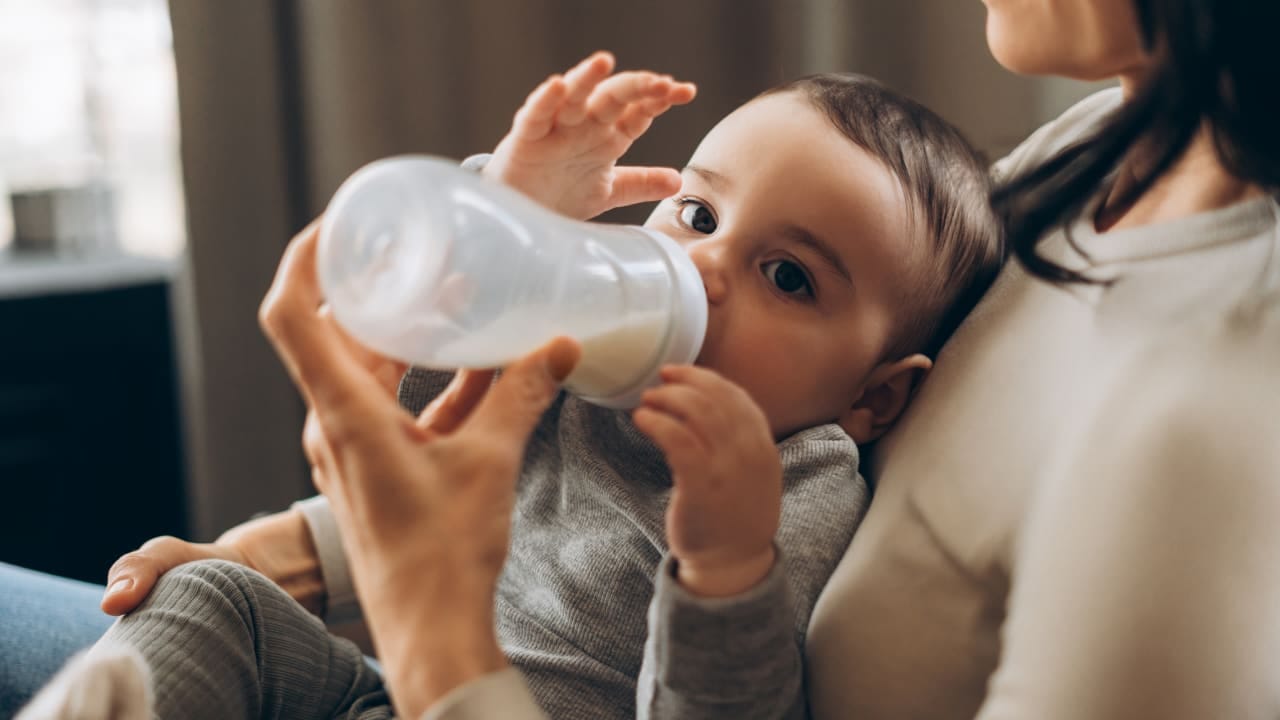
The Social Bank for Baby Food noted a sharp increase in requests for baby food during 2025, the organization reported on Monday.
The data showed a 25% increase in baby food requests, along with a 7% price rise in infant formula over the past year, on top of a cumulative 30% price increase since 2020. This, along with the ongoing security situation, which has affected Israel since the outbreak of the Israel-Hamas War, has led to a significant worsening of many families' economic conditions.
Further, data from the National Insurance Institute found that 2.8 million Israelis currently live with food insecurity, including over a million children. One in seven babies goes to sleep hungry, the data showed.
These figures illustrate a widespread phenomenon that transcends social boundaries and impacts Israeli society.
A single box of infant formula costs NIS 75-85, meaning the average family spends approximately NIS 500 on formula each month, making it one of the main expenditure items for families with babies.

Further, infant formula prices in Israel are in the top decile among OECD countries, with gaps of up to 77% compared to other countries.
Higher percentage of war evacuees affected by rising formula prices
The Social Bank for Baby's Food's data showed a sharp increase in assistance from single mothers who are struggling to maintain employment continuity during emergencies, as well as from families living in the northern border area and the Gaza border communities. A significant portion of those seeking help are families who were evacuated during the Israel-Hamas War and suffered a significant economic blow due to lost income, employment instability, and additional extraordinary expenses.
"The state cannot leave the situation unchanged regarding prices of infant formula, Social Bank for Baby Food's CEO said.
"Unlike other products included in the consumer basket, infant formula has no functional substitute, and the demand for it is completely inelastic," they added.
"It is a vital product with a direct impact on public health and the development of the next generation," they affirmed.
"The government is not promoting solutions such as VAT-free products or significant relief for various populations. The lack of government intervention deepens social gaps and harms food security," they continued.
"Every day, new poor populations are turning to us, populations that have become dependent. The gap between actual income levels and the minimum living expenses for dignified living is widening, especially in light of the renewed increase in infant formula prices in 2025. This is an ongoing and worrying trend that requires immediate policy change and a systemic approach," they demanded.