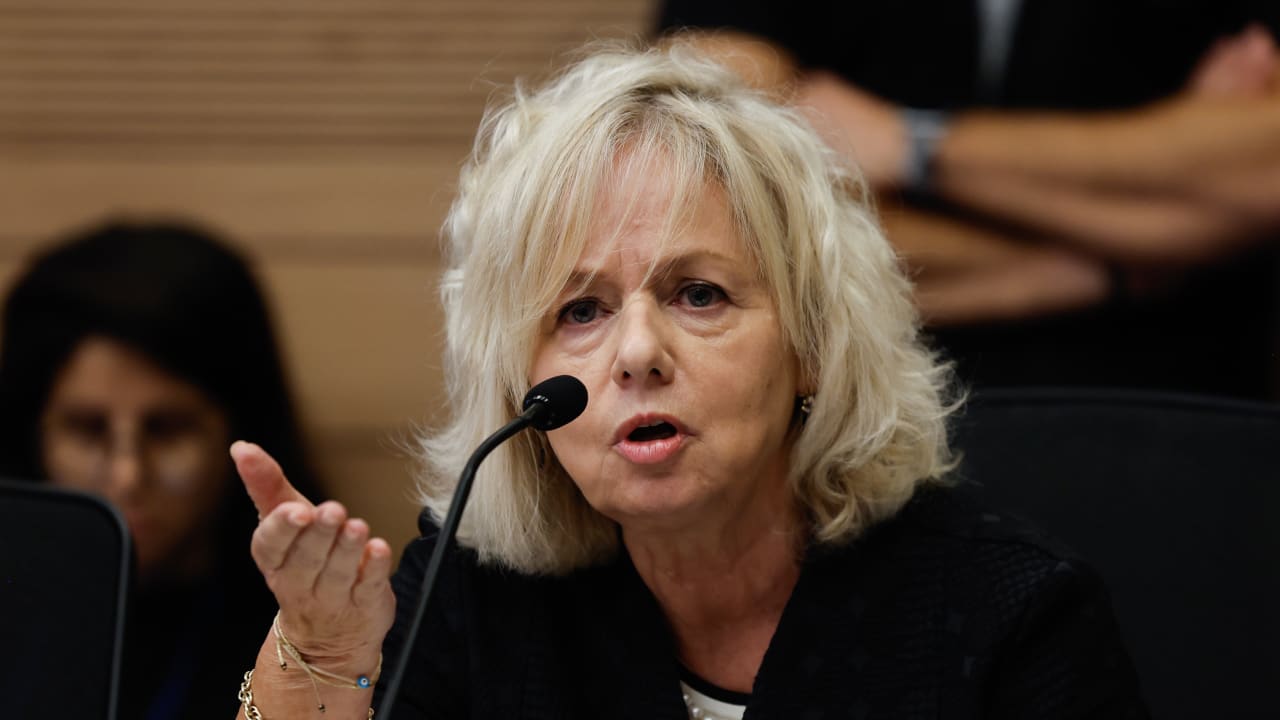
Attorney-General Gali Baharav-Miara on Monday urged the High Court of Justice to convene an urgent hearing on petitions challenging the government’s Broadcasting Law, warning that Communications Minister Shlomo Karhi had “severely damaged” the legislative process and that the law, as currently advanced, poses a grave risk to freedom of expression and press independence.
In a preliminary response submitted to the High Court of Justice, the attorney-general argued that the government bypassed essential professional and legal safeguards in advancing the sweeping reform, and asked the court to intervene at an unusually early stage of the legislative process to halt what she described as a “rare and extreme” breakdown of proper governance norms.
The petitions before the court were filed by civil society group Hatzlacha, the Israel Journalists Association, and the Press Council of Israel, all of which seek to overturn the government’s decision to advance the Broadcasting Law and to invalidate the first reading already held in the Knesset.
At the heart of the attorney-general’s position is the claim that the Broadcasting Law – a far-reaching reform spanning more than 100 pages and reshaping the regulation of television, radio, and online news – was brought to the Knesset before the government had completed the internal professional and legal work required for a government bill.
According to the response, the Communications Ministry abruptly cut short a structured inter-ministerial process once legal objections emerged regarding the bill’s constitutionality, particularly its implications for press freedom, media independence, and pluralism.

Despite repeated warnings from the Justice Ministry and the Regulation Authority, the bill was presented to the Ministerial Committee for Legislation without the attorney-general’s approval - an exceptional and, she argued, unprecedented step.
The opinion describes a draft law lacking explanatory notes, containing incomplete enforcement chapters, and omitting required consultations with the Regulation Authority, which later concluded that the legislative process itself suffered from a “substantive defect.”
Israel AG warns Broadcasting Law lacks legal vetting
“Such a reform – especially one governing news broadcasting – must rest on a comprehensive, professional, and legally vetted foundation,” the response states, warning that the Knesset is neither designed nor authorized to complete unfinished executive-branch work on behalf of the government.
Substantively, the attorney-general highlighted several provisions that raise constitutional red flags, including the dismantling of long-standing regulatory protections governing television news and the dramatic easing of cross-ownership restrictions that could allow a small number of actors to rapidly consolidate control over multiple media platforms.
The legal opinion stresses that these changes were advanced without presenting alternative safeguards to ensure journalistic independence, reliability, or diversity of viewpoints – protections long recognized by Israeli courts as essential to democratic governance.
The concern, Baharav-Miara wrote, is not limited to the final content of the law, but to the “chilling effect” already created by the manner in which it is being advanced – particularly in light of parallel government initiatives affecting public broadcasting and Army Radio.
The response also details a pattern of confrontation between the Communications Ministry and institutional gatekeepers, including legal advisers and regulators, whose objections were met with public delegitimization rather than substantive engagement.
In the Knesset’s specially convened committee – established after the government removed the bill from the Economics Committee – legal representatives reported being accused of political bias, while requests by lawmakers for full professional briefings were rebuffed in the interest of accelerating the legislative timetable.
The attorney-general warned that without repairing the defects in the government phase of the process, the Knesset’s deliberations themselves risk becoming procedurally flawed.
While emphasizing the gravity of the situation, Baharav-Miara stopped short of asking the court to immediately void the bill’s first reading, citing respect for inter-branch comity. Instead, she proposed a judicially supervised pause in Knesset deliberations to allow the government to resume proper internal work, complete legal vetting, and secure formal approval of the bill as a government initiative.
Such a remedy, she argued, would constitute administrative - rather than constitutional - intervention, focused on enforcing the duties of a minister rather than dictating parliamentary outcomes.
“The key to repairing the defects,” the response notes, “lies in the hands of the communications minister.”
The High Court has yet to set a date for the requested urgent hearing.