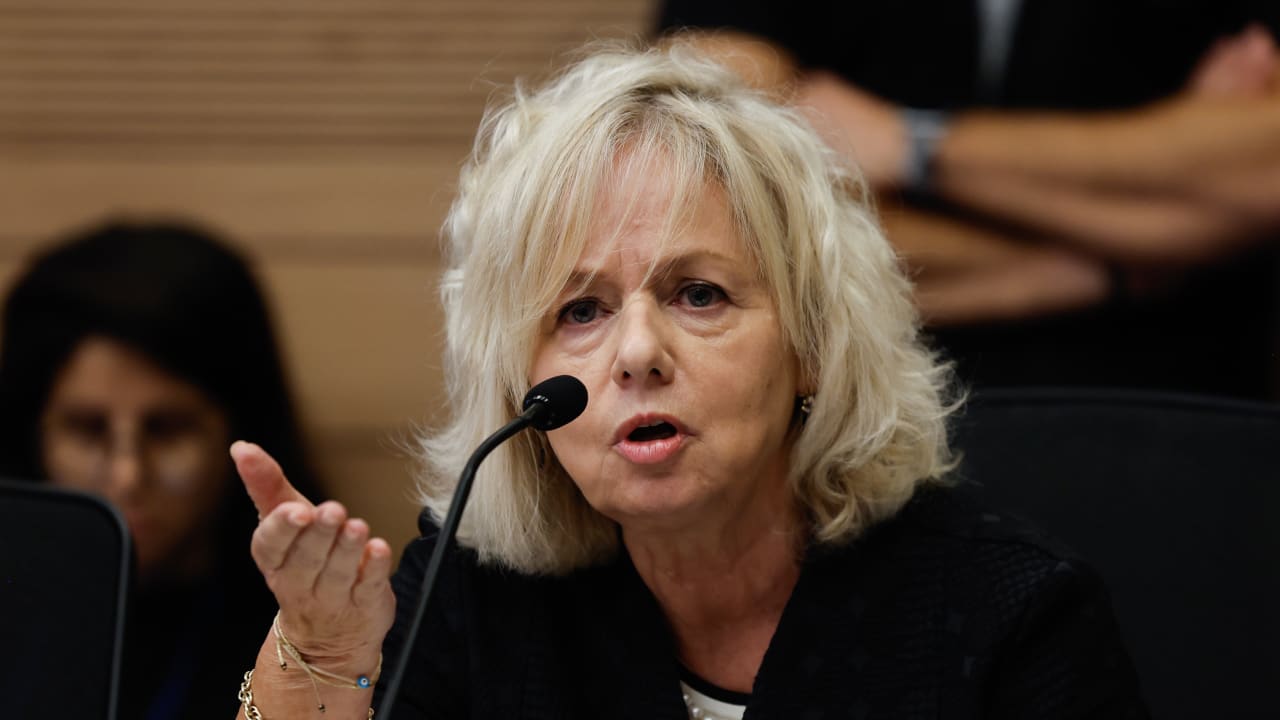
Justice Minister Yariv Levin is acting “contrary to law” and “harming the public” by refusing for more than a year to convene the Judicial Selection Committee to appoint judges to the magistrate and district courts, according to Attorney-General Gali Baharav-Miara.
Israel’s courts are confronted with an exceptional workload, she said last week in a legal position filed ahead of a High Court of Justice hearing scheduled for this Thursday.
The prolonged paralysis is directly hurting litigants, delaying hearings, slowing decisions, including in urgent matters, and leaving “thousands of cases waiting on the shelf,” the Attorney-General’s Office said in response to a petition filed by the Movement for Quality Government in Israel.
The NGO is challenging Levin’s refusal to convene the committee, despite what the state says is a clear statutory duty to do so whenever there is a need to appoint judges.
Baharav-Miara maintains that Levin has no legal authority to condition the convening of the committee on a “broad consensus,” particularly for appointments to the magistrate and district courts, which under the law require only a simple majority vote.
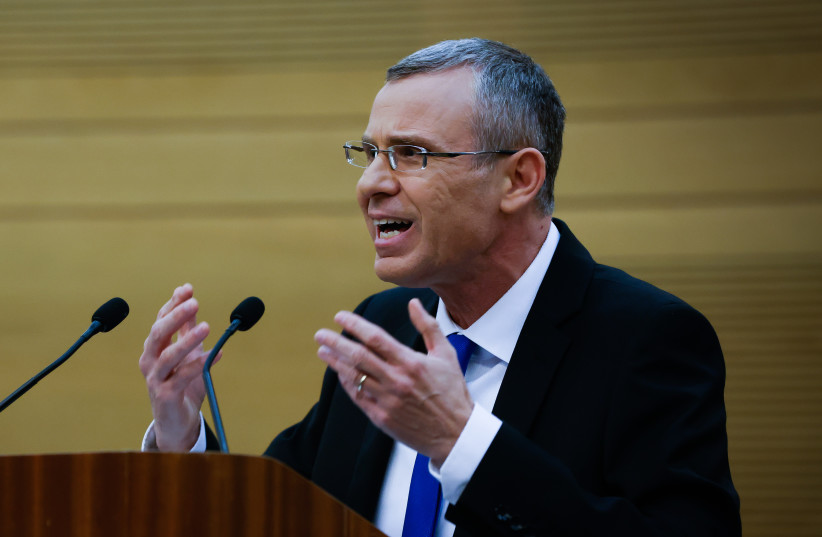
In her filing, Baharav-Miara said Levin had effectively granted himself a veto power not anchored in law, while the judicial system continues to operate under an “exceptional and worsening” shortage of judges.
The state estimates that about 44 judicial positions are currently vacant, with an additional 21 expected to open by the end of the year, not including secondary vacancies created when judges are promoted to higher courts.
The Attorney-General’s Office cited international data, indicating that Israel already has a relatively low number of judges per capita. The prolonged freeze has compounded structural backlogs and inflicted growing harm on litigants, it said.
Levin rejected Baharav-Miara’s claims and accused her of misrepresenting both the law and the situation within the committee. Appointments require agreement among committee members, he said. Others had refused to compromise, and the responsibility for the stalemate does not lie with him, he added.
The dispute over the committee’s paralysis unfolds against the backdrop of broader legal reform, which was launched by Levin in January 2023. The proposed changes, which are aimed at reshaping the balance of power among the judiciary, the government, and the Knesset, sparked months of mass protests, deep political turmoil, and a series of constitutional confrontations before the High Court.
Judicial Selection Committee at center of Israel reform debate
The Judicial Selection Committee has remained a central flashpoint throughout the reform. The nine-member body includes representatives of the government, the Knesset, the judiciary, and the Israel Bar Association. Under existing law, appointments to the magistrate and district courts are made by a regular majority, while Supreme Court appointments require a special majority of seven out of nine members, a mechanism designed to force broad consensus.
A similar confrontation played out in 2024, when Levin refused to convene the committee to appoint a permanent chief justice of the Supreme Court. That September, the High Court ruled that the justice minister could not indefinitely prevent the committee from meeting by insisting on consensus where the law did not require it.
Following the ruling, the committee convened in January 2025 and selected Justice Isaac Amit as Supreme Court chief justice and Justice Noam Sohlberg as his deputy.
Meanwhile, last March, the Knesset passed legislation altering the composition of the Judicial Selection Committee, expanding political representation, and reducing the relative influence of judges and legal professionals.
That law is slated to take effect in the next Knesset term and is itself the subject of pending High Court petitions. A hearing with an expanded panel is scheduled for June.
Thursday’s hearing is expected to focus on the immediate question of whether the High Court will order Levin to convene the committee and begin the lengthy appointment process.
Each additional month of delay deepens the burden on Israel’s courts, Baharav-Miara said in the filing, adding that the price of the standoff is being paid not by politicians but by the public waiting for justice.