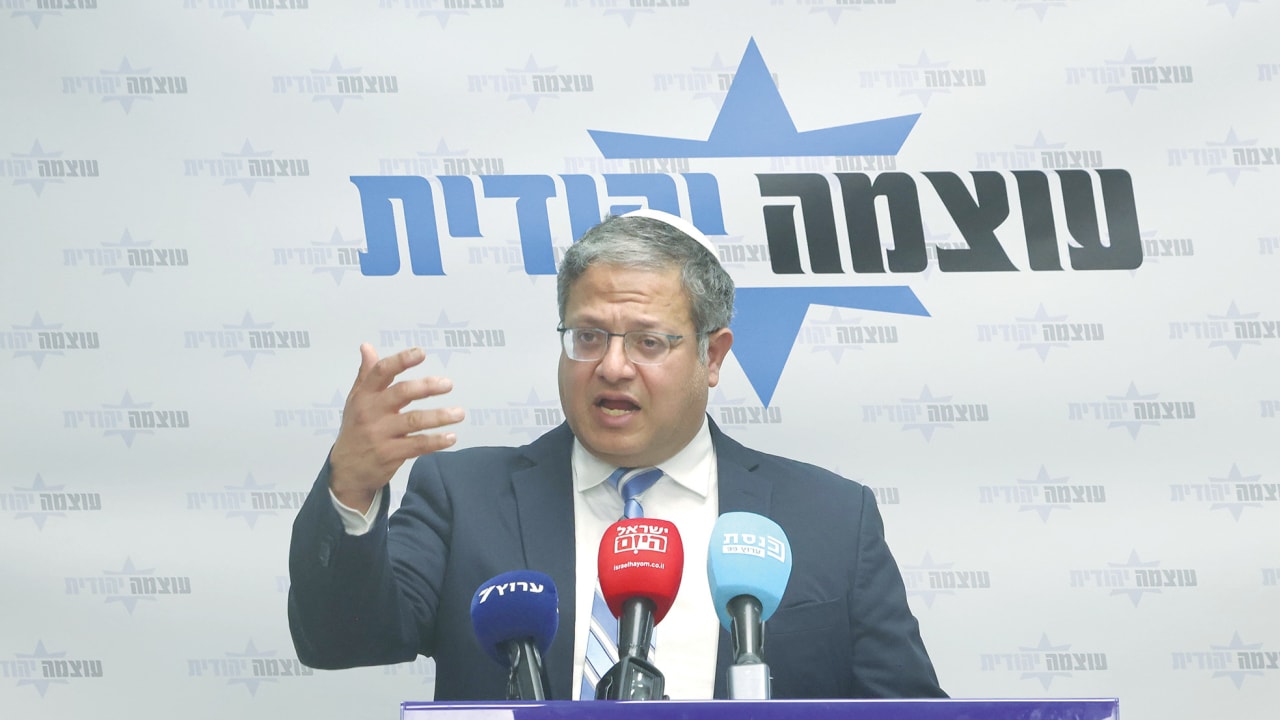
The prosecution on Tuesday formally opposed National Security Minister Itamar Ben-Gvir’s request to delay implementation of a Jerusalem District Court ruling, ordering him to approve the promotion of a senior police officer, arguing that any further postponement would deepen the harm already identified by the court to police independence.
In a detailed submission to the Jerusalem District Court, sitting as an Administrative Affairs Court, the Attorney-General’s Office urged the court to reject Ben-Gvir’s request to stay the judgment that voided his refusal to promote Supt. Rinat Saban to the rank of chief superintendent and instructed that the promotion be granted “without delay.”
The ruling, issued on February 9 by Judge David Gidoni, found that Ben-Gvir’s continued refusal to sign off on Saban’s rank – despite the support of Police Commissioner Daniel Levy and other senior professional officials – was “extremely unreasonable” and raised a “real and substantial concern” that extraneous considerations were at play.
The prosecution wrote that the minister’s request failed to meet the legal threshold required to stay a judgment pending appeal, emphasizing that the public interest lies in preventing “any additional delay” in granting the rank, given the court’s warning that further postponement could intensify concerns over interference with police independence.
The state argued that both key criteria for a stay of execution – likelihood of success on appeal and balance of convenience – tilt against the minister.

First, it said that the district court’s ruling was factually and legally well-grounded and did not create a new precedent but rather applied established administrative law principles to what it described as an unprecedented refusal by a minister to promote an officer deemed qualified by all relevant professional bodies.
Second, the prosecution dismissed Ben-Gvir’s argument that granting the rank now would make it impossible to undo later.
Citing Supreme Court case law, the prosecution stressed that appointments and promotions are not irreversible acts; if an appeal were to succeed, the situation could be remedied.
By contrast, it argued, continued delay only inflicts concrete harm: Saban is already serving in the position to which the rank is attached, yet without the formal insignia, in circumstances the court found were linked to her involvement in sensitive investigations.
The prosecution further contended that prolonging the impasse sends a chilling message to police officers that their advancement could hinge on political considerations – particularly when they are involved in probes concerning public officials.
According to the state’s filing, Ben-Gvir initially approved Saban’s appointment in late 2024. Only after she testified in Case 4000 – one of the three criminal cases brought against Prime Minister Benjamin Netanyahu – and was involved in investigations touching senior officials did the minister’s position shift, the court noted in its judgment.
The court detailed how successive justifications for withholding the promotion were raised months after the fact and were contradicted by police legal advisers and senior command, who found no disciplinary or criminal impediment to her advancement.
In his motion to delay implementation, Ben-Gvir claimed “new evidence” had recently surfaced and would be presented in the framework of an appeal, but provided no specifics in the stay request.
The dispute over Saban’s promotion is the latest in a series of confrontations between Ben-Gvir and senior law enforcement officials over appointments and promotions.
Ben-Gvir delays police promotions, overruling officials
In recent months, the minister has declined to advance or has delayed the promotion of other officers, at times overruling or disregarding the recommendations of the police commissioner and senior command staff.
In one earlier case, cited in the state’s submission, a court intervened after Ben-Gvir approved the advancement of an officer despite an ongoing criminal proceeding – contrary to professional advice.
The current case has drawn particular attention because of the court’s explicit reference to concerns about police independence and the potential deterrent effect on investigators handling politically sensitive cases.
Adding to the institutional friction, Ha’aretz reported on Tuesday that Commissioner Levy asked not to be listed as a signatory to the state’s response opposing the stay request – a move that underscores the delicate position of the police leadership amid the escalating legal battle.
Absent a stay, the district court’s order requires the minister to grant the rank without delay. The prosecution stressed that the default rule in administrative proceedings is that filing an appeal does not suspend implementation of a judgment, and that the burden rests squarely on the applicant to justify exceptional relief.