After patients undergo surgery, doctors automatically give them prescriptions for opioids for pain. Some physicians warn them that they should be taken only for a short time, while others don’t, and some sufferers buy the pills on the black market.
Opioids are a class of natural, semi-synthetic, and synthetic drugs that include both prescription medications like OxyContin, Vicodin, morphine, codeine, and fentanyl, and illegal drugs like heroin.
Israeli authorities estimate that there are between 50 and 60 overdose and drug-related deaths per year, but medical experts suspect the real figure is much higher.
A study at Jerusalem’s Taub Center for Social Policy Studies maintained that Israelis’ consumption of narcotic painkillers makes them one of the heaviest consumers in the world.
Since the war that started on October 7, 2023, addiction experts say they have seen a significant increase in substance abuse and relapses among survivors and displaced people.

More than 1.25 million Americans have died of opioid-related drug overdoses since 1999, with these drugs a major factor in two-thirds of all national drug overdose deaths, with nearly 80,000 opioid-related fatalities occurring in a single recent year; however, abuse has apparently declined in the last few years.
Symptoms of addiction include tremors, excessive sweating, disquiet, dizziness, nausea, vomiting, constipation, and pain.
Fortunately, there is hope on the horizon for combating the epidemic. For the first time in Israel, a patient addicted to opioids for pain has been successfully treated at Haifa’s Rambam Health Care Campus with an innovative sound-wave technology.
Although it was just one patient and at least a year’s follow-up is necessary to be sure, the doctors involved say that the treatment relieved his addiction.
The first such treatment in the world, followed by 19 more, has been performed since 2022 by renowned neurosurgeon and neuroscientist Dr. Ali Rezai at West Virginia University.
Afterward, more were done by others: one at New York’s Cornell University, followed by Rambam, and the last one at the University of Florida.
How does the treatment work?
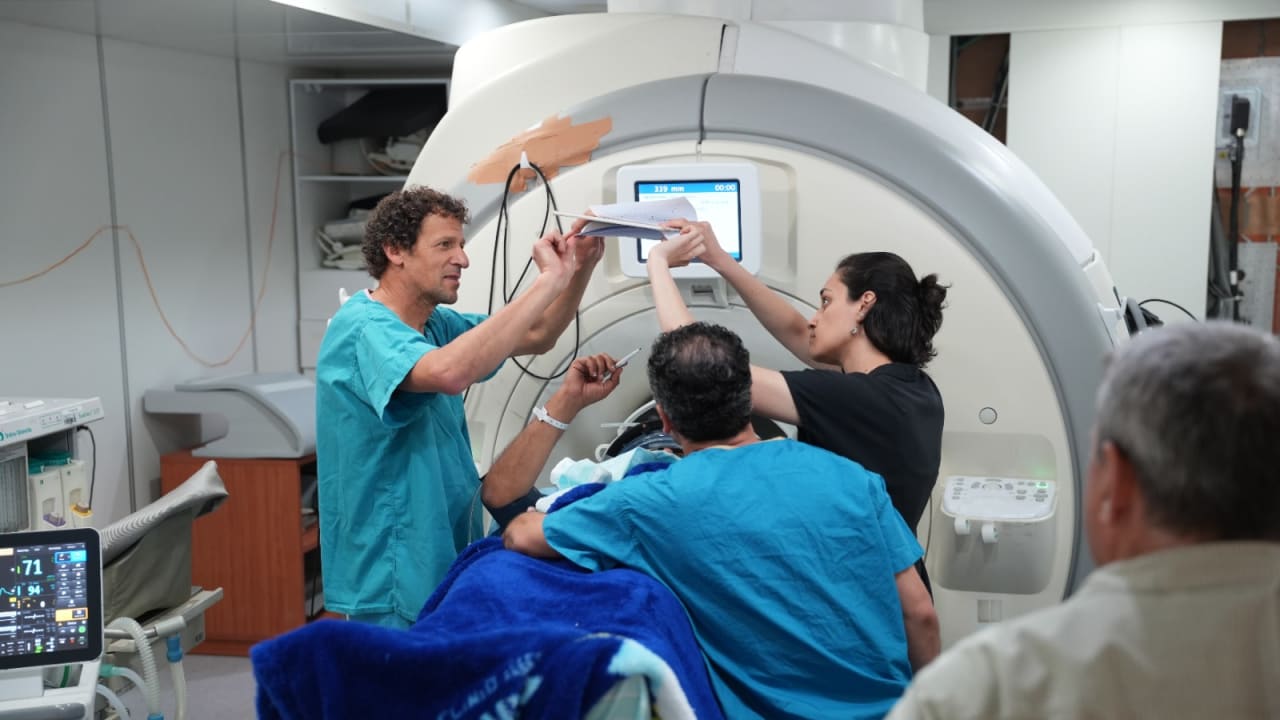
The treatment in Haifa was made possible by a unique Israeli technology developed by Insightec, headquartered in Haifa and Miami, which combined real-time MRI with high-intensity focused ultrasound without scalpels or incisions.
H., a family man in his 40s, suffered a neck injury several years ago. To manage the pain, he was prescribed opioids; over time, the pain was reduced, but he was unable to break free from the medication. Eventually, he was taking 130 pills per day.
Dr. Amir Minerbi, head of the hospital’s pain medicine institute who runs a specialized clinic for opioid withdrawal and addiction treatment, told The Jerusalem Post in an interview that H. was no longer experiencing physical pain but still needed the same substance in his bloodstream simply to feel calm and maintain normal functioning.
He is the first to undergo treatment while experiencing active withdrawal symptoms, a unique challenge that yielded important insights for the researchers. “He couldn’t even get out of bed without taking 30 pills,” said Minerbi.
The multidisciplinary team modulated the electrical activity of a brain region known as the nucleus accumbens – the key component of the brain’s reward system, responsible for feelings of pleasure, satisfaction, and reinforcement.
The treatment is similar to that used for treating symptoms of essential tremor and Parkinsonian tremor, with electrodes inserted into the brain under MRI guidance – but it uses a new, non-invasive neuromodulation technology without heating or removing tissue, allowing targeted stimulation of the same brain region – either to activate additional activity or suppress it.
By using energy from outside the body with magnetic fields, electrical currents, or ultrasound, brain activity is altered to treat psychiatric and neurological conditions, restore function, and encourage neuroplasticity.
“This new technology makes it possible to intervene directly in the brain’s electrical activity in a highly targeted way and to influence specific control centers depending on the condition being treated,” added pain expert Dr. Lior Lev Tov, director of the hospital’s functional neurosurgery and the study’s main investigator.
“During the treatment itself, a reduction of the patient’s craving for opioids was already observed. A week later, tests came back negative for opioids and other substances, and the patient reported a craving score of zero out of 10,” he said.
Lev Tov described this as “nothing short of a medical and therapeutic breakthrough.” However, the Rambam trial is still in phase-1 research, allowing for a special case. It has not yet been approved by the US Food and Drug Administration.
The treatment would be expensive because of the medical equipment and the need for a neurosurgeon; health fund clinics wouldn’t be able to offer it, Lev Tov said.
Surprisingly, H. significantly cut his smoking of cigarettes from three packs a day to just a few cigarettes, along with no desire to consume alcohol.
As addictions and cravings of alcohol, nicotine, Internet and social media use, gambling, overeating, and more all involve the brain’s reward center, the team believes that the technology could eventually be used to treat these as well.
Obsessive-compulsive disorder, post-traumatic stress disorder, eating disorders, and severe depression might be treated using this approach, along with other forms of addiction and chronic pain syndrome, suggested Minerbi, who is also a senior lecturer at the medical faculty of the Technion-Israel Institute of Technology.
Looking ahead, he also envisions applications in cognitive and neurodegenerative conditions, including attention-deficit hyperactivity disorder, Alzheimer’s disease, and Parkinson’s disease.
Treating addiction's physical and psychological withdrawals
Addiction treatment involves both physical withdrawal and psychological withdrawal, the latter of which can persist for a long time, explained Minerbi.
“This new treatment directly targets the brain regions involved in addiction, and we hope that it will offer a safer and less traumatic solution for thousands of people dependent on opioids,” he said.
“Opioid pain medications are highly effective for short-term pain management and remain an important medical tool,” Minerbi added, “but a small yet significant proportion of patients develop opioid addiction – they continue to seek the medication repeatedly regardless of its impact on their pain.
“Among long-term users, opioids become less effective for pain control while contributing to a growing range of adverse effects, including declining health, increased risk of premature death, a reduced ability to function in daily life, and a significant decrease in quality of life.”
“From the day of treatment until the present, he has remained completely free of the opioid medication,” Lev Tov reported. “His craving for opioids disappeared entirely, and he described feeling as though he had regained his life.”
“Medical tests confirm that he is opioid-free, has significantly reduced his craving, and his physical and functional condition is excellent,” he added.
The significance of the work reaches far beyond the treatment of addiction, Lev Tov continued. “It represents the emergence of a new, non-invasive way to access deep and highly sensitive regions of the brain – areas responsible for reward, motivation, desire, and impulse control – and to meaningfully alter activity within those networks.”
In his view, nothing currently available in modern medicine offers a comparable level of precision without surgical intervention. He sees this breakthrough as opening a path toward treating some of the most complex and persistent conditions in medicine.
Lev Tov, who is also a biomedical engineer, calls it “a major scientific advancement with the potential to reshape how medicine approaches disease. Patients who currently struggle with these conditions may one day have a real chance at full rehabilitation – returning to work, building families, and contributing meaningfully to society.”
He said there is no evidence that the treatment causes personality changes, depression, apathy, or an inability to feel pleasure from other activities.
“Five more Israeli patients with the addiction have been lined up for treatment soon. After a year or so of patient follow-up, doctors will know how effective it is, and whether additional treatments are needed or one is enough,” he added.
“Doctors around the world mistakenly believed that acute and chronic pain are similar, that if opioids are effective in reducing acute pain, they can also be used for chronic pain,” Lev Tov concluded.
“There must be better supervision that makes it more difficult to get the pills, except for painful cancers.”