The IDF is racing to finish eliminating Hezbollah terror infrastructure in 52 southern Lebanese villages in the coming weeks before the US presses Israel for a wider withdrawal, IDF sources said on Wednesday.
During The Jerusalem Post’s visit to Bint Jbail, multiple kilometers into southern Lebanon, and where the IDF vanquished one of Hezbollah’s main centers of gravity in the area, IDF officials discussed with the Post and other outlets how they defeated the group and the current state of play.
On Tuesday, US President Donald Trump told Prime Minister Benjamin Netanyahu that he wanted Israel to withdraw from both Lebanon and Syria.
For the last couple of weeks, Israel, the US, and Lebanon have been negotiating over the multiple spots where the pilot program of Israel undertaking small partial withdrawals, in which it hands over a specific area to the Lebanese Armed Forces (LAF), will take place.
Originally, two areas under discussion were Tibnin and Ali Taher Ridge, but there could be an evolution in the areas, including the addition of a third area, IDF sources said.
IDF monitors Lebanese Armed Forces moving into areas Givati Brigade is leaving, officer tells 'Post'
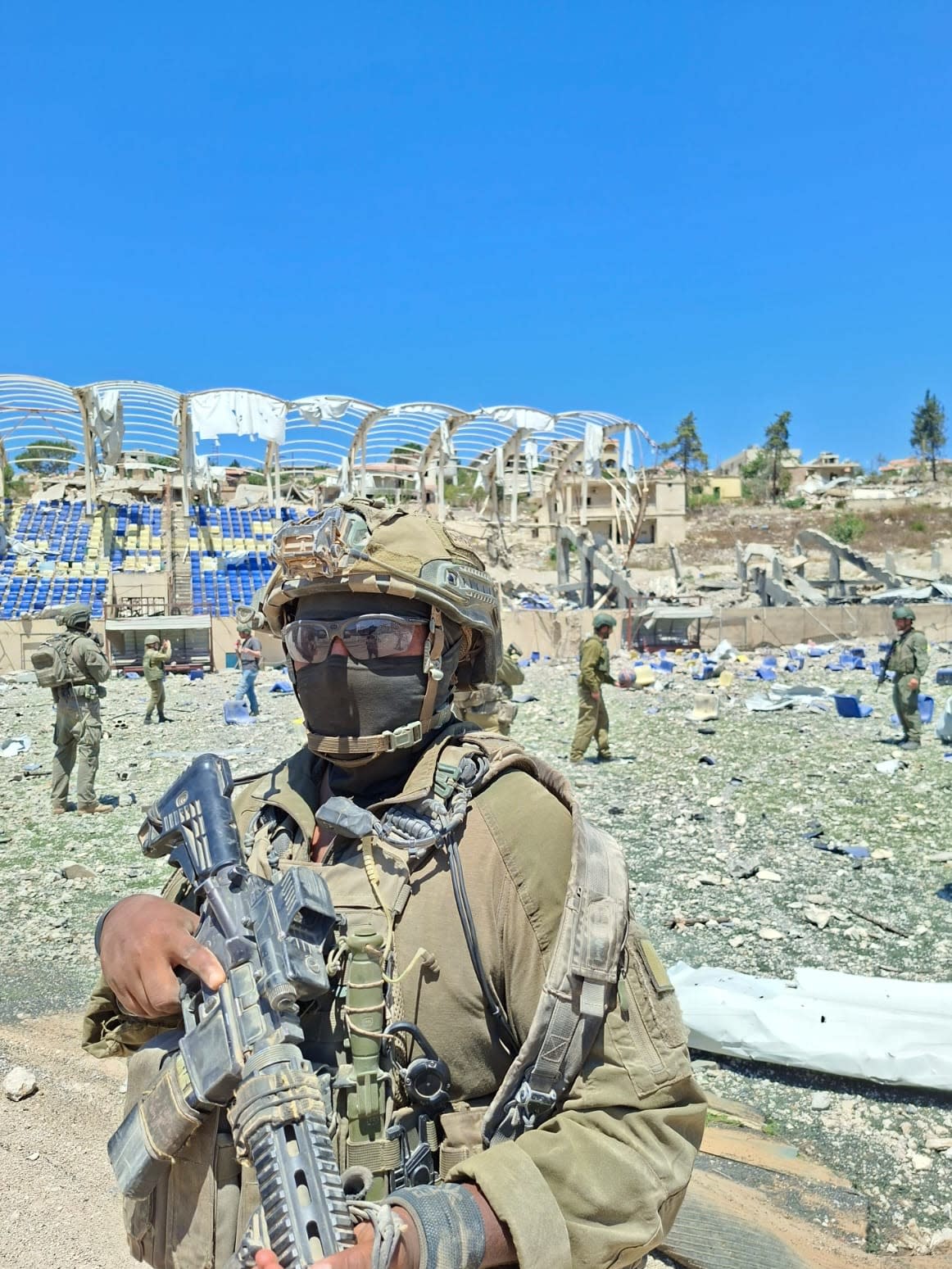
On July 5, the Post spoke with the Givati Brigade’s Weapons Commander Lt.-Col. “I,” who described to the Post watching the LAF move into certain areas where the Givati Brigade was leaving.
According to “I”, higher-level IDF and US officials handled the transition and handover of territory coordination, with "I" and his forces observing the Lebanese army from a safe distance for a period of minutes.
Curiously, this handover of land occurred some weeks before the IDF had said that officially transferring territory in some key spots in southern Lebanon over to the Lebanese army would occur.
IDF sources emphasized that it is critical to Israel that the transfer process ensures the LAF meets certain benchmarks before additional transfers proceed.
The IDF has said that after a few months of trying more seriously to evict Hezbollah from southern Lebanon, the weaker Lebanese army eventually mostly gave up, part of why Hezbollah started to recover and felt strong enough to attack Israel again in July 2026.
Partial withdrawals, land transfers, being coordinated by US Marine Corps general
The partial withdrawals and land transfers are being coordinated by US Marine Corps Lt.-Gen. Joseph R. Clearfield, who was the main coordinator with Israel and Lebanon on such issues from fall 2024 until the recent war, with support from around 30 other American military officials.
IDF sources said that Clearfield properly understands the weaknesses that the Lebanese army has, though they cannot vouch for whether American political officials will hold up the land transfers if necessary from an Israeli security perspective, which may clash with their timeline for wrapping up Lebanon as an issue.
An official for CENTCOM’s Marine Corps Command (MARCENT), relating to CENTCOM’s Military Coordination Group for Lebanon, declined over the weekend to provide more specific updates about how the transfer of territory was going so far.
However, the Post understands that Clearfield met with IDF Chief of Staff Lt.-Gen. Eyal Zamir on July 1 and secretly visited Lebanon on July 2.
While IDF sources are concerned that the Lebanese army will again fail at clearing Hezbollah from areas it takes over, as it failed in 2024-2025, they have some additional hope of success given that this time the Lebanese government has held several public meetings with Israel and is publicly backing disarming Hezbollah.
During the Post’s visit to Bint Jbail, the tour showed off the destroyed Maroun al-Ras, and several vantage points to survey Bint Jbail itself, which appeared to be about 80% damaged, but has only been 44% destroyed in terms of stored terror infrastructure.
According to the IDF, 1,500 items of terror infrastructure have been destroyed, which often translates into houses, since the IDF said that nearly all of the residences in the village held Hezbollah weapons.
IDF sources said that the 91st Division, led by Brig.-Gen. Yuval Gez, had defeated around 350 Hezbollah fighters in the area, of which 200-250 were killed, and around 100 initially escaped.
Those 100 later tried to rally either at the Salah Ghandour Hospital – which one official called “the Shifa of Bint Jbail,” referring to Hamas’s use of Shifa Hospital in Gaza as a critical command center – or at the Sylvester Ridge slightly outside of the village.
The military’s 91st and 98th Divisions together defeated these forces, in some cases coming from behind them or striking from multiple vectors at once to confuse Hezbollah.
According to the IDF, it hopes to at minimum reduce the terror infrastructure left over in southern Lebanon, including Bint Jbail, to 70%, which would make it very hard for an organized Hezbollah front to reestablish itself, while aspiring toward 100% elimination.
One of the key parts of the tour of the village, which Israel had not taken in decades, including not in fall 2024, was the Post standing where then-Hezbollah secretary-general Hassan Nasrallah gave his “spider’s web speech” on May 26, 2000, saying Hezbollah would destroy Israel.
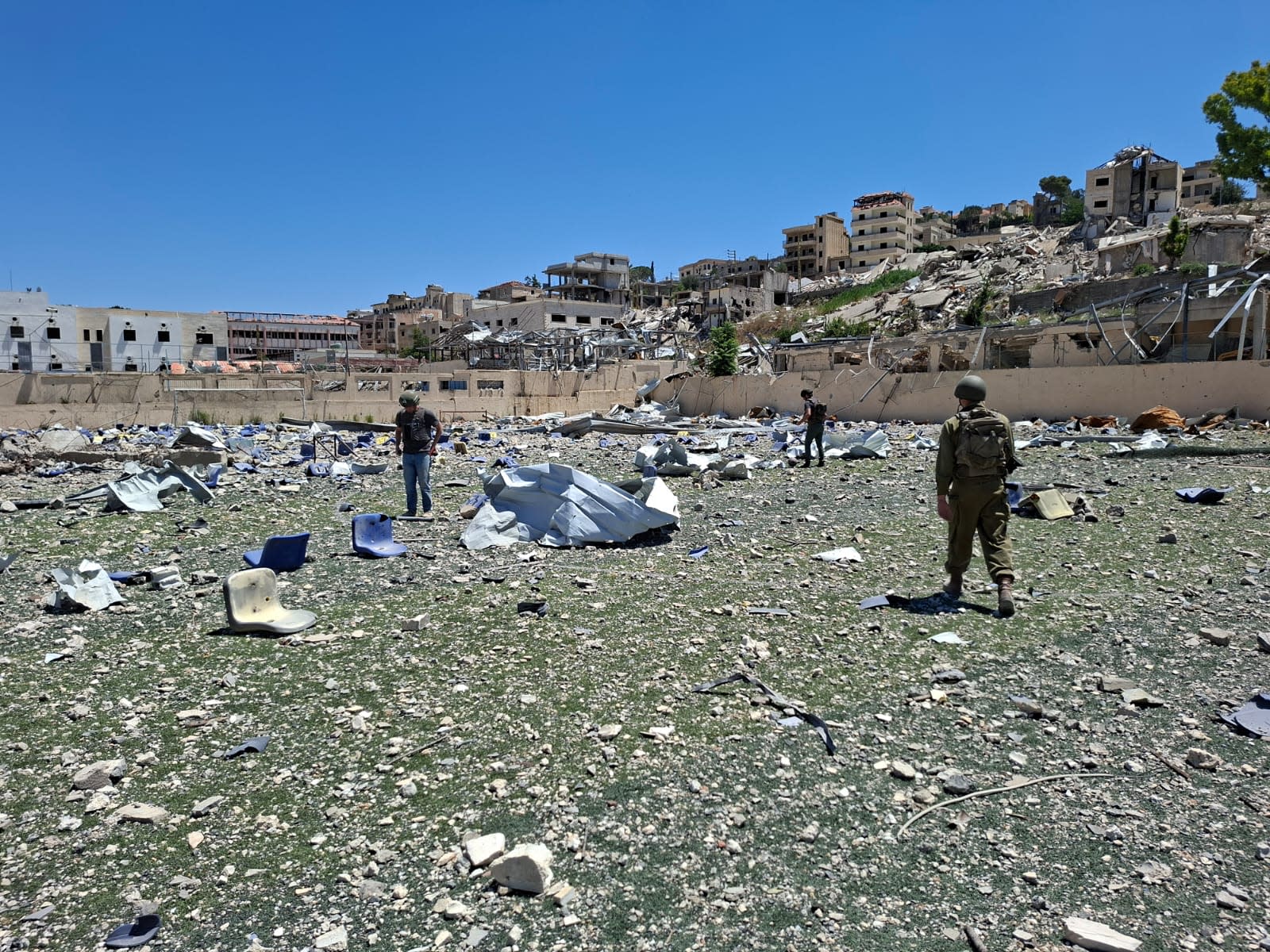
Debris spread across stadium where Nasrallah gave 'spider's web' speech after IDF's May 2000 withdrawal
The Post saw that while parts of the bleachers still stood at the stadium, much of it was destroyed and the soccer field was strewn with debris.
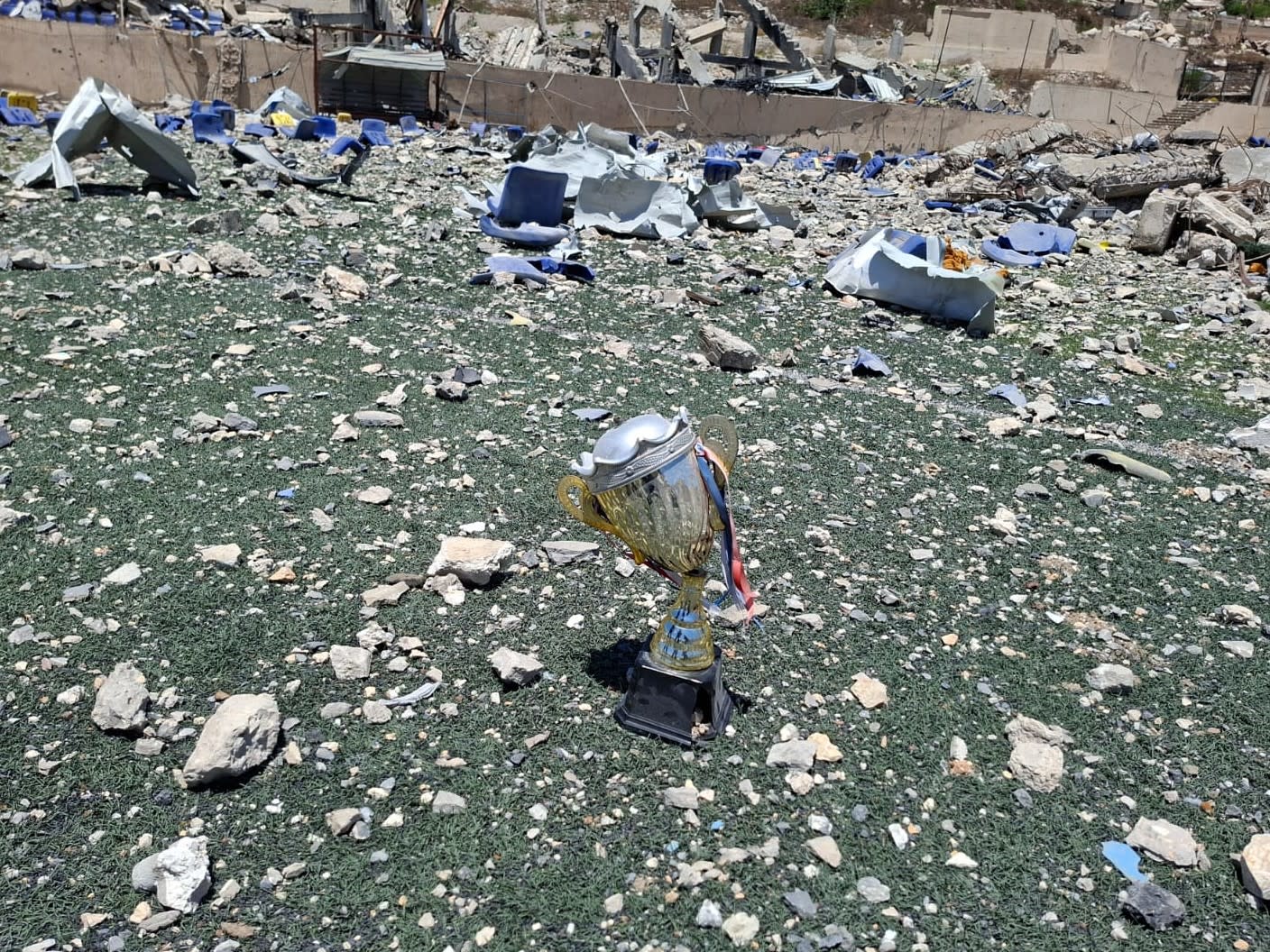
Three soccer balls and a trophy still lay around the area, apparently from whatever last events might have been held there prior to the IDF invasion.
Until the IDF is potentially forced to withdraw, it is building additional new positions in the Bint Jbail area and other areas to be better ready to defend against future Hezbollah attacks.
Taking Bint Jbail was part of the IDF’s plans to move any invasion threat far off Israel’s border as well as to push Hezbollah anti-tank cells more than eight kilometers back from the Israeli border, such that their weapons would not be able to reach Israeli villages.
While much of the Bint Jbail operation, in which the Paratroopers Brigade’s 101st Battalion, led by Lt. Col. “Z,” had a significant role, had been planned since early 2025, IDF sources said that there was some improvisation, such as taking Sylvester Ridge when an unexpected opportunity to do so more easily opened up.
In addition, IDF sources said that a variety of covert moves against Hezbollah and removing topographical obstacles to advancing during the course of 2025 made it much easier for 18 different smaller IDF units to enter southern Lebanon in different spots in March of this year.
According to the IDF, whereas absent the covert 2025 moves, a brigade (as many as 500-1,500 soldiers) or battalion (as many as 250-400 soldiers) would have been needed to advance in each area, smaller company-size units (as many as 100-150 soldiers) were able to take on separate missions.