

“For too long, those who support Zionism have let others who have no interest in Israel’s future control the narrative,” Robinson says in an interview at Tel Aviv’s Carlton Hotel, where he recently spent a week. “We want to spark a new conversation about Zionism and bring people from across the political and religious spectrum together. We have already started the conversation at share.jnf.org, where we are celebrating the beauty and diversity that is Zionism in the 21st century.”
Under the slogan, #ThisIsZionism, JNF-USA invites people from across the globe to join in the conversation and share their photographs to show the many faces of Zionism.
Robinson, 65, has served as Chief Executive Officer of JNF-USA (which is a separate organization from the Israel-based KKL-JNF) since 1998 (when at 41, he was the youngest CEO in its history). He has overseen the organization’s groundbreaking “One Billion Dollar Roadmap” to develop the Negev and Galilee and its meteoric rise to the $100 million charity it has become today.
Under his leadership, JNF-USA has been instrumental in developing successful programs for Israel’s water crisis, Zionist advocacy and education, community development, environmental work and the sustainable development of the Negev and Galilee, all of which play a significant role in the quality of life for all Israelis.
A sixth-generation American Jew, Robinson grew up in El Paso, Texas, lives in New Jersey and works out of the JNF-USA national office in New York. He is married to Marci and has two children – a son, Sam, who lives in Los Angeles, and a daughter, Aly, who lives in Israel.
Here are highlights of my interview with him.
Let me clarify. I don’t want to redefine it at all, but I want to put it on the table. If you take historic moments in Jewish life, our strength in those moments is when leadership rose to claim the greatness of who we are as a Jewish people. We claimed greatness when Theodor Herzl decided to establish the State of Israel in a diverse Jewish community spread around the world without TikTok and Instagram and yet they unified over that cause. The establishment of the State of Israel: who does not remember a story from a grandfather who sat there listening for the vote at the UN. In 1967, Israel wins the Six Day War and if you look at the American Jewish community, more synagogue JCCs got built than at any other time because the hidden Yidden had pride. Our march to release Jews from the former Soviet Union was a source of pride.
Then we allowed someone to stand up at the UN and make a statement that “Zionism is Racism” and we didn’t stand up. We decided that we were going to get more sophisticated and we took it off the table. And the shame of it is that this is the most beautiful movement. It has nothing to do with race or anything else, except for the self-expression of Jews to be allowed into their homeland. We want to bring the beauty of the Zionist movement back onto the table and say to the world: we are one, we are together, and we are moving – multi-colored, multi-faceted, different Jews, religious and non-religious but we are Zionists because Zionism is part of who we are as the Jewish people.
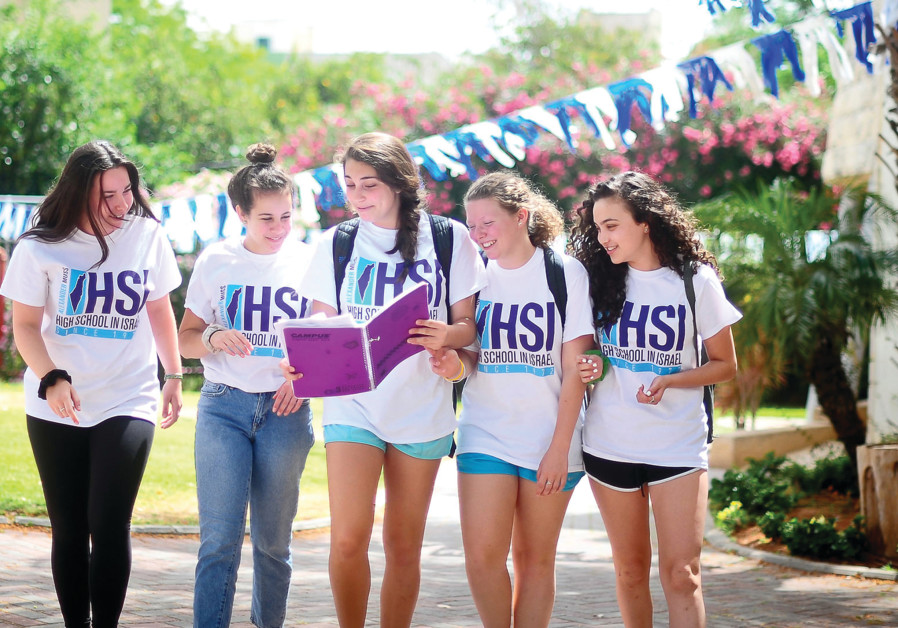
That’s why we started this Zionist campaign. We started doing focus groups and we talked to young people who’ve been to Israel on Birthright and other programs and when we talk about Zionism, the air came out of our chests. “Isn’t Zionism a bad word?” one person asked. Our leadership rose and said this is not the time to give it up, but for us to bring it back. So we’ve started a campaign called “Share your photo.” You go to share.jnf.org, take a picture of yourself and upload it on Facebook or Twitter or Instagram. We don’t want to define Zionism for you but by what it does for the Jewish people. In less than a week we got over 1,200 people sharing their photos, and we want 100,000 people to share to the world that Zionism comes in many different colors, shapes and looks, but by gosh it’s the beauty and greatness of the Jewish people.
We have an architectural contest going on, not to design the entire campus but rather to design elements, before we go to the architect. We have over 300 people who have now put in elements of our campaign. So we’re taking creative ideas, and then in six months we’ll go to the architect with these ideas sitting on the table. In four and a half years, in 2025, we plan to come together to have the ribbon-cutting for what will be the greatest village in the Jewish world.
We’re doing the focus group with young people, and we realize that if they have sushi, it’s part of Zionism as well. Everybody who goes on gap-year programs, for example, wants that Israel reality, so they’re going to be invited to somebody’s home for Shabbat dinner. We’re also bringing something very creative. We’re working with the national movement of mechinot here in Israel, so now you’ve got Israelis going on their gap-year before army, you’ve got Americans or international kids going on the gap-year before college. They are the same age, coming together in an ecosystem of conversation. Now where does that ecosystem take you?

The Jewish heroes of today are a little different. We have the Wonder Woman of Gal Gadot and others. But you know, Theodor Herzl was only 33 years old when he was elected president of the World Zionist Organization and he died at 44. He had no outlet like The Jerusalem Report or Instagram, and had nothing more than hope and values and belief and yet he was able to unify the world. I felt terrible that Bernie Madoff was a Jew doing bad things, but I’m going to celebrate any time I hear about a Jew or an Israeli doing great things. How is an African farmer bringing food onto his family’s plate? Because of the technology created in a place called Israel. Israel makes the world a better place. Let’s say it loud and clear.
The Gaza violence has infected the conversation. But I think if someone from Dubai can come all the way here to find Israeli water technology, that’s great. The UAE has a spaceship on Mars. They don’t need Israel for that technology, but they do need food and water. And where did they decide to come? To Israel. And what were the first pictures coming out of Dubai after the peace agreement was signed? Israeli fruit in their open market. We should be celebrating! Can you imagine? They came here to feed their nation. We’re pretty darn great!
We sent our people home to work remotely from our four administrative offices taking care of 55 offices, and realized we had to get a little cheerleading going. We started by making some 14,000 “donor wellness” phone calls, just asking how people are, moved on to Zoom calls – we’ve done some 187,000 since this thing started – and moved on to virtual tours of Israel with professional guides. About 9,700 people have signed up so far, 40 percent of whom are new to our database. All this has positively impacted fundraising, and our campaign is now at an all-time high, not only in dollars but in donors. Our great heroes are the tens of thousands of volunteers and professionals and affiliates here in Israel, who stood above everything and said, “Let’s go forward.”
The current attacks on Israel have interrupted the sense of normalcy for many Israelis. I was on a Zoom call with one of JNF-USA’s employees based in Israel that was abruptly interrupted when she had to grab her young children and relocate to a nearby bomb shelter, a shelter that suddenly became the only safe place in her vicinity. Yet, for many Israelis, this is, regrettably, normal.
Our Israeli friends on the border know how to defeat evil. They simply stay. The Gaza Envelope and Eshkol Region is their home and they refuse to be bullied by terrorists into leaving their ancestral homeland. The courage, resilience, and resourcefulness of these modern-day pioneers inspires me every day, and I know that even during these scary times, they continue to look towards the future.
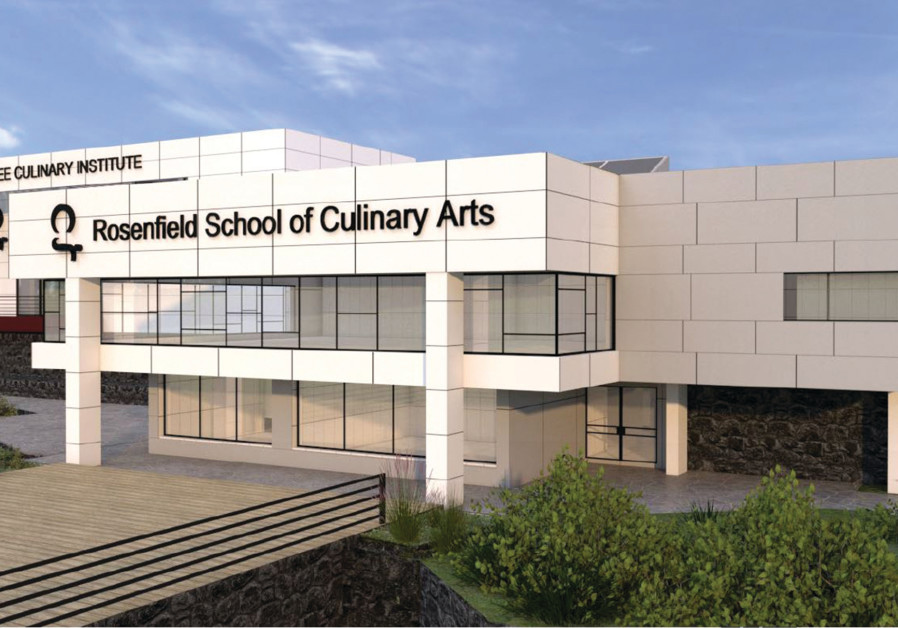
We don’t care about the hallways of the Knesset, and none of our missions in the last five years revolves around meetings with politicians. Our life revolves around the streets of Be’er Sheva, Kiryat Shmona and Tel Aviv. There are so many great people in Israel, like Noa with her three children in the Arava, where we have built an Olympic Pool which every eight days cleans itself with chemicals. Or you can go to Galilee, where we’re building the Galilee Culinary Institute by JNF-USA. We’re going to turn this area – which has gone from 38,000 people in 1958 to just 22,000 people today – into the culinary food capital of the world.
We’re building a food technology center and the culinary institute so that in five years you’re going to be calling JNF-USA to see if you can get a reservation at one of the great restaurants in Kiryat Shmona. That’s where Israel’s at today, and that’s where the people of the Diaspora want to be at. The strength of our community today and tomorrow rests on my children and my children’s children and their ability to have a conversation with each other, not because they go to the same shul, but because they belong to the same people. That’s what Zionism is about.