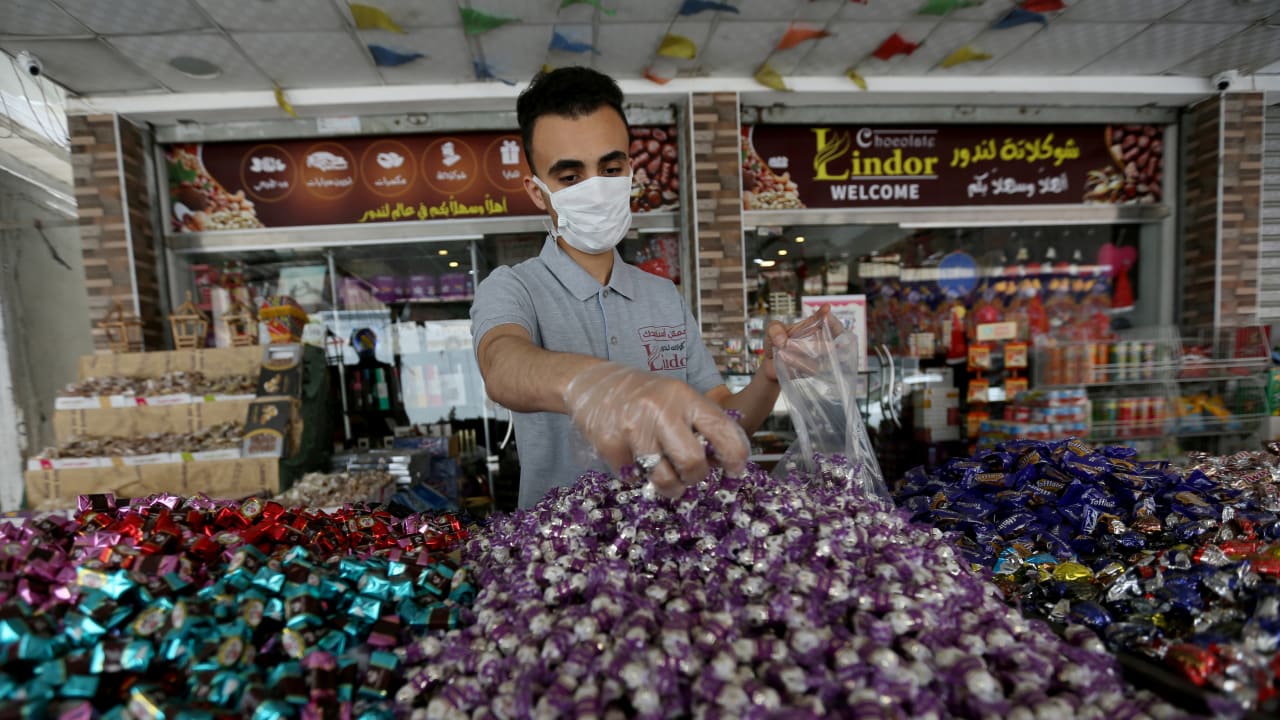
Israel has approved the entry of hundreds of trucks carrying sweets, soft drinks, and energy drinks into the Gaza Strip in the run-up to Ramadan, business sources and people familiar with the decision told Walla on Sunday.
The move was authorized by the Coordinator of Government Activities in the Territories (COGAT).
Four months after a ceasefire took effect in Gaza, Israel has continued to allow around 700 humanitarian aid trucks a day to enter the enclave with food, shelter supplies, and medical equipment.
COGAT has publicly cited a daily range of 600 to 800 trucks since the ceasefire began, according to a December report by The Jerusalem Post.

Candy brands, energy drinks, and claims of big money
According to Walla, the approval came at the request of US officials and in connection with Ramadan, allowing the transfer of sweets, soda, and energy drinks into Gaza.
“Bread and flour, yes, of course,” a food-sector businessman told Walla, “but candy and chocolates, have we lost our minds?”
The businessman said both Arab and Jewish traders were seeking premium items, including XL and Red Bull energy drinks, Ferrero Rocher, and Kinder Bueno.
“Money blinds even the wise,” he added, claiming that “people are making millions here.”
Importers and wholesalers have been clearing out warehouses at full price, including purchasing stock that expires within weeks without a discount. The source warned that this could push up prices in Israel, especially ahead of Purim, when candy consumption typically spikes.
A source familiar with the details said that COGAT lifted a restriction on bringing sweets into Gaza about two weeks ago, and that Israel agreed to the move “at Trump’s request” in the context of Ramadan. The source said that previously, only Turkish suppliers had been approved to send confectionery, while now much of it is coming in through Israeli traders.
How does the aid mechanism work?
About 700 trucks enter Gaza daily, and the goods are then transferred to licensed merchants inside the Strip, who sell them locally. In recent weeks, COGAT has pushed back against international claims about food insecurity in Gaza, emphasizing the volume and composition of aid entering the Strip, as reported by the Post.
Walla argued that the scale of nonessential shipments directly affects Israel’s cost of living by emptying warehouses and tightening local supply ahead of peak seasonal demand. The question of how many trucks are needed has also become a point of dispute within Israel, with IDF sources recommending a major reduction in daily truck volumes in a later phase of the ceasefire framework, according to a January report.
Israel has previously signaled it could curb aid flows amid ceasefire disputes, including after alleged violations by Hamas in October 2025.
Customs regulations and 'approved suppliers'
A shift toward routing humanitarian supply purchases through the private sector began on December 8, when new customs administration regulations took effect. Under the regulations, purchases of goods classified as aid must be made through a limited pool of Israeli firms designated as “approved suppliers,” thereby centralizing and supervising the chain.
The report said the eligibility thresholds effectively limited participation to large companies. The Israel Tax Authority, including annual turnover requirements of NIS 344 million for a “large supplier” or NIS 286 million for a “large retailer” operating at least three stores or an online store, along with computerized bookkeeping.
Among the companies are Victory, Carrefour, Mehadrin, and the Newman Group. These companies are a necessary intermediary because goods designated as aid must pass through them to reach Gaza.
The model is based on fees charged for the service: around NIS 10,000 for oversight and inspection of each truck, plus a brokerage commission of about 5% of the shipment value, estimated at roughly NIS 5,000. That totals around NIS 15,000 per truck, meaning that “approved suppliers” are meant to serve as a logistical conduit and are not supposed to be involved in the trade itself.
In response, COGAT said that “the entry of aid into the Gaza Strip is carried out in accordance with the directives and policy of the political echelon” and under oversight mechanisms “to prevent terrorist elements from infiltrating the aid entry mechanism.”