The only way to topple the Iranian regime is from within, and the key to doing so lies within an Israeli-Kurdish alliance, “Kurds Without Borders” head Kader Piri said in a Wednesday interview with Maariv.
In the interview, Piri discussed the reality of Kurds in northeastern Syria, the behind-the-scenes details of political agreements, and why such an alliance is essential to changing the reality in the Middle East.
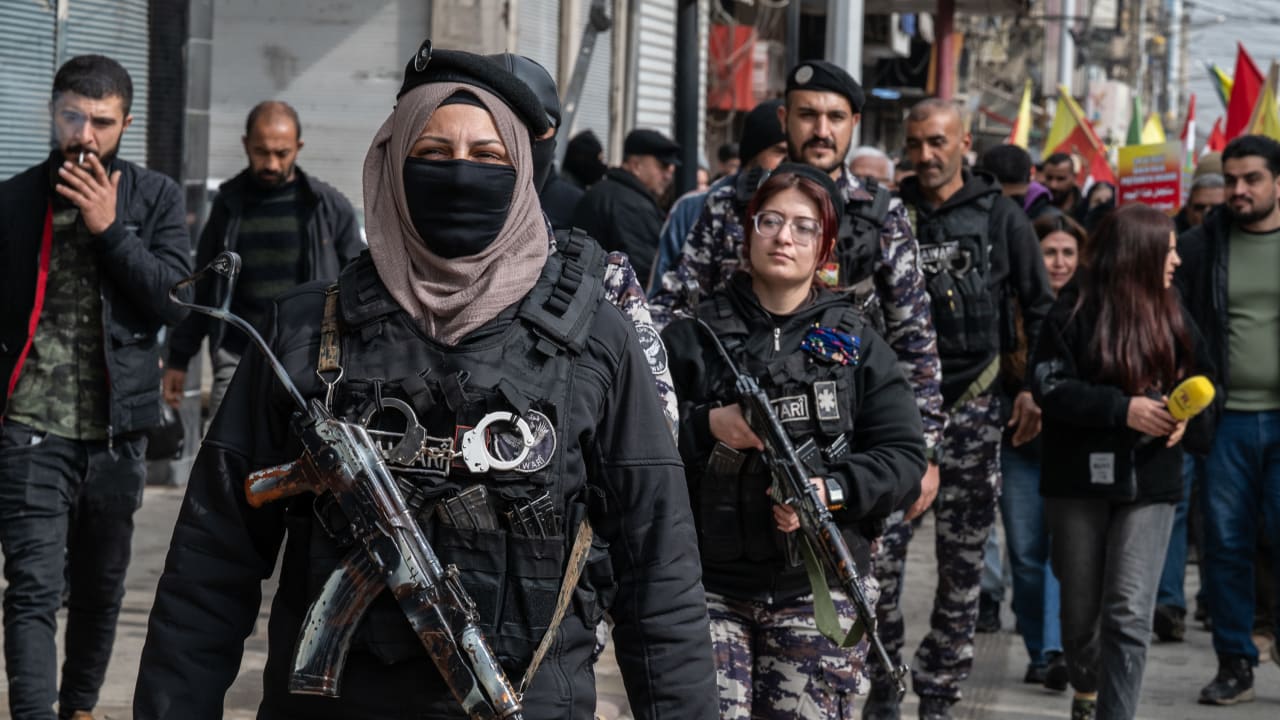
Piri, who is currently located in Qamishli, Syria, said the Kurds have reached the “zero point" of retreats, with nowhere else to go.
“The plan was the destruction of the Kurdish people, not only militarily, but a political and physical genocide, as was done in Afrin in the past,” Piri said.

A necessary resistance campaign
In Qamishli, Piri described seeing “young people, adults, women, and men carrying weapons. This is a necessary resistance campaign against a Turkish operation, combined with the regime of [Syrian President Ahmed al-Sharaa], to carry out ethnic cleansing."
In addition to the Sharaa regime, Piri asserted that Kurds are targeted by remnants of Al-Qaeda and ISIS.
“The Kurds are the ones who eliminated ISIS, and they openly declare they are coming to avenge their defeat in 'Al-Bagouz' (ISIS's last stronghold),” Piri said. “They see it as revenge.”
'There is no trust in the other side'
Piri also addressed the critique of the Kurdish leadership regarding the allegations that they capitulated to Turkey and joined Sharaa’s troops.
“We’re not talking about official policy, but about Tom Barrack, the double envoy of the American and Turkish presidents,” Piri said.
According to Piri, Barrack was motivated to close the bilateral deals by bribes and the interests of Saudi Arabia and Qatar, which provided funding.
“Barrack is the one closing the deals, and first and foremost, he works for the interests of the Turkish president.”
“The last agreement, which seemingly looks like capitulation, was intended to prevent mass massacres. Under this agreement, the Kurdish forces or what remains of Assad's forces will stay in the Kurdish areas but under a different name, as a division of the Syrian army. The critical point for us was that the 'Asayish' (Kurdish internal security) would carry out the defense mission inside the cities," said Piri.
"Simply put, there is no trust in the other side. They cannot be allowed to enter Kurdish cities and towns. What they did on the Syrian coast (against the Alawites) and elsewhere (against the Druze) is clear proof of what they will do if they gain a foothold with us.”
“Therefore, the forces and generals, including General Mazlum Abdi, will stay in their place under Kurdish command, even if the official name changes. General Abdi refused to take roles like Deputy Defense Minister and insisted on staying with his people."
National security achieved only through support for Kurdish cause
Piri’s message to the Israeli government and the Israeli public extends beyond simply asking for help. While he expressed gratitude for the current support, Piri said it is not enough and added that there is a clear Israeli interest involved.
“Your national security is achieved only through support for the Kurdish cause,” Piri said. “We are talking about a new Middle East with four key countries: Syria, Iraq, Turkey, and Iran. The Kurds are in all of them. You are aware of the existential danger posed by Iran, but I tell you with confidence: Iran will not fall from missiles from outside. No matter how much Israel or the US bombs it or what advanced weapons are used, Iran will only fall from within."
"The only force capable of toppling the Ayatollah regime is the Kurds. We control the mountainous regions, from the Kandil Mountains to Eastern Kurdistan ('Rojhelat'). We are the primary victims of this regime, even before the Gulf or Israel. Therefore, Netanyahu, who thinks deeply strategically, must understand that the strategic defense of Israel goes through the realization of Kurdish rights,” Piri stated.
Piri said that Israel is not being asked to intervene directly, but rather to support the Kurdish lobby in the US. The ‘Kurdish Protection Act’ that Congress is working on must be supported, and the Israeli lobby in Washington should pressure the administration to implement the agreements and protect the Kurds from Turkish ambitions.