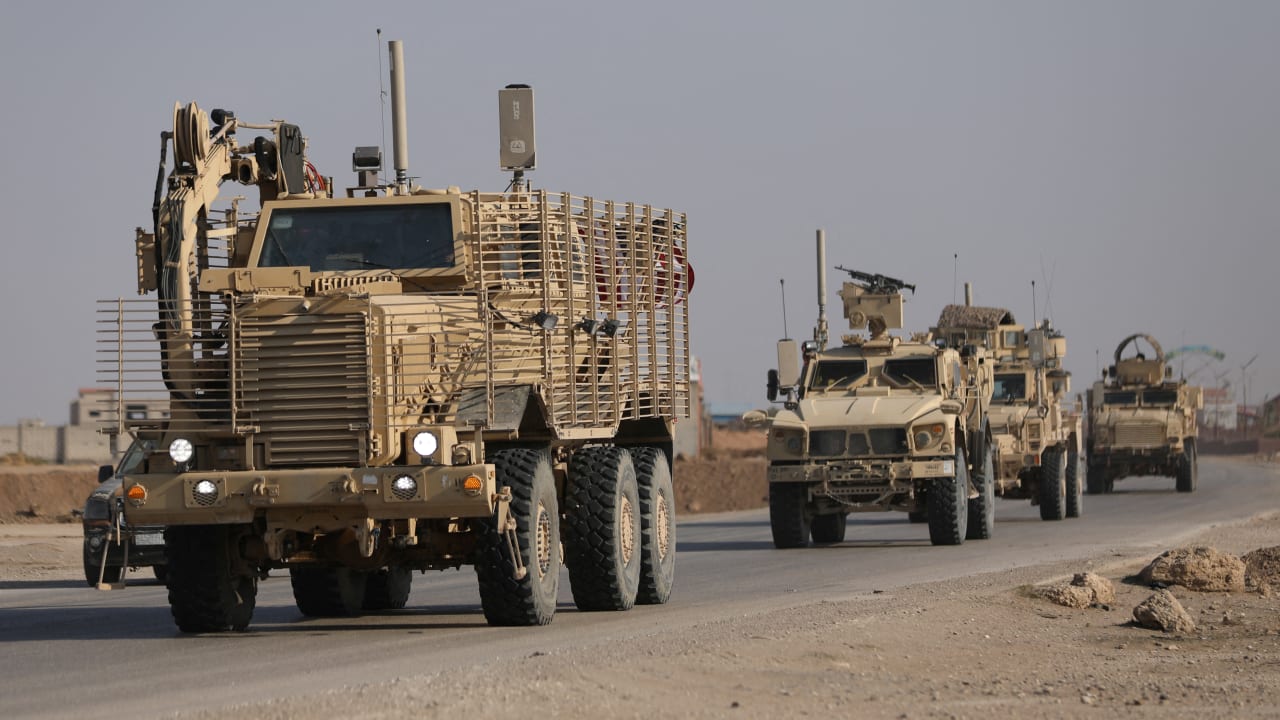
The US is withdrawing all of its forces from Syria, The Wall Street Journal reported Wednesday. This follows many momentous developments in Syria over the past year.
The US mission in Syria began in 2014 during the war against ISIS. It ramped up in 2015, when the US helped back the creation of the Syrian Democratic Forces, the main partner force against ISIS in Syria. The SDF was primarily a Kurdish force.
It’s worth looking back at how the US began its role in Syria and what happened.
The anti-ISIS mission in Syria has been incredibly successful. At its peak, it saw several thousand US personnel supporting 50,000 to 80,000 SDF fighters against ISIS.
The SDF was able to liberate eastern Syria from ISIS in battles between 2015 and 2019. The last ISIS enclave was in an area near the Euphrates River valley in Baghuz in early 2019.

ISIS was forced to surrender this last area, and about 50,000 ISIS fighters and their families ended up in detention facilities in eastern Syria.
Ever since the last ISIS enclave was cleared, the US has been backing the SDF to continue to crack down on any ISIS cells that pop up and also to detain the ISIS fighters.
There were some 7,000 male ISIS detainees, including some of the most brutal ISIS murderers who had committed genocide against the Yazidis in Iraq.
The SDF’s war against ISIS was not without some controversies and challenges. First of all, the fighting was difficult, and the SDF lost about 12,000 fighters.
In addition, the SDF sometimes pushed for operations that the US did not want to undertake.
The US has been leading a 90-country anti-ISIS coalition. This is usually called “the Coalition.” Its technical name is Combined Joint Task Force-Operation Inherent Resolve.
While there are 90 countries in the Coalition, including most recently Syria, most members of the Coalition didn’t send forces to Syria.
The US was the main player in Syria, along with some support from France and the UK. Jordan also carried out airstrikes against ISIS in Syria. The US put some 2,000 boots on the ground.
The US role in Syria was run by Central Command. It’s goal was to work “by, with and through” the SDF. That means the SDF led the fighting, and the US gave support, including airstrikes and sending special operations forces. Some armored vehicles were also deployed.
US diplomats generally chafed at the role in Syria. They didn’t want to work with a “non-state actor” like the SDF, and they characterized the US role as “temporary, tactical and transactional.”
WHEN THE Assad regime fell, the US began to work directly with Damascus, essentially sidelining the SDF and making its role less necessary.
There were other hurdles. Turkey opposed the SDF and accused it of being linked to the Kurdistan Workers Party (PKK), which Ankara views as a terrorist group.
The US was aware of other concerns in Syria. When the SDF liberated Raqqa from ISIS in 2017, it came to control a large Arab population in Syria. Many Arabs did not support the SDF or its civilian component, the AANES, which was dominated by the Kurdish PYD party.
The US had helped support the SDF as a way to make it an umbrella group that included Arabs. Around one-third of its fighters were Arabs. But this still created challenges.
US personnel continue to leave Syria
Turkey invaded the SDF-held area of Serekaniyeh in 2019. This led the Trump administration to consider withdrawing from Syria at the time. However, the withdrawal stalled. Nevertheless, it was always clear since 2019 that the clock was ticking on US withdrawal.
A challenge in Syria was what to do with all the ISIS detainees. When Syria joined the Coalition last November, the US was open to working directly with Damascus and seeking a way the SDF could integrate into the new Syrian security forces. SDF commander Mazloum Abdi had met with Syria’s president last March to prepare this process.
The process stalled, however, and there were clashes in January. On January 29, the SDF and Damascus reached a new agreement. Now it seems that Damascus will deploy Interior Ministry forces in most SDF areas. The US has moved almost 7,000 ISIS detainees to Iraq.
With these key issues mostly solved, the US is wrapping up its role. The US also had a small force at Tanf garrison in southern Syria, supporting an Arab unit of anti-ISIS fighters. That group, which called itself the Syria Free Army, became part of the Syrian government’s new 70th division and then joined the Interior Ministry.
With the mission at Tanf complete, the US left Tanf earlier this month. The US also left bases near the Euphrates River and also the base at Shaddadi.
The number of US personnel in Syria is estimated to be in the hundreds now, and there will be fewer soon, until the numbers will apparently reach zero.
Nevertheless, the US continues to carry out airstrikes against ISIS in Syria.