
On February 17, the Kurdish Rudaw media channel said that a UN delegation had “visited the Kurdish besieged town of Kobane in northern Syria on Monday to assess the humanitarian situation in the city and evaluate the conditions of displaced people, according to a local official.”
The fate of Kobane has been largely overlooked as Syria continues to seek to integrate the Syrian Democratic Forces into the Syrian Transitional Government’s forces.
Writing on his Substack, Wladimir van Wilgenburg discussed the concerns about the deepening crisis in Kobane. In his piece, he quoted from a Kurdish Red Crescent report about what is happening.
“As of February 17th, Kobane is still under siege; the humanitarian disaster is increasing day by day. Kobane has been without adequate supplies for more than three weeks now,” the report noted.
“Around 600,000 people are currently stuck in Kobane, without adequate supplies….About 48 schools and mosques are currently providing shelter for an approximate number of 200.000 IDPs.”
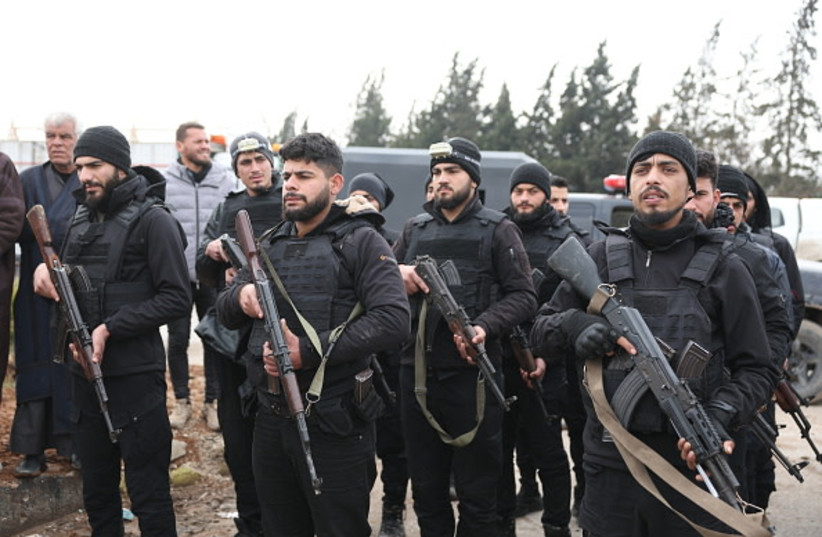
In addition, a delegation from the UN Office for the Coordination of Humanitarian Affairs (OCHA) visited the city, Rudaw noted. The problem in Kobane is that it faces unique challenges that are different from those in some other Kurdish areas of Syria.
The Kurdish inhabited area of Syria is largely confined to northeastern Syria.
Prior to 2018, the area of Afrin in northwest Syria was also inhabited by Kurds. However, a Turkish invasion in which Ankara backed a number of extremist groups led to around 160,000 Kurds fleeing Afrin. This is part of a pattern of displacement of Kurds in Syria.
Other Kurds have been displaced from neighborhoods in Aleppo after fighting in January, and also large numbers of Kurds were displaced in a different Turkish invasion in 2019 near Serekaniye.
The Kurdish community formed the bulk of the fighters in the SDF, which was founded in 2015. Prior to that, many Kurds served in the People’s Protection Units or YPG. This group helped fight ISIS and also held ISIS off during a siege of Kobane in 2014. It was the siege of Kobane at the time that led the US-led anti-ISIS coalition to use airpower to help the defenders of Kobane.
This brutal battle, akin to Stalingrad in the Second World War, helped turn the tide against ISIS.
Today, the city of Kobane is again under siege. It is not clear why the Syrian government and SDF are at an impasse over the city. In other areas, such as Hasakah and Qamishli, the Syrian government has deployed security forces of the Interior Ministry in an agreement with the SDF. It’s possible that the holdup around Kobane is related to Turkey’s opposition or concerns. In the past, Ankara has vowed to remove the SDF from Kobane.
Kobane needs humanitarian aid, electricity, and water
The reports indicate that the city requires humanitarian aid. It has also faced shortages of electricity and water. The UN delegation and the focus from the Red Crescent may help change things. Ramadan is also starting, and it’s possible that this could lead to a relaxation of the siege. Three weeks ago, there was a humanitarian corridor to the city. However, it is not clear what comes next.
ANHA, the Kurdish Hawar News Agency, noted on February 18 that “factions affiliated with the Syrian Interim Government have been enforcing a full blockade on Kobani since 20 January, leading to a severe deterioration in the conditions of more than 600,000 civilians in the city and its countryside, raising serious fears of an impending humanitarian catastrophe.”
“Roads remain closed, while food and medical supplies are barred from entry. Hospitals are operating at minimal capacity due to shortages of medicines, particularly those for chronic illnesses and emergency cases, in addition to a sharp decline in medical supplies.”