Iran entered the fifth day since Operation Rising Lion began reeling from continued military losses, and struggling to find diplomatic support. In the months prior to the war Iran had sought to improve its diplomatic ties abroad.
It had been working more closely with the Gulf, as well as Russia, China and other countries. Iran also did outreach to Egypt, Pakistan and Central Asia.
Iran likely expected a lot more support by this point. However, even its friends in places like Venezuela and Russia don’t seem to be able to aid Iran very much.
Iran’s other friends such as Turkey have slammed Israel, but it’s not clear what they can do for Iran. It’s not clear if Qatar and Turkey, which are both US allies, can encourage the Trump administration to help Iran get a deal that would enable it to climb down from the conflict.
Iran’s own state media illustrates the diplomatic isolation because Iran doesn’t seem to highlight any visits by foreign heads of state or any phone calls with countries that are ready to help.

There is no doubt Iran has reached out to China, Russia and other countries. Iran was in the middle of talks with the US on a possible Iran nuclear deal when the war broke out.
However, Iran was slow playing the deal talks. It thought it had all the time in the world and that US President Donald Trump wanted a deal more than Tehran did. Iran appears to have miscalculated there.
What can we tell about Iran’s apparent isolation by its own state media accounts?
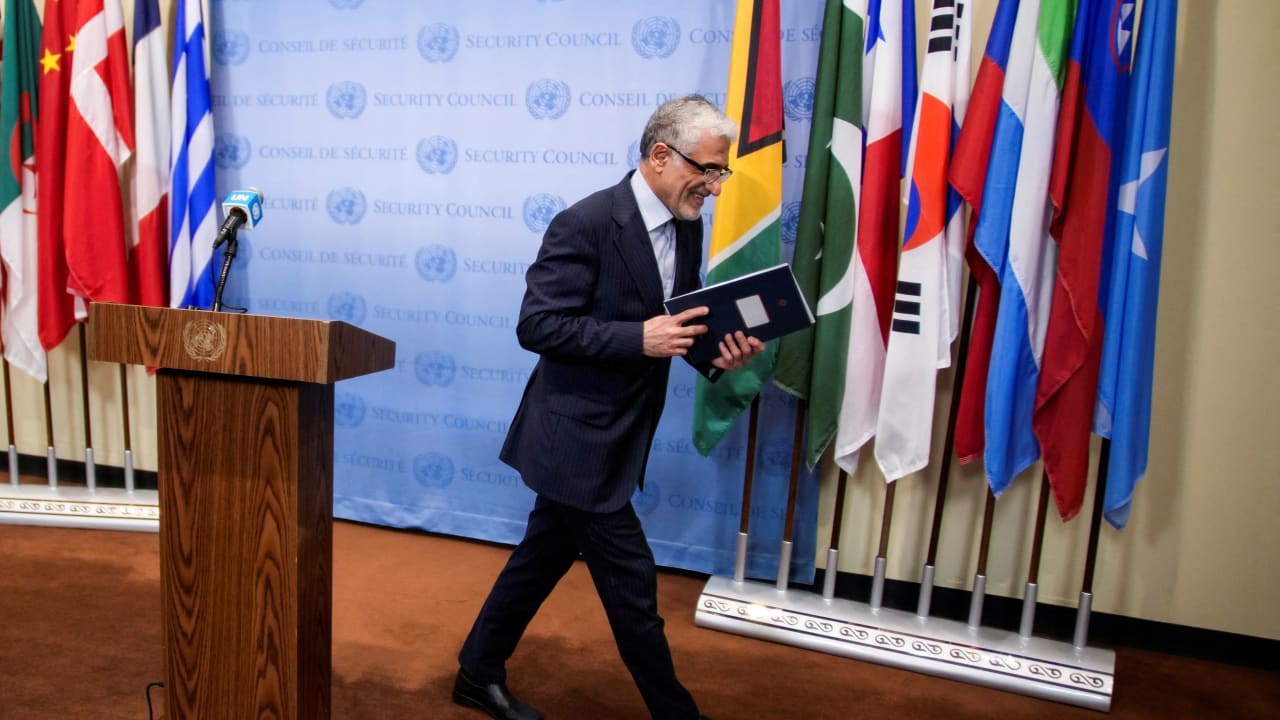
Iran’s IRNA says that the country condemned Israel’s attack on its national TV headquarters. Also Iran’s UN envoy has said Israel “crossed all red lines” in attacks on Iran.
In addition, the envoy said that Iran has the will to defend its homeland and will not “weaken.” He wouldn’t need to assure the world of this, if it was true.
These statements are trying to bring confidence, when it is clear Iran is not confident. Israel eliminated the commander of Iran’s Khatam al-Anbiya headquarters, according to the IDF on June 17. Ali Shademani, who is viewed as Iran’s wartime chief of staff and a top aide to Khamenei, was killed just days after his predecessor was killed on June 13.
Iran is reeling from military losses. It has lost a third of its long-range missile losses. It has lost commanders. It has suffered losses to other key military sites and it cannot defend its own air space.
Iran likely hoped that the Gulf countries, China, Russia, Pakistan, India and other countries would help contain this war and end it quickly. Now Iran faces the prospect of a humiliating defeat or a long war in which the regime could weaken and even be overthrown.
Iran does not want to repeat Libya or Iraq's mistakes
Iran doesn’t want to end up in a situation like Libya or Iraq, with its nuclear program dismantled. It knows Libya sank into civil war and Iraq was invaded and became a weak state.
However, Iran’s military defenses have proven to be a paper tiger and it is much weaker than people thought the country was before June 13. Israel has torn off the mask of Iran’s military prowess. The days when countries in the region cowered due to Iranian threats appears to be over.