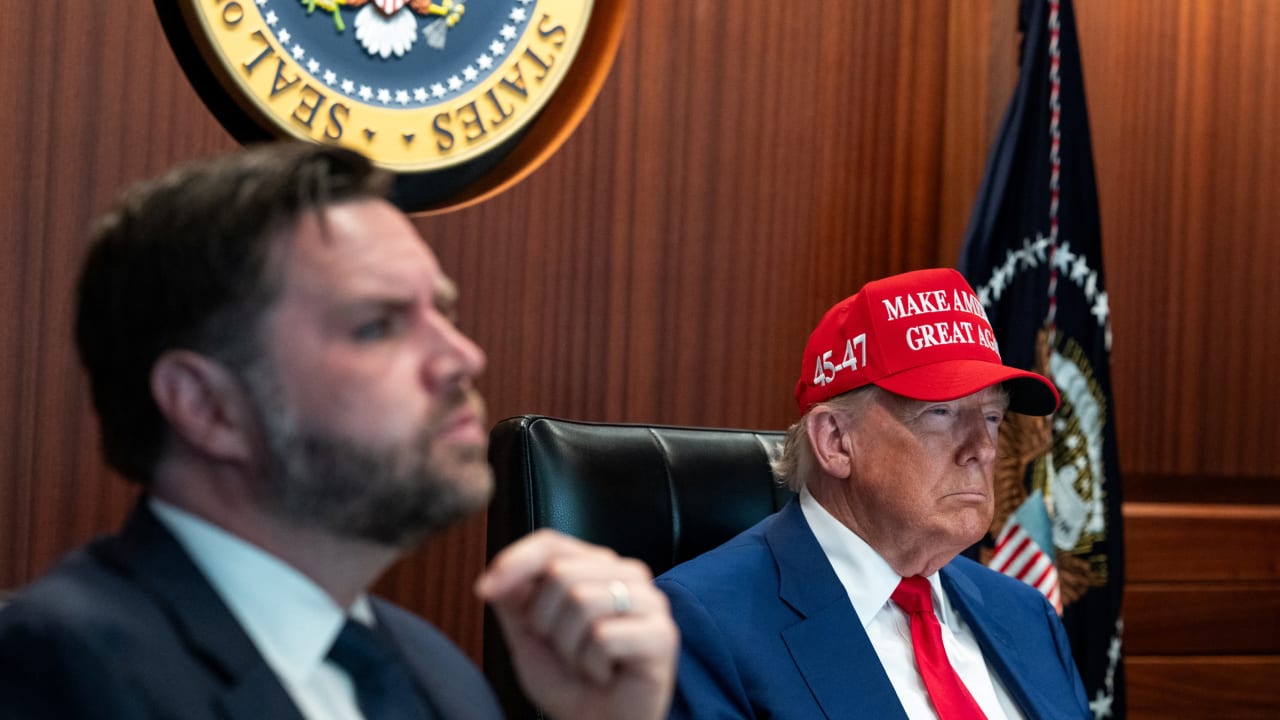
US Vice President JD Vance was unable to confirm the status of Iran's stockpile of enriched uranium in an ABC News interview after US President Donald Trump ordered airstrikes on nuclear facilities in the country.
In the Sunday interview, Vance said he thought the Iranian nuclear sites were "severely damaged or obliterated, I'm not exactly sure what the difference is."
However, he did note that the country's nuclear program had been heavily set back.
When asked about the status of Iran's 900 pounds of highly enriched uranium, Vance said that the Trump administration is "going to work in the coming weeks to ensure that we do something with that fuel, and that’s one of the things that we’re going to have conversations with the Iranians about."
He added that the objective of the mission was to destroy the Fordow nuclear site in particular.

Fordow was substantially set back, Vance says
"That was the objective of the mission: to destroy that Fordow nuclear site and, of course, do some damage to the other sites as well. But we feel very confident that the Fordow nuclear site was substantially set back, and that was our goal," Vance emphasized.
Vance's statements come after US President Donald Trump, who made the claim that Iran's three main nuclear enrichment facilities were "completely and totally obliterated" during a Saturday night address.
Vance also emphasized to ABC that the US is not at war with the Islamic Republic.
"[We are] not at war with Iran. We're at war with Iran's nuclear program. And I think the president took decisive action to destroy that program last night."
Previous sources with insight into the US strikes on Iranian targets said that the Natanz nuclear site had been destroyed, but that Fordow and Isfahan only suffered "major damage."
The New York Times, citing two Israeli officials, reported on Sunday that Fordow hadn't been destroyed, but severely damaged.
The officials also added that Iran had moved uranium away from the site. The NYT report added that 880 pounds of enriched uranium had been removed to 60% purity, below the 90% needed for nuclear weapons. Some 60% enriched fuel was stored at the nuclear facility in Isfahan.
Questioning IAEA head Rafael Grossi
International Atomic Energy Agency (IAEA) head Rafael Grossi was interviewed by CNN and was also asked about the status of the Iranian nuclear facilities.
"The picture is mixed. You will have a different assessment of each site of the damage," he said. "Of all the sites, there are clear indications of impacts, but for the assessment of the degree of damage underground, we cannot pronounce ourselves. No one would be able to tell."
Speaking on the stockpile of 880 pounds of enriched uranium, Grossi noted that “Iran has made no secret that they have protected this material,” and that the fuel was last seen by his inspectors just before Israeli attacks on Iran.
Trump reiterates statements on nuclear facilities
Trump reiterated his statements on Sunday night about the status of the Iranian nuclear facilities after strikes were launched against them, claiming that "monumental damage was done to all nuclear sites" in the country.
"Obliteration is an accurate term! The white structure shown is deeply embedded into the rock, with even its roof well below ground level, and completely shielded from flame. The biggest damage took place far below ground level. Bullseye!!!"
Amichai Stein contributed to this report.