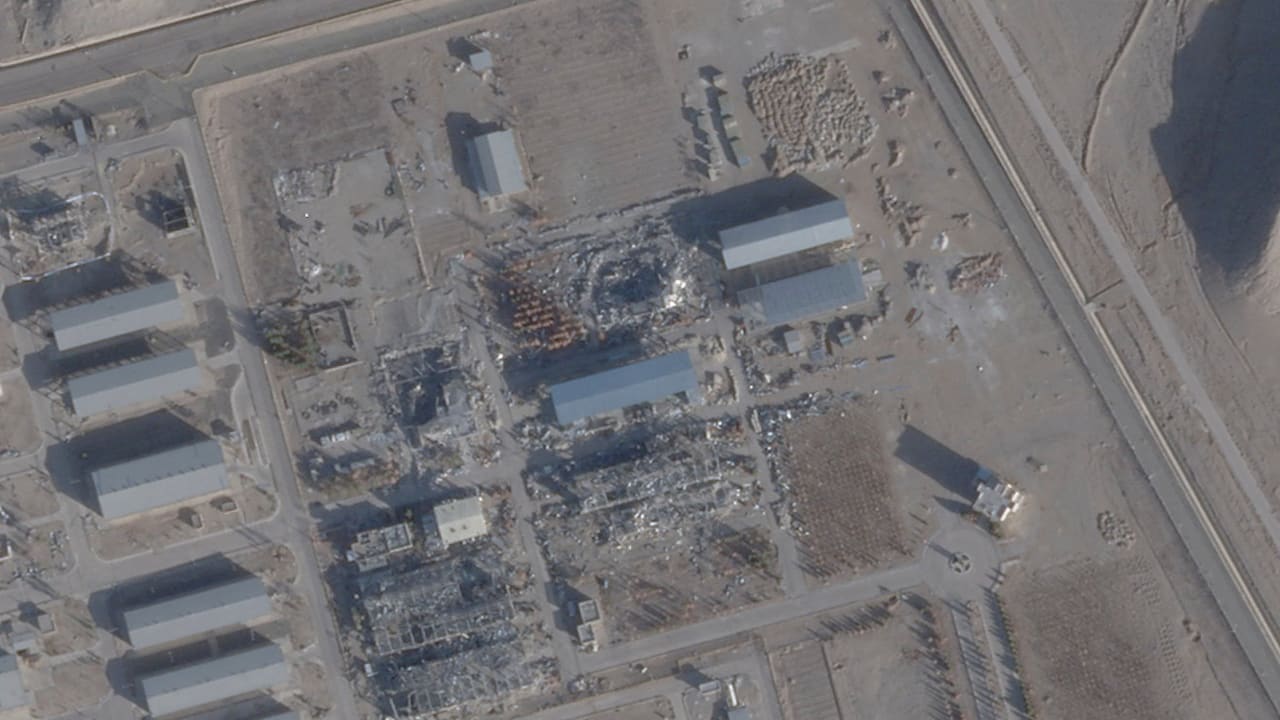
Iran’s ambassador to the UN nuclear watchdog said Iran’s sprawling nuclear facility at Natanz was struck during US and Israeli military operations against the Islamic Republic.
“Again they attacked Iran’s peaceful, safeguarded nuclear facilities yesterday,” Reza Najafi told reporters on Monday at a meeting of the International Atomic Energy Agency’s 35-nation board of governors. Asked by Reuters which facilities were hit, he replied: “Natanz.”
There were also reports later of explosions at various Iranian nuclear facilities.

However, to date, Israel has repeatedly refused to name any nuclear sites it might have struck, despite identifying them during the June war.
The extent of new damage to Iran’s nuclear facilities caused by the current military conflict remains unclear as of Monday night, following potentially contradictory statements from Iran, the IAEA, Israel, and the US on the issue.
Explosions heard at various Iranian nuclear sites on Monday
On one hand, late on Monday, there were reports that the US had finally carried out a major attack on Iran’s Isfahan nuclear facility. On the other hand, there were no confirmations, and until that attack, it was unclear whether any nuclear facilities had been attacked for much of the conflict’s first three days.
IAEA Director-General Rafael Grossi, earlier on Monday, told the IAEA Board of Governors that there was no evidence that either the US or Israel had struck any nuclear sites in Iran as part of the current war.
“We have no indication that any of the nuclear installations, including the Busher nuclear power plant, the Tehran research reactor, or other nuclear fuel cycle facilities have been damaged or hit,” he said.
Likewise, though the United States has named a long list of targets it struck, it did not include any nuclear sites.
Israeli spokespeople have vaguely mentioned targeting the nuclear program, and Israel did assassinate two high-level Iranian nuclear authorities who were running or have run Iran’s Organization of Defensive Innovation and Research (SPND) nuclear program.
There have also been unconfirmed reports of attacks around Isfahan, but those could be unrelated to the nuclear program.
The Jerusalem Post sought to clarify the contradictions with the IAEA spokesperson.
The IAEA spokesperson referred the Post to Grossi’s press conference later on Monday.
At the press conference, Grossi did not directly address the contradiction.
Instead, he said that much of his information on the state of things in Iran stemmed from technological devices scanning for radiological changes, such as leaks of toxic nuclear materials into the air in a given area, and his staff has seen no such leakages.
However, Grossi said, since the Israel-US attacks on Iranian nuclear facilities in June 2025, his staff has had no access to any of the central facilities, whether Natanz, Isfahan, or Fordow.
When asked specifically about reports on Friday that Isfahan had been struck, he cited his lack of direct access to that facility.
Grossi also speculated that most of Iran’s 60% enriched uranium remains deep underground at Isfahan and was not bombed in June, nor has it yet been bombed during the current conflict.