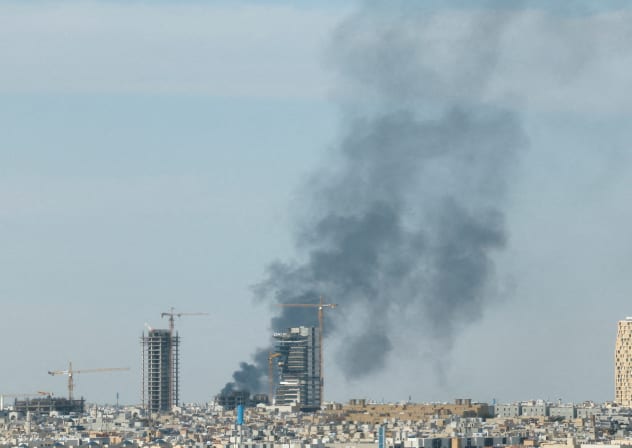
Kuwait Airport attacked by several drones as Iran continues attacking Gulf
The attack follows a drone attack on the Salalah port in Oman and a ballistic missile interception over Abu Dhabi, both on Saturday.

The attack follows a drone attack on the Salalah port in Oman and a ballistic missile interception over Abu Dhabi, both on Saturday.


Hezbollah's spike in attacks on Israel and IDF soldiers is likely not sustainable, but could be part of an effort to coerce Israel and the US into a ceasefire on all fronts.

Regional powers are positioning themselves to mediate the Iran conflict, with Turkey and Pakistan seeking a role in easing tensions and shaping the post-war order.

The conflicting statements came as the economic and humanitarian toll of the war mounted, with fuel shortages spreading worldwide, sending companies and countries scrambling to contain the fallout.

Israeli sources have confirmed that the IDF was behind the strike, adding that some of Tangsiri's top naval aides were killed in the same attack.

In the past, Israel largely stood alone on the front line against Iran, occasionally managing to bring the United States and European partners on board, but only on the nuclear issue.

US officials and military experts have warned of the significant risks that a US ground invasion of Kharg Island, Iran's primary hub for oil exports, would pose.

Two IDF soldiers killed in southern Lebanon • IDF continues strikes in Tehran overnight • One killed, 25 injured in Nahariya by Hezbollah rocket fire

According to a post made on X/Twitter by the Interior Ministry, six figures were identified within Kuwait as being part of the network, along with 14 others located outside of Kuwait.

The series of attacks came following Iran's refusal to accept US President Donald Trump's ceasefire proposal.
"Israel has a right to exist and attacks against her must stop," Uganda’s Chief of Defense Forces Gen. Muhoozi Kainerugaba said during a series of X/Twitter posts expressing his support.