
2025 has been a landmark year for historic milestones.
For more stories from The Media Line go to themedialine.org
May 8 marked the 80th anniversary of the final defeat of Nazi Germany in 1945. September 2 marked the official end of World War II with Japan’s surrender to US Gen. Douglas MacArthur.
I had the privilege of representing the Simon Wiesenthal Center—an institution devoted to remembering the lessons of the past—at ceremonies from Berlin to Yokohama. I also had the honor to march with the US delegation, along with 20,000 others, marking the anniversary of the liberation of the infamous Mauthausen concentration camp in Austria, where, on May 5, 1945, battle-tested US soldiers were staggered by the sights and smells of a charnel house as tortured and starving survivors moved among the murdered victims of the Nazi Final Solution. Jewish survivors like Simon Wiesenthal, who weighed only 90 lbs., were too weak to stand to embrace their saviors.
Years later, when I first met the man who rose from the ashes of the Shoah to emerge as the courageous Nazi hunter and the unofficial ambassador of 6 million Jewish ghosts, Mr. Wiesenthal told me this: “During the Shoah, the worst for us Jews was the knowledge that no one cared about us. We were abandoned by so-called friends and forgotten by supposed allies. That crushed our spirits.”
He added a charge for the future.
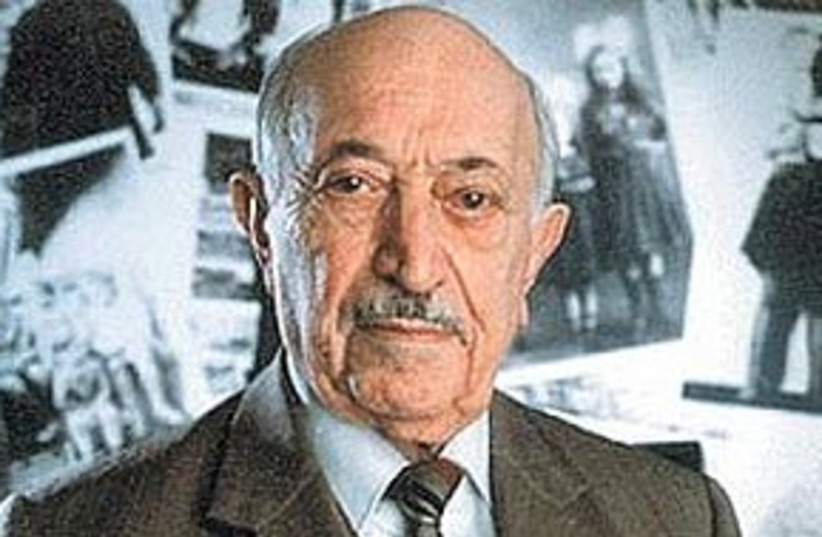
“A key lesson for us Jews going forward”, Wiesenthal added, “That if the Shoah teaches us anything, if we are to survive and thrive, we must seek out new allies and make new friends. We cannot do it alone.”
And yet today, in 2025, so many of our Jewish students from Rome to Madrid, from Montreal to Melbourne, and across the US elite campuses feel the bitter winds of abandonment.
Bedrock Jewish communities in the Diaspora—London, Paris, Toronto, Sydney, Chicago, and New York—have seen their sense of safety and protection stripped away by well-funded hate campaigns led by Hamas’ fellow travelers and by far-left and far-right extremists, who have largely succeeded in rendering mute so many whom we viewed as trusted political allies. Synagogues—our collective spiritual and communal homes—are under violent attack in Europe, Australia, and North America.
Where are the leaders with moral authority to lead the charge against antisemitism?
Where are the thinkers, the influencers, the religious leaders prepared to defend—openly and publicly—Judaism and Judaic values in the marketplace of ideas and influencers in the face of blood libel after blood libel against Israel and the Jewish people?
Nostra Aetate vital importance in fight against antisemitism
Another anniversary this year carries real-time implications—the Catholic Church’s 60th anniversary of the historic Nostra Aetate.
That Church document was released after the passing of a true saint, Pope John XXIII. During much of the Nazi era, he had served as a papal nuncio in Turkey and understood full well the failure of the Church to publicly defend the Jews and rebuke the Nazis. When he became pope, he set out to change Christian dogma that for centuries had demonized Jews, accused them of deicide, and ingrained and normalized antisemitic tropes in Europe and beyond. Such hatred and loathing helped pave the course that led to Hitler’s Final Solution.
As pope, he set in motion the theological mechanism to defang theological antisemitism and instead openly celebrated Judaism as a legitimate faith that informed Christians and Christianity. The Church’s newfound open respect for Judaism also opened wide the gates for interfaith dialogue with other religions over the last six decades.
I witnessed the new Pope Leo XIV’s commemoration of Nostra Aetate at the Vatican. I was present at two events, one in the presence of hundreds of faith leaders and the second at the pontiff’s weekly public appearance in St. Peter’s Square before a crowd of 100,000 faithful. On this day, I watched and listened from a distance of 20 feet as he sang and spoke to pilgrims from 24 countries.
He declared: “Sixty years ago, on 28 October 1965, Vatican Council II, with the promulgation of the declaration Nostra Aetate, opened up a new horizon of encounter, respect, and spiritual hospitality. This luminous Document teaches us to meet the followers of other religions not as outsiders, but as traveling companions on the path of truth; to honor differences, affirming our common humanity; and to discern, in every sincere religious search, a reflection of the one divine Mystery that embraces all creation.