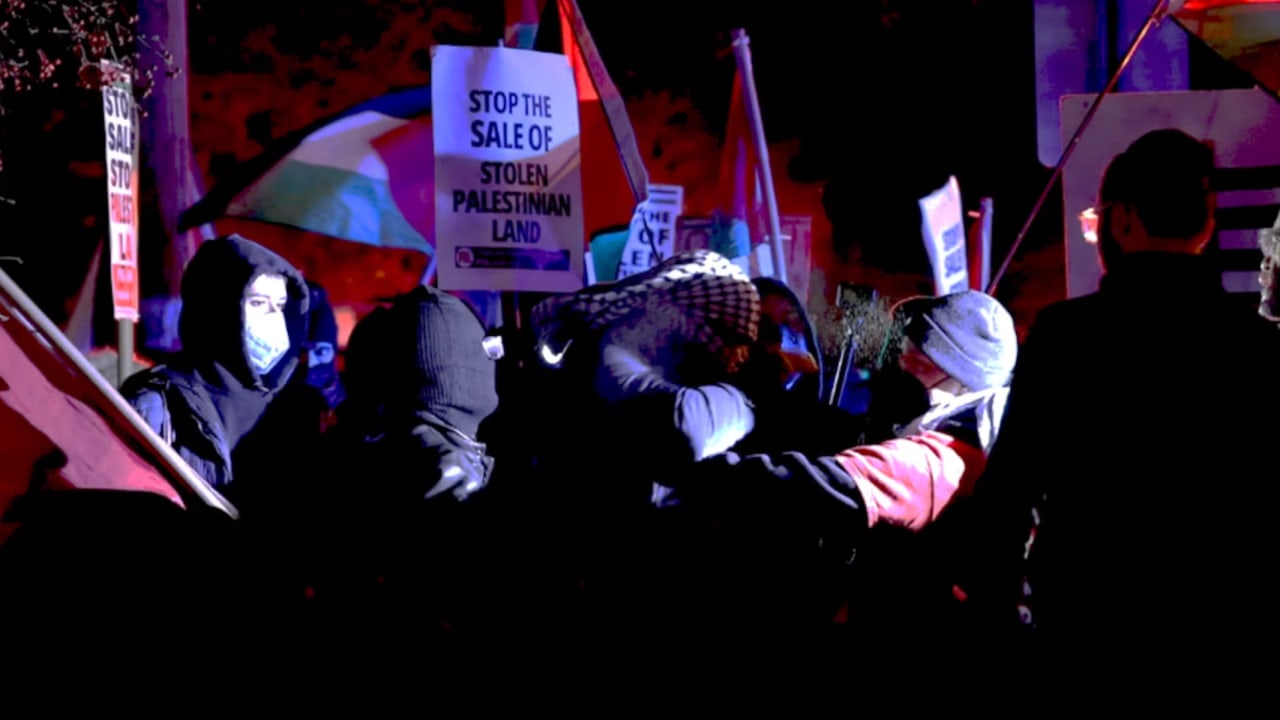
Over a year ago, in West Orange, New Jersey, a group of pro-Hamas protesters gathered in front of a synagogue with nothing to do with foreign politics.
During that protest, one of the radicals violently attacked an elderly Jewish man who was trying simply to attend services. Dr. Moshe Glick intervened to protect the victim and ended up injuring the attacker.
Instead, it was Dr. Glick, the defender, who was arrested; he was charged with aggravated assault, and “ the persecuted became prosecuted.”
Defending Dr. Glick is a worthy cause, but his experience highlighted a much larger issue. The issue is that Jewish people who attend a synagogue should not be subjected to harassment and intimidation for simply wanting to pray at their house of worship.
Dr. Glick’s case drew renewed attention to a law already on the books, the FACE Act. The US Department of Justice recently reaffirmed that the law “prohibits the use or threat of force and physical obstruction to intentionally injure, intimidate or interfere with any person lawfully exercising their First Amendment right to religious freedom at a place of worship.”

In other words, it is illegal to stand outside a synagogue, as a menacing mob blowing horns, threatening violence, or obstructing entry when the protest has nothing to do with that congregation’s traditions or worship.
'Protect Our Houses of Worship' campaign
This law can dramatically change the landscape for Jewish people in the United States who currently feel under siege in many regards. The challenge is that not all police departments or local governments even know about this act. As a result, a new campaign has been launched called: The “Protect Our Houses of Worship” campaign.
Interestingly, it was out of Dr. Glick’s courage and refusal to be silenced that this movement emerged. Its mission is simple: to make sure law enforcement, local governments, Jewish communities, as well as those who aim to menace Jewish communities (or any house of worship), are made aware that those who engage in this type of behavior will be arrested and or fined up to five thousand dollars.
The FACE Act draws a line: no more “just demonstrating” when the real intent is intimidation and fear. In its first use against synagogue protesters this fall, the Department of Justice made clear: “No American should be harassed, targeted, or discriminated against for peacefully practicing their religion.”If this campaign is successful and if the law is enforced consistently, it could reshape the landscape and return a sense of security to Jewish communities across the country.
This campaign also demonstrates a broader principle for anyone seeking to make an impact in the world today. One of the most effective ways to move the narrative and create tangible change is to identify causes that are affecting people’s lives right now.
This could include exposing the physical and sexual violence committed against Israelis on October 7 and afterward, shining a light on the persecution of Christians in Nigeria, or raising awareness of the starvation crisis in Yemen.
These are causes that matter, and the world needs to know about them.
The formula for impact:
• Identify a cause
• Build an alliance with the people who are most impacted by the cause
• Create a campaign that gives structure and focus to the effort
• Create linked missions over a finite amount of time to accomplish the goals of the campaign
By participating in these missions, individuals not only contribute to meaningful change but also experience the personal satisfaction of having made a measurable difference.
This approach mirrors what Dr. Glick and the MetroWest Israel Action Committee, in association with Emissary4all, are doing with the “Protect Our Houses of Worship” initiative. By organizing a campaign and creating actionable missions, they have turned outrage at injustice into a structured effort that can achieve real results. It is a blueprint that can be applied to almost any urgent issue affecting communities worldwide.
If you want to help be part of this campaign to make a real difference, reach out: protectOurHousesOfWorship@gmail.com.
There are many ways to protect and support the Jewish community, but meaningful impact can certainly come from the Cause–Alliance–Campaign–Missions action plan. In doing so, individuals not only make a difference in the world but also gain the satisfaction of contributing to meaningful change.
Daniel Rosen is the co-founder of a nonprofit technology company, Emissary4all, which is an app to organize people to impact the narrative and move the needle on social media and beyond. He is the co-host of the podcast Recalibration.