
During my travels in the region – including a visit to Syria in September 2025 – I heard elderly men and women, and even a senior government official, speak with quiet pride about how they once helped their Jewish neighbors observe Shabbat. They recalled lighting stoves, switching on lights, or checking in before nightfall so a family could rest without worry. These were not acts of diplomacy or dialogue. They were simply what good neighbors did – and they were not rare.
This year, the rhythms of Ramadan and the Hebrew month of Adar move in parallel – days of fasting, nights of generosity, and a festival of joy. In a wounded moment for our region and our world, their shared moral language invites us to rediscover our shared humanity.
Purim commemorates the deliverance of the Jewish people in ancient Persia more than two millennia ago. It is a story rooted in the broader Middle Eastern landscape, reminding us that Jews have been part of this region since antiquity. For centuries, Jewish communities existed across lands that are today predominantly Muslim – from Morocco to Iraq, from Yemen to Central Asia, from Anatolia to the Balkans and in many GCC countries.
History is never without pain. Yet Jews in Muslim lands experienced long eras of coexistence and cultural exchange that stand in contrast to the severe persecutions that marked much of Jewish life in parts of Christian Europe.
Even today, approximately 100,000 Jews continue to live across 18 Muslim-majority countries. Their presence is not a relic of the past but a living reminder that Jewish life remains part of the social and religious fabric of the Muslim world.
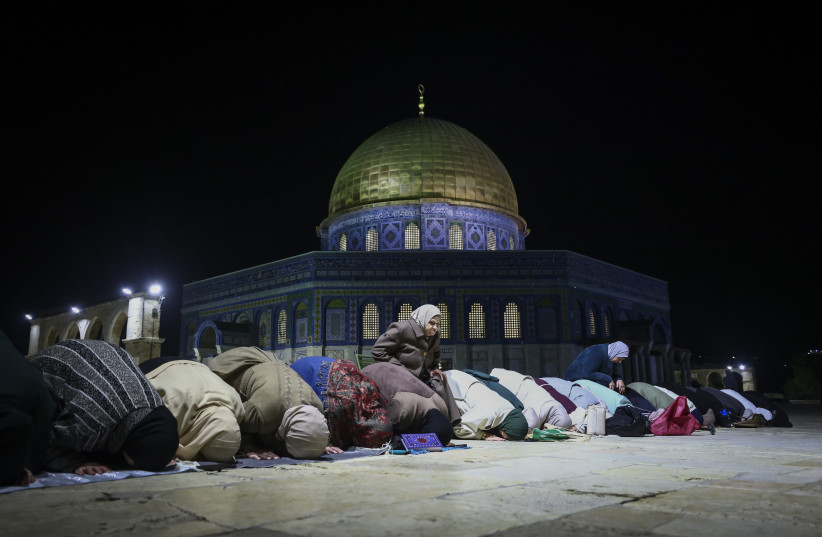
In recent years, however, that fabric has been further strained. The war in Gaza has deepened grief and anguish across communities, intensifying fears and widening emotional distance between neighbors.
Synagogues have been attacked, including arson assaults in Tunisia. Religious leaders in the region have been targeted and killed. Across digital spaces, online bullying and antisemitic harassment have become commonplace, corroding trust and pushing communities into silence.
Imported fear and suspicion
Fear and suspicion – often imported from conflicts far beyond the neighborhood, conflicts for which local communities bear no responsibility – can quietly erode relationships that took generations to build.
Yet one truth remains unavoidable: None of our communities are disappearing. Jewish and Muslim communities are destined to share societies and futures – in the Middle East, in Europe, and across the Western world. We are all here to stay, together.
If we must live together, then we must also learn to heal together.
Ramadan and Adar both call us toward generosity and compassion. During Ramadan, Muslims fast from dawn to sunset, cultivating humility, compassion, and responsibility toward the vulnerable. Adar invites Jews to increase joy, give charity, and ensure that no one is left hungry through gifts to the poor and shared festive meals.
These values offer a path forward – not through conferences or declarations alone, but through daily interaction: a greeting, a visit, a respectful conversation, a meal offered with dignity. It is the ordinary expression of shared humanity that quietly lowers walls.
Peace between people is not created by politics or negotiations. It begins when human beings recognize one another’s dignity and treat one another with respect.
This season invites simple acts: Jews showing sensitivity during Ramadan, refraining from eating or drinking in public where others are fasting, and extending charity to those in need; Muslims welcoming neighbors to Iftar tables and strengthening bonds of hospitality (while being mindful of kosher rules); and their civic leaders ensuring that the Jewish religion and Jewish citizens and residents are openly included and recognized as valued members of society. Familiarity reduces fear – and reduced fear makes cooperation possible.
Small acts build healing
Small acts do not erase pain. But they build the human fabric necessary for healing.
The story of Purim teaches that hidden turns of history can lead to unexpected redemption. Ramadan teaches that patience, restraint, and compassion refine the soul and strengthen society.
We must build bridges – in our neighborhoods, in our civic spaces, and in our everyday lives. Healing will come not through declarations alone, but through encounters: at shared tables, in acts of kindness, and in the recognition that the other is also created in the image of God.
One step at a time – without surrendering who we are, and while embracing the goodness we can share.
Ramadan Kareem and Purim Sameah!
The writer, a rabbi, is chairman of the Alliance of Rabbis in Islamic States.