The blood pools have dried, and the killers returned to their nests, but the ayatollahs’ gunfire still crackles in millions of Iranian ears. The victims’ cries haunt Iran at nightfall, and multitudes of bereaved parents, siblings, and children wake up at dawn seething with wrath and awash with despair.
At this writing, they are preparing to hold the 40-day commemoration ceremonies while their hopeful savior negotiates in the morning and gathers warships at night.
Just where all this leads is anyone’s guess, but one thing has already emerged, to the Iranian people’s disgust: some of their neighbors are working hard to prevent the attack that can unseat their loved ones’ murderers.
Who are these accomplices, what drives them, and where does it lead?
The most innocent of the prospective attack’s resisters are the leaders of Saudi Arabia.

Iran's relationship with Saudi Arabia
Yes, Riyadh and Tehran have long been at loggerheads. In 1987, Iranian pilgrims, incited by Ayatollah Ruhollah Khomeini himself, provoked riots at the Hajj, resulting in major clashes where hundreds were killed. Saudi-Iranian diplomatic ties were consequently severed for three years.
In 201,6 Riyadh again broke diplomatic ties, following Tehran’s protestation of Shi’ite Sheikh Nimr al-Nimr’s execution for agitating Saudi Shi’ites to secede. Relations were not restored for seven years. In the interim, Iranian drones and missiles torched Saudi oil fields, cutting the kingdom’s oil production by more than 50%.
One might therefore expect the Saudis to want the ayatollahs gone. Well, they do, but they are afraid that an American attack might fail to unseat the regime and spark a vicious counterattack that will target Mecca and Riyadh.
It’s a disappointingly antiheroic approach, but at least there is nothing sinister about it.
That cannot be said about the ayatollahs’ other Arab defender, Qatar, and its non-Arab partner, Turkey.
How Qatar relates to the situation
Qatar is hardly a two-hour yacht sail from Iranian shores, and thus shares its Saudi neighbor’s fears of an Iranian attack. The same goes for the rest of the Gulf’s Arab countries, from the Emirates and Kuwait to Oman and Bahrain.
Moreover, Qatar hosts a vast American airbase, and as such has all the reason in the world to suspect that Iran, if drawn into an all-out war with the United States, will make Qatar a prime target for the mullahs’ missiles and drones.
However, the Qataris have an additional cause. For reasons that even expert Arabists find difficult to understand, Qatar has chosen to be a thorn in the side of the Arab world’s leaders – first Egypt, then Saudi Arabia. In 2017, this resulted in the two’s severance of diplomatic relations with Doha, a row that lasted four years and included a naval blockade on Qatar.
The reason for this drastic action, which was joined by the United Arab Emirates and Bahrain, was what Qatar’s Arab adversaries described as its support of Iran in particular, and Islamist terrorism in general. Now, it is only natural that the same people who helped the Muslim Brotherhood destabilize Egypt will help the staggering Iranian regime back on its feet.
Qatar’s anti-Arab game, whatever its wisdom, can only be played as long as Iran is fundamentalist and imperialistic. If Tehran loses its regional bellicosity and religious zeal, Qatar will lose the Iranian card it is playing against the Arab powers it so much likes to jab.
That is not the context of Turkey’s backing of Iran.
The differences between Qatar and Turkey in the Iranian context
Qatar’s leader, Emir Tamim bin Hamad bin Khalifa Al Thani, is a noblemen raised in marble-floored palaces. He and his circle have never spent even one day on the angry streets where Islamist radicalism brews. Their dancing with fundamentalist wolves, while ruinous, is doubtfully about faith. The Turkish leader’s fundamentalism is.
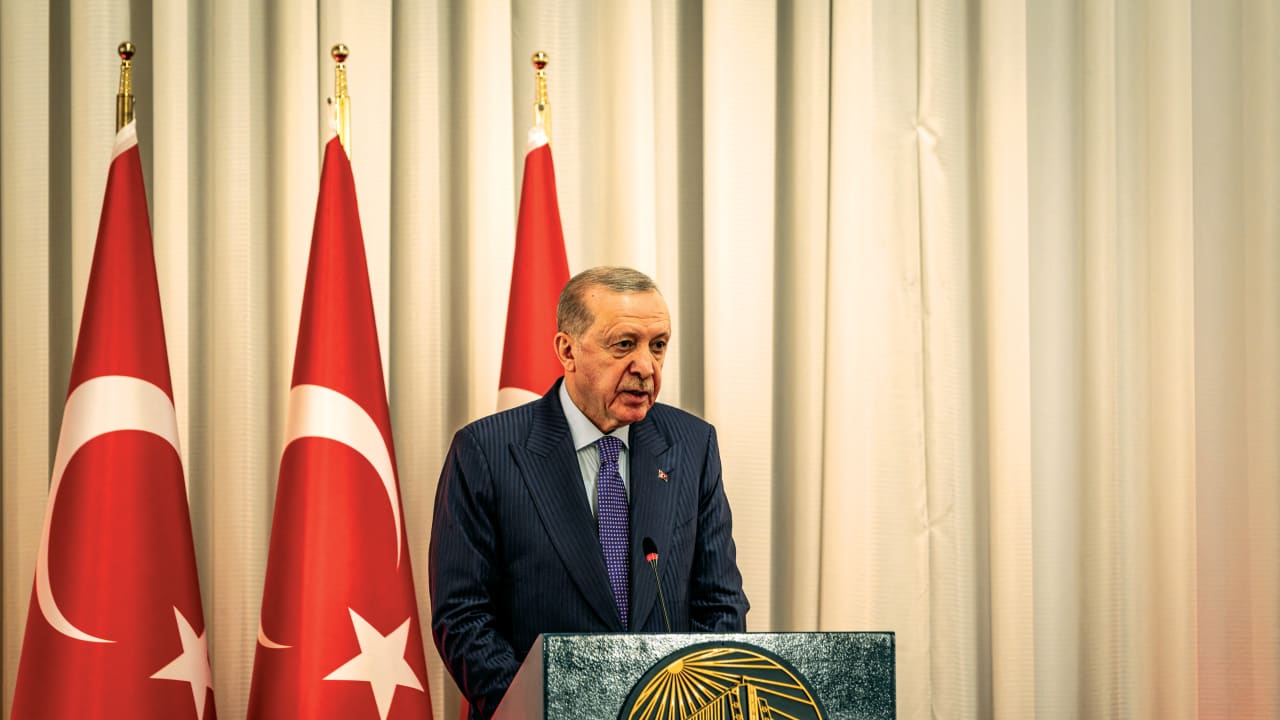
Born to a coast guard officer and housewife, Recep Tayyip Erdogan was raised in one of Istanbul’s proletarian neighborhoods, where he spent summers peddling water bottles, postcards, and bread rolls. His path from there to Islamist politics via a religious vocational school produced a sincere critic of Western civilization and a true believer in its fundamentalist cure.
Having already undid much of modern Turkey’s secular character, from opening hundreds of religious seminaries to abolishing the ban on headscarves in public offices, Erdogan is mentally unable to side with America in its clash with Iran.
It’s a matter of conviction, calculation, and reflex all at once, and it became clear as soon as news of the ayatollahs’ massacre broke out. Turkey, unlike Iran’s Arab neighbors, is not a candidate for an Iranian attack should war with the US erupt. Even so, Erdogan would not rebuke the mullahs for massacring their own people.
The man who repeatedly cried out “genocide” where there was none now avoided his trademark pontifications and diatribes. Instead, he called the bloodstained ayatollahs “our Iranian brothers,” wished them to “get through this trap-filled period,” and said he opposed an American attack.
Turkey and Iran are not true friends. They are racially different, speak entirely different languages, and are also on opposite sides of the Sunni-Shi’ite divide. However, in terms of the clash of civilizations, Ali Khamenei and Recep Erdogan are on the same page.
As both men see things, Islamists like them are God’s tools, the rest of us are the devil’s fools, freedom is a secular charade, and civil rights are a Western ploy. Staring at the blood pools across Iran, they tell themselves that such is the price of revolution, piety, and true faith.
And staring back from their blood pools, the slain tell their slayers and their accomplices:
You killed our bodies, but you haven’t killed our spirit. With or without Uncle Sam, we shall return. We shall return to haunt you; we shall return from the dead; we shall return to restore the freedom you have wrecked and the humanism you have fought; we shall return to redeem Tehran, and also Istanbul.
www.middleIsrael.net
The writer, a Hartman Institute fellow, is the author of Ha’Sfar Ha’Yehudi Ha’Aharon (The Last Jewish Frontier, Yediot Sfarim 2025), a sequel to Theodor Herzl’s The Old New Land.