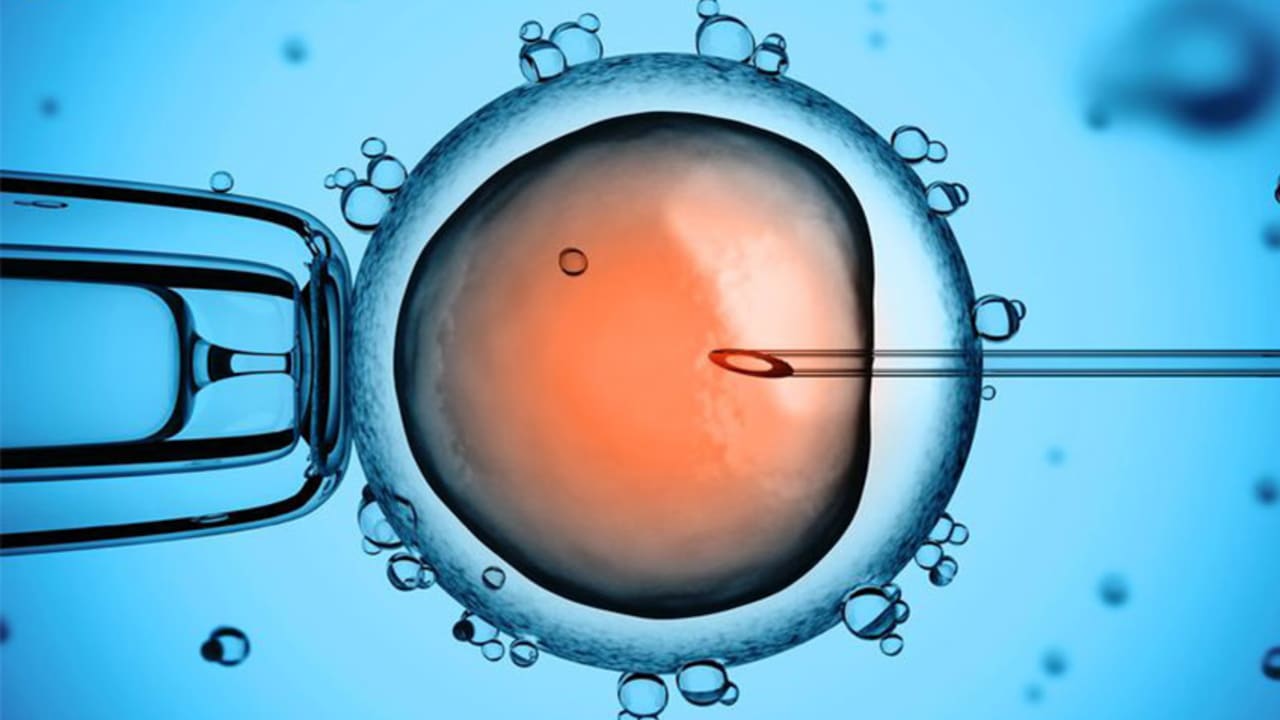
The Israeli Basket of Health Services was very recently expanded to include preimplantation genetic testing and in vitro fertilization (PGT-IVF) for individuals carrying three genetic markers: BRCA1, BRCA2 and that for Lynch disease.
This important step in the fight against heritable diseases was, in large part, in response to efforts by a number of Israeli NGOs, supplemented by the determination of Dr. Naama Kessler, a scientist at the Weizmann Institute of Science.
Kessler’s journey is one of personal tragedy evolving to an altruistic passion to help her fellow citizens in Israel. A true manifestation of Israeli brotherhood (Achva Yisraelit).
Genetic diseases are not new.
Hemophilia, described as a bleeding disorder in the Talmud, was known as the Royal Disease in the 19th and 20th centuries. It was associated with British, German, Russian, and Spanish monarchies and was traced to Queen Victoria.
Often the source of the genetic trait is a spontaneous mutation. An accident of nature. Frequently these genetic lesions are passed from generation to generation.
Sometimes they are associated with disease symptoms, and sometimes they are not. Affected individuals suffer and may die at a young age. Non-symptomatic persons with the mutation are called carriers.
Naama married an American named Mark Kessler. They had six children. Mark, who carried the BRCA2 mutation, was a healthy, vigorous man in his youth. He was diagnosed with stage 4 prostate cancer in his fifties.
Their youngest daughter, Shaked, was diagnosed with an adrenocortical carcinoma as a child. Father and daughter passed away within two weeks of each other (Shaked was 12 years old), leaving Kessler as a young widow with five children.
Kessler is a quiet, strong, and determined woman. While mourning her unfathomable losses, she decided to act. All of her children were tested for the BRCA2 mutation.
Two of her sons inherited Mark’s genetic defect and were at higher risk of developing cancer. Moreover, even if they remained healthy, they could pass the mutation to future Kessler offspring.
BRCA1 and BRCA2 mutations are associated with higher risks of developing breast (up to 80%) ovarian (up to 60%), and prostate cancer (up to 60% by age 80). These gene-driven cancers are often aggressive and more difficult to treat.
There is no guarantee that individuals with a genetic lesion associated with a given disease will develop that disease. Human diseases are often the result of a complex combination of genetic and environmental factors.
But Kessler’s experience and her scientific background catalyzed her to act.
In addition to testing for their father’s BRCA2 mutation, when her sons decided to get married and have children of their own, she educated them toward the possibility of eradicating the lesion in their offspring through PGT-IVF techniques.
This approach is used in many Western countries to eliminate the passage of disease-associated mutations. It involves the screening of embryos and eliminating those with the genetic defect before implantation.
Kessler’s daughters-in-law agreed to undergo PGT-IVF. This is not a simple or easy undertaking. However, now that they and her children have undergone this procedure, her grandchildren will no longer have Mark’s BRCA2 gene.
The disease link has been eliminated from the future bloodline of the Kessler family. Until the recent change, the Israeli basket of services available through the Health Ministry did not cover PGT-IVF therapy.
Kessler felt compelled to spend tens of thousands of dollars to ensure her family wouldn’t suffer what she had endured. In addition, by choosing this path, her future offspring will not need to undergo regular screening for disease and will not live with the anxiety of developing these strongly linked cancers.
They also will not be faced with having to choose preventive mastectomies or ovariectomies to lower the risk of cancer and premature death.
From personal loss to national policy change
Dr. Naama Kessler had the resources to finance the PGT-IVF therapy she felt was needed. However, she was convinced that this therapy should be available to all Israelis who carried disease-linked mutations.
She learned that others had sent in requests to the Health Ministry to allocate funding for such a program.
In fact, for many years the requests were submitted but not funded. By networking with colleagues at the Weizmann Institute and throughout Israel, Kessler uncovered the objections given for the refusal to fund the program.
She met with physicians, called policymakers, and learned who the decision-makers were. She provided answers to all their objections and explained why PGT-IVF therapies would be cost-effective.
Finally, this year her perseverance paid off. Now preimplantation genetic testing and in vitro fertilization approaches will be funded by the Health Ministry for all Israelis who have BRCA1, BRCA2, and Lynch syndrome lesions.
Rabbi Jonathan Sacks often wrote about the power of individuals to make changes. The butterfly effect professes that when a butterfly flaps its wings, the perturbation can lead to unpredictable consequences.
Due to the efforts of Kessler, Israeli NGOs – in particular, the Good Genes organization – and her colleagues and associates (Kessler insists this was not the work of one person), many Israelis can be spared the tragedy experienced by the Kessler family.
The knowledge about the availability of funding for the PGT-IVF therapy and its significance for a family’s health must be disseminated NOW!
The writer is a distinguished professor emeritus of biochemistry and chemistry at the College of Staten Island and Graduate School of the City University of New York. He collaborated with scientists at the Weizmann Institute over a period of 50 years. One of these scientists was Dr. Naama Kessler. The opinions expressed in this article are his own.