
While the world’s attention has focused on the war in Gaza and the humanitarian catastrophe facing its population, another, less visible but equally dangerous system has been operating behind the scenes – one that deserves serious scrutiny and thorough investigation.
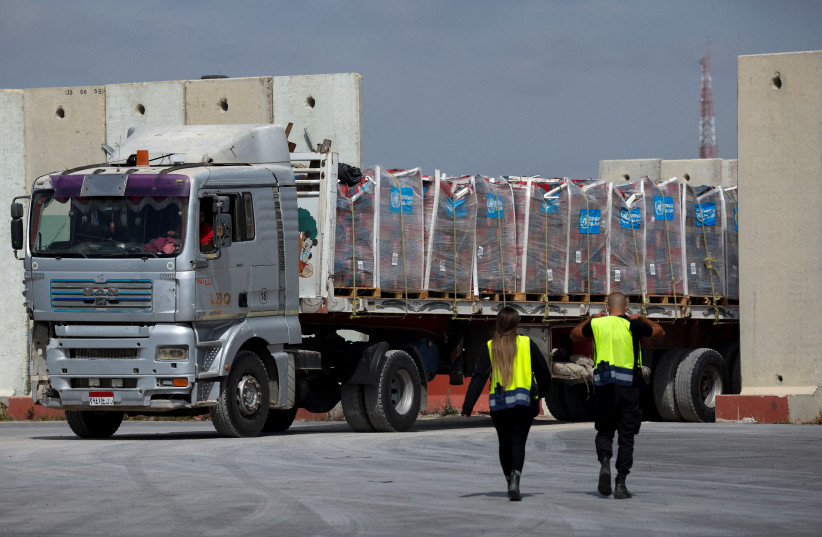
Since the beginning of the war, Israeli military and security authorities have reportedly relied on an exclusive list of just 13 individuals authorized to import commercial goods into Gaza.
Although some names have changed over time, the underlying principle has remained the same: a small group has been granted a monopoly over commercial imports, while hundreds of Gaza’s established merchants – the backbone of the Strip’s economy for decades – have effectively been excluded.
The latest list, reportedly approved by Israel in October 2025, included: Mustafa Eid, Mohammed al-Khazendar, Mohammad al-Barqi, Riyad Daoud, Mohammad Dardasawi, Muhannad Abu Halloub, Sameh Othman, Raed Abu Murai, Ayada al-Rifi, Mohammad al-Khodari, Bakr Abu Halima, Suhail Abu Halima, and Mahmoud Abu Murai.
The issue is not the individuals themselves. The issue is the system that granted them this monopoly.
According to testimony from numerous merchants in Gaza, these individuals do not function as genuine importers. Rather, they primarily act as intermediaries between legitimate merchants and the Israeli authorities. Any merchant wishing to import goods is reportedly forced to go through one of these brokers.
Merchants state that these intermediaries charge commissions ranging from NIS 150,000 to NIS 400,000 per truck, depending on the type of goods being imported. If these figures are accurate, each of them could be earning close to one million shekels per day simply by controlling access to import coordination.
The consequences of this system extend far beyond excessive profits.
Every additional commission paid by merchants is ultimately passed on to Gaza’s civilians. Food, medicine, construction materials, fuel, and other essential goods then become significantly more expensive at a time when the population is already enduring one of the worst humanitarian crises in the world.
Meanwhile, hundreds of experienced Palestinian businesspeople with decades of commercial expertise and extensive trade networks have been pushed aside, replaced by a system in which privileged access appears to matter more than competence, experience, or competition.
Economic monopolies inevitably create black markets. When access to imports depends on exclusive permits rather than transparent regulations, favoritism, corruption, and informal financial networks flourish. In wartime, such systems generate extraordinary wealth for a small group while society as a whole bears the cost.
A way to help Palestinians and Israeli security
Experience across the region has repeatedly shown that economic monopolies created during conflict do not remain merely economic phenomena. Over time, they evolve into powerful political and security networks that become increasingly difficult to dismantle. This should concern Israelis just as much as it concerns Palestinians.
Israel has consistently stated that its strategic objective is to weaken extremist organizations, strengthen stability, and create the conditions for a different future in Gaza. Yet creating a closed economic system that concentrates enormous wealth in the hands of a small number of individuals risks producing precisely the opposite outcome.
Instead of empowering Gaza’s legitimate private sector, it weakens it. Instead of promoting transparency, it rewards privileged access.
Instead of laying the foundations for post-war reconstruction, it creates a new class of economic beneficiaries whose interests may become tied to preserving monopoly and instability.
This raises several questions.
Why has this monopolistic system continued for so long? What objective criteria are used to determine who is authorized to import goods into Gaza? Why have many of Gaza’s most experienced and established merchants been excluded?
Who oversees the enormous financial flows generated by these brokerage commissions? Have Israel’s oversight institutions examined whether this system genuinely serves Israel’s long-term security interests?
And has anyone investigated whether financial corruption extends beyond the commercial beneficiaries themselves?
These are not accusations. They are legitimate questions that deserve transparent answers.
For decades, the Israeli media has demonstrated remarkable courage in exposing corruption and holding powerful institutions accountable, thereby strengthening Israeli democracy. This issue deserves the same level of investigative journalism.
I therefore call on Israel’s investigative media to conduct a comprehensive and independent investigation into Gaza’s commercial import authorization system.
Such an investigation should examine how authorized importers were selected, what oversight mechanisms were in place, whether the public interest was properly protected, and whether anyone – inside or outside the commercial sector – benefited financially in an improper manner from this system.
If such an investigation uncovers structural failures, monopolistic practices, or evidence of financial misconduct, addressing them would not only benefit Palestinian civilians but would also serve Israel’s own national security.
A stable Gaza cannot be built on an economy based on monopoly, patronage, and wartime profiteering. Lasting security requires transparency, accountability, effective institutions, competitive markets, and the rule of law.
Ignoring the economic dimension of Gaza’s crisis today may well create the security threats Israel will face tomorrow.
The writer is a Palestinian political activist and reform advocate. A lifelong Fatah member, he has become a prominent voice for democratic renewal, national elections, and institutional reform. He is a founder Head of New Path (Masar Jadid), a new Palestinian political party seeking to build a modern, accountable, and democratic political alternative.