Archaeological Site
Israeli researchers use ancient stone tools to trace hunter-gatherer migrations
The study focused specifically on the late Middle Paleolithic period, when ancient hunter-gatherers attempted to navigate intense environmental shifts in the South Caucasus region.
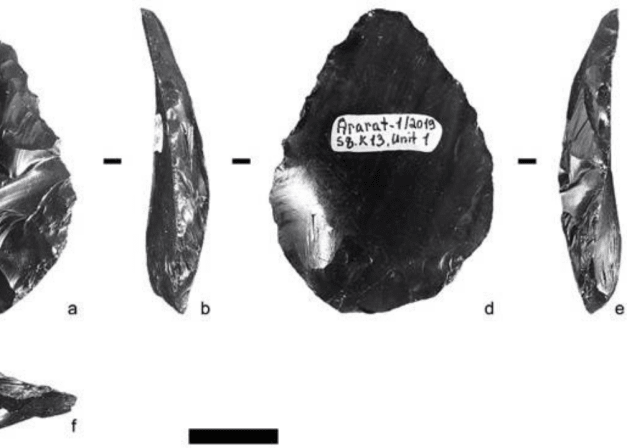

Prehistoric hunter-gatherers stayed connected across 200 kilometers, Israeli study finds
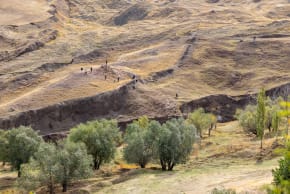
‘We’re all in the same boat,’ Noah's Ark researcher tells ‘Post’ at Turkey’s Durupinar site

Backyard find: Egyptian farmer unearths statue fragments believed to depict Ramesses II
Egypt uncovers first complete bath complex, ancient hydraulic system north of Suez Canal
Leithy added that the layer is marked by remnants of ancient Cypriot pottery and Greek amphorae, confirming that settlement of the site began before the construction of the bathing complex.

Nahariya's Byzantine church hit by Hezbollah rocket reopens to public after four months
At the time, the IAA had shared with The Jerusalem Post that only the site's modern, protective structure had been damaged in the strike.

Egypt unearths underground tombs, golden tongues ahead of construction in ancient coastal city
An unfinished statue of the Greek goddess Aphrodite, a limestone gravestone depicting a seated man holding a bird, as well as the remains of a plaster sphinx statue were also found at the site.

Second-century building found near Colosseum may have been ancient Rome's firefighter barracks
The mosaic's design closely resembles one previously discovered in a firefighters' barracks in Ostia, the ancient port of Rome, about 30 km from the capital, the archaeological office said

‘Zionist act of highest order’: Smotrich allocates NIS 113m. to develop West Bank heritage sites
The West Bank is home to over 2,600 archaeological and heritage sites, including the Cave of the Patriarchs in Hebron, the Qumran Caves in the Judean Desert, and Sebastia.

UNESCO adds 25 new World Heritage Sites including Mount Olympus, Normandy's D-Day beaches
The List of World Heritage Sites includes sites in three categories: cultural sites, natural sites, and mixed sites which combine the two.

UNESCO designates Lebanon's Beaufort Castle, West Bank's Sebastia as World Heritage Sites in Danger
According to UNESCO, the World Heritage Sites in Danger list includes sites that are part of their country’s cultural and natural heritage and are under threat by “serious and specific dangers."

Guatemala to recognize Jerusalem’s City of David as part of its national heritage
A plaque signed by Guatemalan President Bernardo Arévalo will be unveiled in a ceremony attended by senior Israeli, US and Guatemalan officials.

‘Weaponization of cultural heritage’: Israel accuses PA of exploiting UNESCO in bid for Sebastia
The 450-acre site, which has awaited joining the world heritage list since 2012, has a history dating back at least 3,000 years.

Days before Tisha B'Av: Charred wooden beams from First Temple’s destruction unearthed in Jerusalem
The First Temple, built by the biblical King Solomon, was destroyed in 586 BCE at the hands of Nebuchadnezzar II, the second king of the Neo-Babylonian Empire.
